
All Products
209 products found
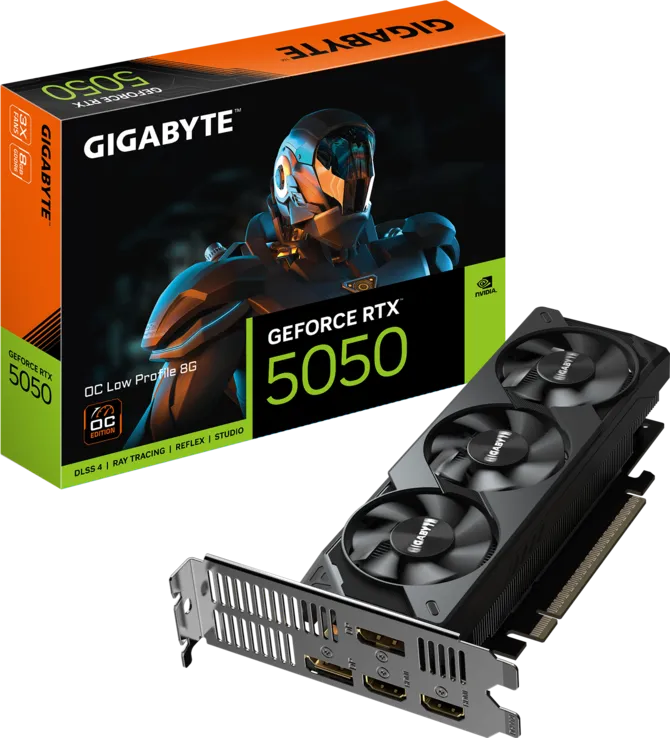
Gigabyte GeForce RTX™ 5050 OC Low Profile 8G
Overview
The Gigabyte rtx 5050 8gb low profile is a precision-engineered solution built to deliver high performance, stability, and durability for demanding workloads.
Key Technical Specifications
- Built specifically: Built specifically for the Graphics Card's ecosystem
- Constructed using: Constructed using high-grade components for extended reliability and thermal stability
- Engineered to: Engineered to meet rigorous industry standards for performance and compatibility
- Seamless integration: Seamless integration with existing PC setups and desktop configurations
Practical Applications & Performance
Everyday computing, high-performance tasks, gaming setups, and professional workstations.
Who It's Built For
Ideal for enthusiasts, gamers, and computing professionals who demand uncompromising performance, rock-solid stability, and premium build quality.
R 6,500.00
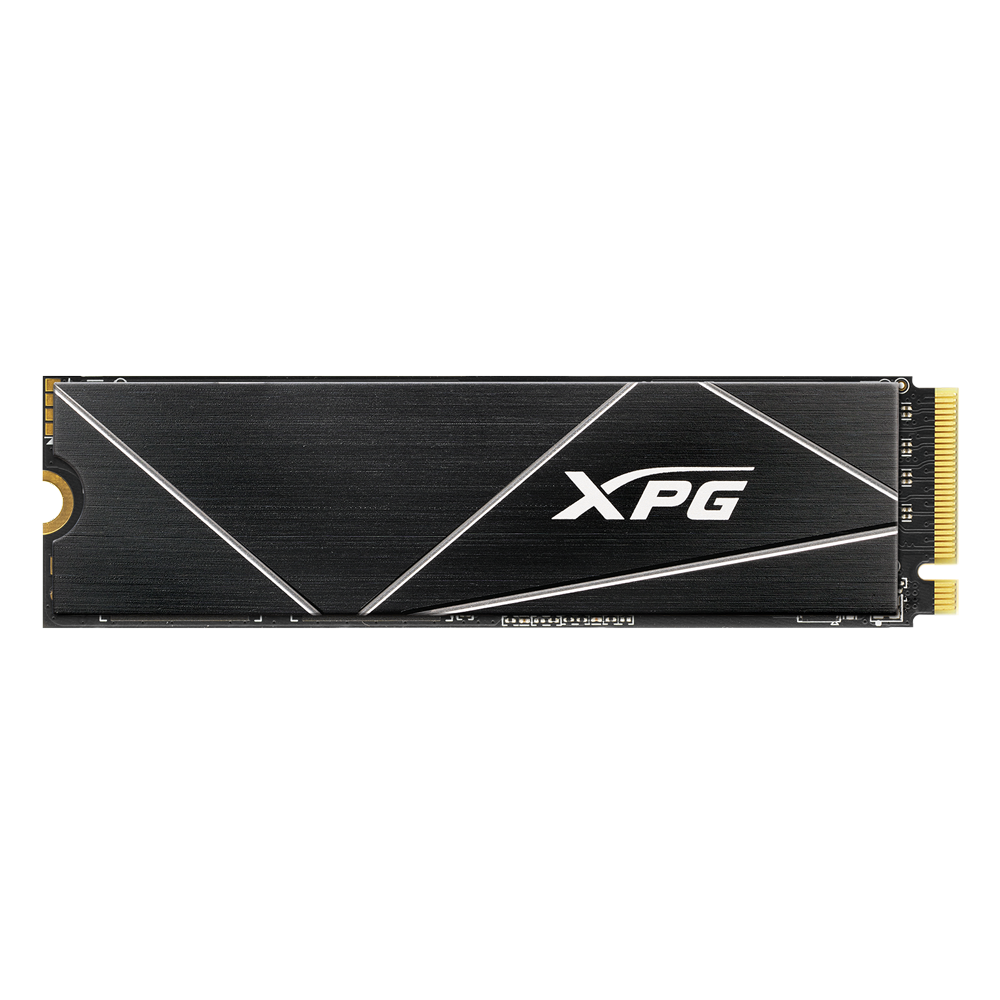
XPG AGAMMIXS70B-1T-CS GAMMIX S70 BLADE 1TB M.2 (2280) NVMe PCI-E 4.0 Solid State Drive
Overview
Engineered for instantaneous boot times and lightning-fast game loading, this M.2 NVMe SSD unlocks blazing fast read and write transfer rates.
Key Technical Specifications
- 1TB storage: 1TB storage capacity in a compact M.2 2280 form factor
- PCIe 4.0: PCIe 4.0 NVMe interface delivering high sequential read/write speeds
- Advanced controller: Advanced controller and 3D NAND flash architecture for sustained durability
- Superior thermal: Superior thermal management ensuring consistent performance under prolonged load
Practical Applications & Performance
Fast OS boot times, rapid game level load times, and instantaneous transfer of massive 4K video files.
Who It's Built For
Ideal for gamers, creators, and professionals needing reliable high-speed solid-state storage. who demand uncompromising performance, rock-solid stability, and premium build quality.
R 2,300.00
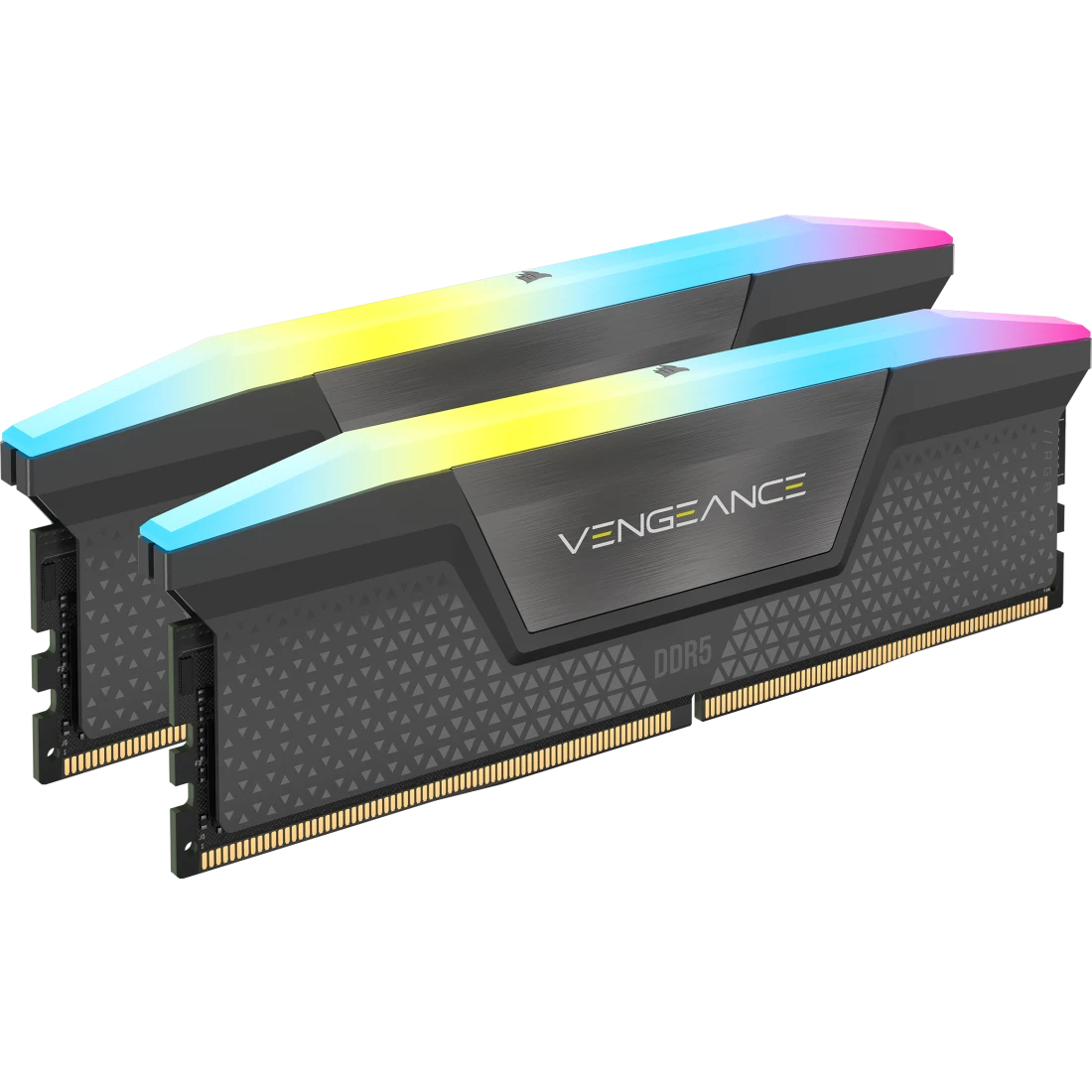
VENGEANCE® RGB 32GB (2x16GB) DDR5 DRAM Up To 6000MT/s CL30
Overview
Built for peak stability and low latency, this high-performance DDR5 memory module ensures fast data transfer rates between your CPU and system memory.
Key Technical Specifications
- 32GB total: 32GB total capacity engineered for modern multitasking
- DDR5 technology: DDR5 technology operating at 6000MHz
- Precision aluminum: Precision aluminum heat spreader for efficient heat dissipation
- Intel XMP: Intel XMP and AMD EXPO profile support for one-click overclocking
Practical Applications & Performance
Smooth high-framerate gaming, seamless browser tab switching, video rendering, and heavy multitasking.
Who It's Built For
Ideal for PC builders looking to upgrade memory bandwidth and system responsiveness. who demand uncompromising performance, rock-solid stability, and premium build quality.
R 9,000.00
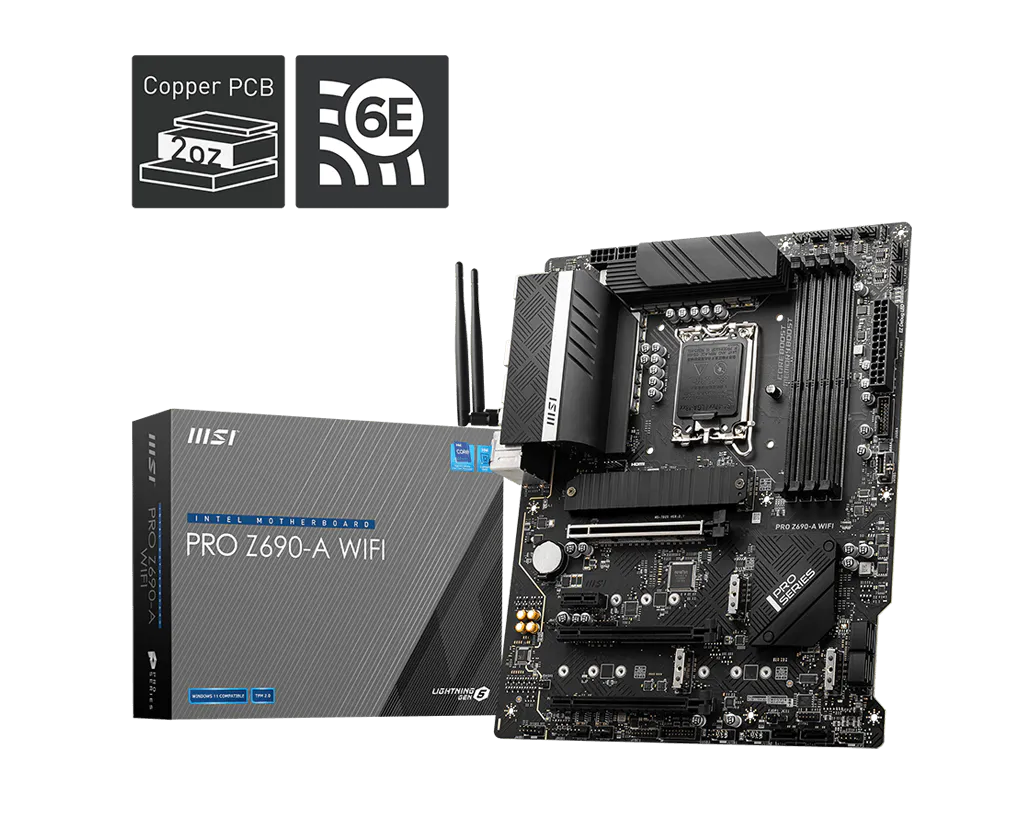
PRO Z690-A WIFI
Overview
The MSI PRO Z690-A WIFI is a performance-driven ATX motherboard engineered around the Intel Z690 chipset and the LGA1700 socket, delivering comprehensive hardware compatibility for 12th, 13th, and 14th Generation Intel Core desktop processors. Designed with a clean, industrial minimalist aesthetic, the board prioritizes stable operation and thermal endurance above unnecessary cosmetic clutter. It is constructed upon a server-grade 6-layer printed circuit board (PCB) reinforced with 2oz thickened copper, significantly mitigating electromagnetic interference and ensuring signal integrity across high-frequency memory traces and high-speed PCIe lanes.
Architecture & Performance
Engineered to leverage modern Intel architectures—including Alder Lake, Raptor Lake, and Raptor Lake Refresh—the PRO Z690-A WIFI unlocks PCIe 5.0 connectivity on the primary expansion slot, yielding a massive 128 GB/s bidirectional bandwidth ready for next-generation discrete GPUs. Memory performance is supercharged via a quad-DIMM DDR5 layout supporting high-speed dual-channel operation up to 6400+ MHz (OC) with Intel XMP 3.0 profiles. Powering heavy multi-threaded workloads is a 14+1+1 Duet Rail Power System (DRPS) featuring 55A DrMOS power stages and dual 8-pin EPS CPU power connectors, guaranteeing sustained current delivery to unlocked K-series processors without thermal throttling. Storage capabilities are anchored by four onboard M.2 slots (three operating at PCIe Gen 4x4 up to 64Gbps), cooled by an extended M.2 Shield Frozr heatsink to prevent sustained read/write degradation under intensive I/O tasks.
Key Technical Specifications
- Socket & Chipset: Intel LGA1700; Intel Z690 Express Chipset
- Processor Support: 12th, 13th, and 14th Gen Intel Core, Pentium Gold, and Celeron processors
- Memory Subsystem: 4x DDR5 DIMM slots, up to 192GB dual-channel, DDR5-6400+ (OC), Intel XMP 3.0
- Power Delivery & Cooling: 14+1+1 Phase 55A DrMOS digital VRM, extended aluminium heatsinks with 7W/mK thermal pads, M.2 Shield Frozr
- PCIe Expansion: 1x PCIe 5.0 x16 (x16 mode via CPU), 1x PCIe 3.0 x16 (x4 mode), 1x PCIe 3.0 x16 (x1 mode), 1x PCIe 3.0 x1
- Storage Interfaces: 4x M.2 slots (3x PCIe 4.0 x4, 1x PCIe 3.0 x4/SATA), 6x SATA 6Gb/s (RAID 0, 1, 5, 10 support)
- Networking & Wireless: Intel I225-V 2.5Gbps Ethernet, Intel Wi-Fi 6E module (6GHz band, 802.11ax), Bluetooth 5.2
- Rear I/O Connectivity: 1x USB 3.2 Gen 2x2 20Gbps Type-C, 1x USB 3.2 Gen 2 10Gbps Type-A, 2x USB 3.2 Gen 1 5Gbps, 4x USB 2.0, DisplayPort 1.4, HDMI 2.1, Flash BIOS Button
Who It's Built For
The MSI PRO Z690-A WIFI is the ideal platform for software developers, workstation editors, 3D renderers, and competitive PC gamers who demand maximum stability, cutting-edge DDR5 memory bandwidth, and high-speed PCIe 5.0 expandability without paying a premium for aggressive RGB aesthetics. It serves as an uncompromising, reliable backbone for high-performance Intel builds.
R 2,500.00
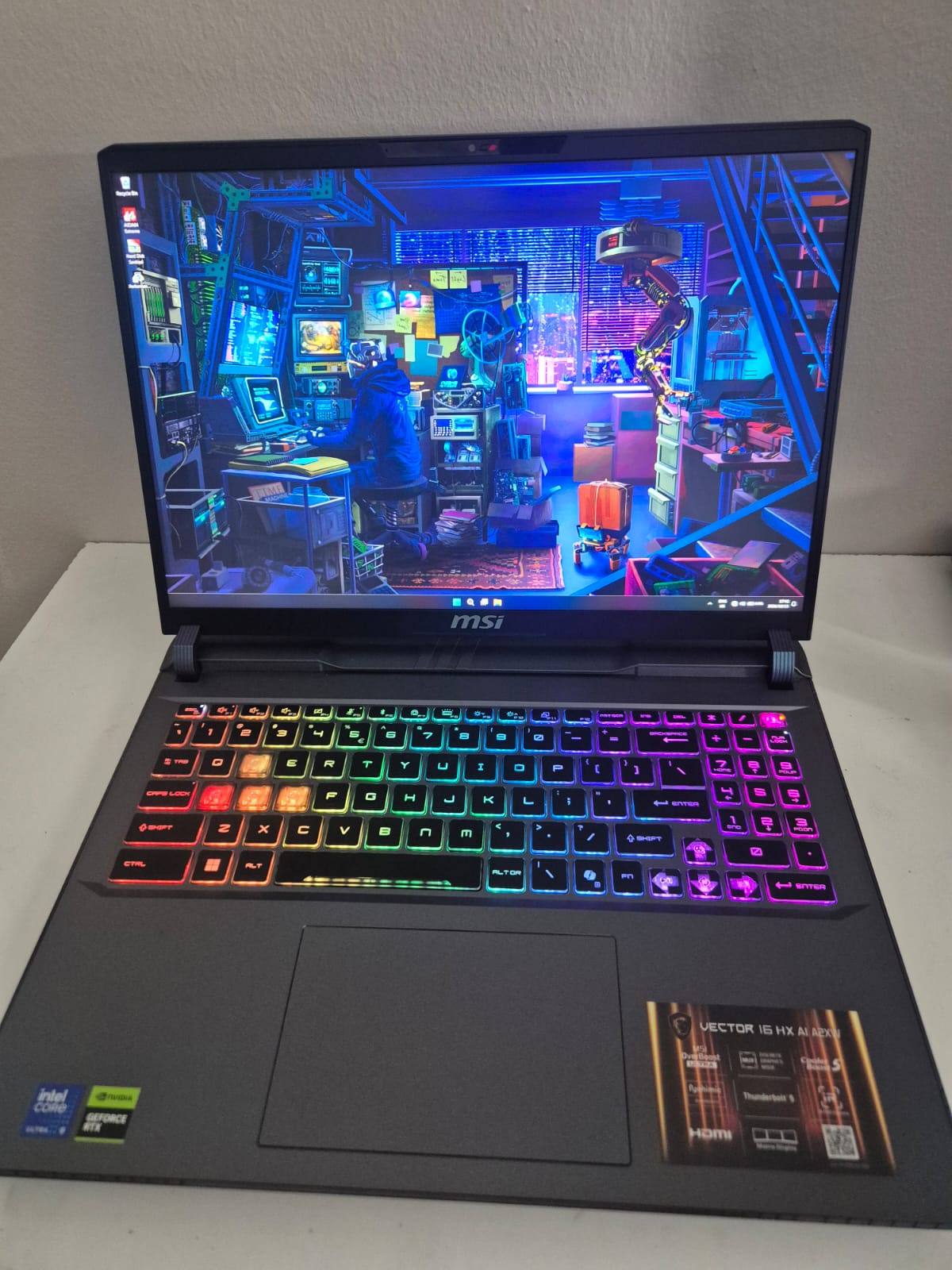
MSI Vector 16 HX AI
R 30,000.00
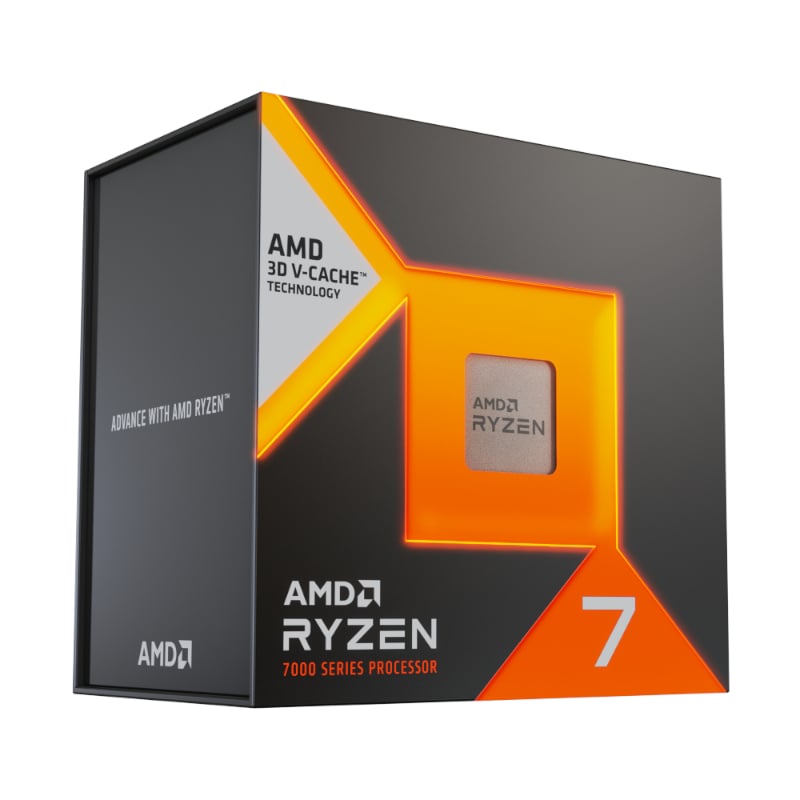
Ryzen 7 7800X3D
R 7,000.00
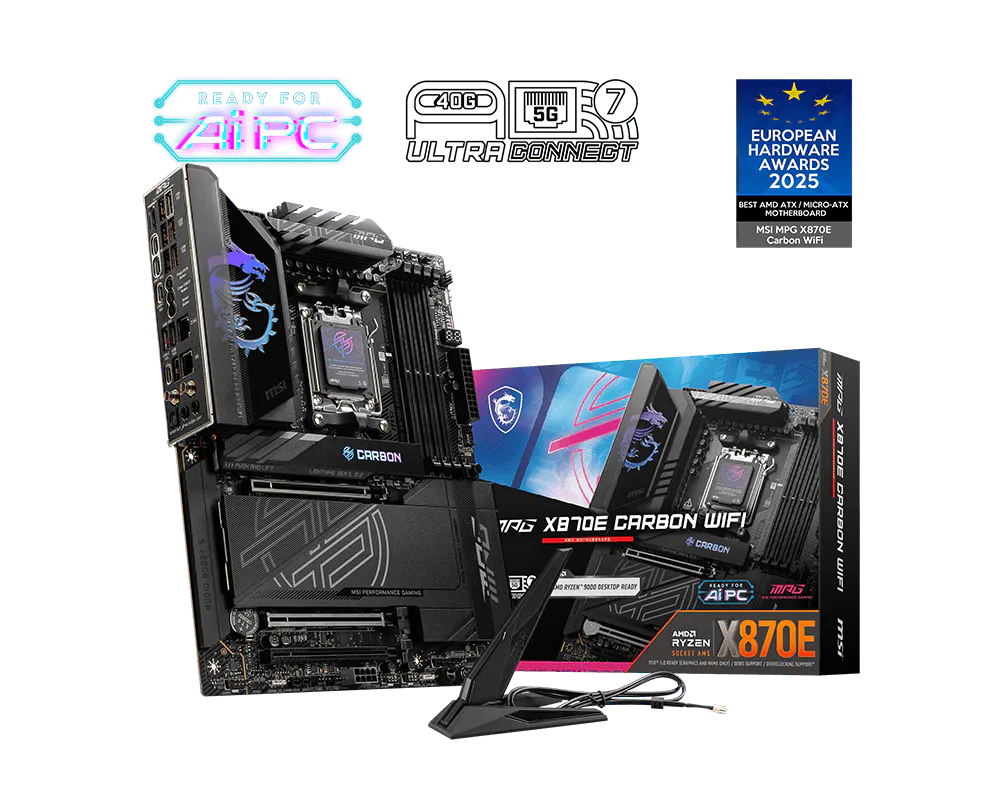
MSI MPG X870E CARBON WIFI
R 6,000.00
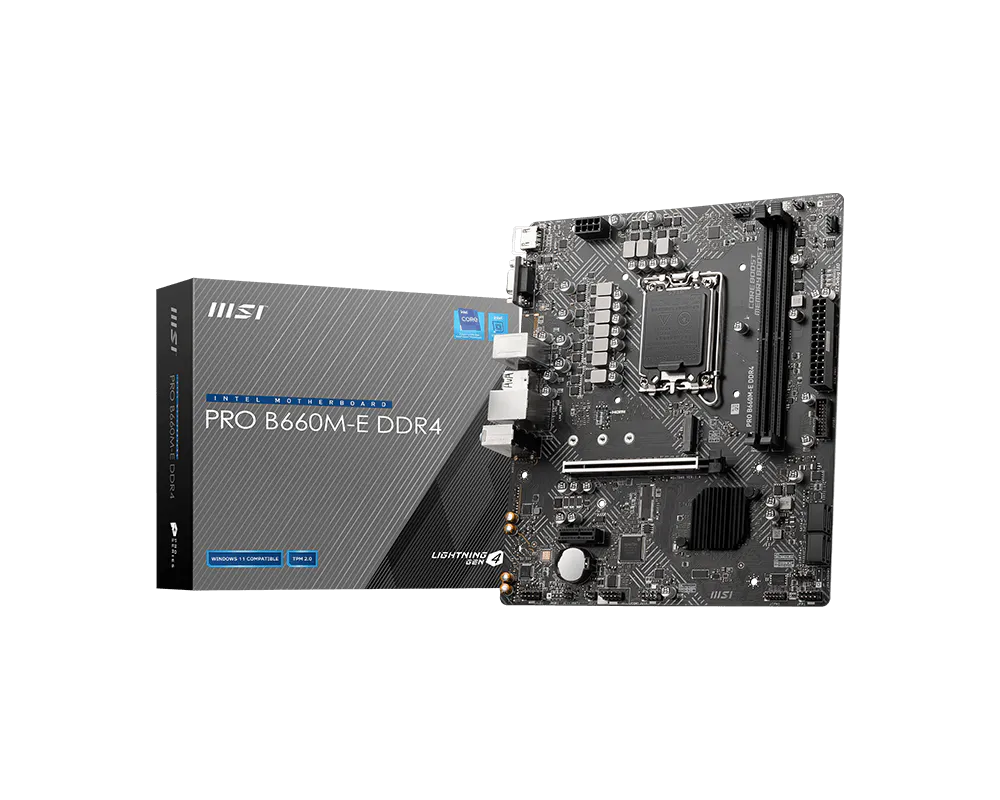
PRO B660M-E DDR4
R 1,500.00
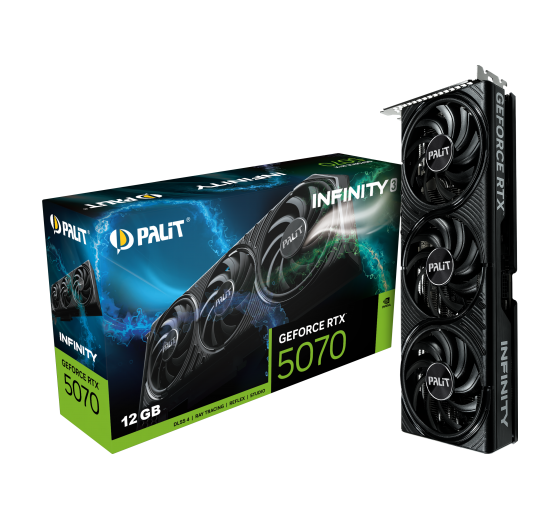
Palit GeForce RTX 5070 Infinity 3 12GB GDDR7
Overview
The Palit GeForce RTX 5070 Infinity 3 12GB GDDR7 represents a massive generational leap in graphics processing, powered by NVIDIA's next-generation Blackwell GPU architecture. Engineered with a clean, industrial design language, the Infinity 3 series integrates a high-density aluminum heatsink stack coupled with composite copper heatpipes to maintain optimal thermal headroom during intense computational loads. Designed for extreme stability and acoustic efficiency, this card utilizes high-grade power phases and a full-coverage protective backplate to provide exceptional structural integrity and passive heat dissipation.
Architecture & Performance
Driven by the cutting-edge Blackwell architecture, the RTX 5070 incorporates next-gen Tensor Cores and Ray Tracing Cores to push modern real-time path tracing and AI-accelerated rendering to new heights. Outfitted with 12GB of ultra-fast GDDR7 memory on a high-bandwidth bus, it delivers substantially higher memory throughput compared to previous-generation GDDR6X solutions. The RTX 5070 effortlessly targets maximum-settings 1440p gaming at high refresh rates (165Hz+) and capable 4K gaming utilizing DLSS neural rendering technology. Outside of gaming, it excels in compute-heavy applications such as DaVinci Resolve 8K video editing, Blender cycles 3D rendering, and local AI LLM execution.
Key Technical Specifications
- GPU Architecture: NVIDIA Blackwell Architecture
- Video Memory: 12GB GDDR7
- Bus Interface: PCI Express 5.0 x16
- Cooling Technology: Palit Infinity 3 Triple-Fan Thermal System with 0-dB Tech
- Display Outputs: 3x DisplayPort 2.1a, 1x HDMI 2.1a
- Power Input: 1x 16-Pin PCIe Power Connector (12V-2x6)
- API Support: DirectX 12 Ultimate, OpenGL 4.6, Vulkan 1.3, CUDA
Who It's Built For
The Palit GeForce RTX 5070 Infinity 3 is meticulously tailored for serious PC gamers seeking high-FPS 1440p and 4K performance, game developers, 3D artists, and content creators who require high-speed VRAM bandwidth, advanced ray tracing capabilities, and cutting-edge CUDA/Tensor hardware acceleration for complex creative and technical workflows.
R 14,000.00

Wootvision 27" QHD 180HZ Gaming monitor
Overview
Designed to give competitive gamers and visual artists an elite viewing experience, this display pairs a fluid 180Hz refresh rate with vivid color accuracy.
Key Technical Specifications
- QHD (2560: QHD (2560 x 1440) display resolution delivering crisp visual fidelity
- Ultra-smooth 180Hz: Ultra-smooth 180Hz refresh rate for competitive motion clarity
- VA panel: VA panel technology with wide viewing angles and vivid color reproduction
- Adaptive-Sync technology: Adaptive-Sync technology (AMD FreeSync / NVIDIA G-SYNC compatible) preventing screen tearing
- Low input: Low input lag and rapid response time for instantaneous reflex response
Practical Applications & Performance
High-FPS competitive esports, cinematic gaming, and professional color-accurate content creation.
Who It's Built For
Ideal for gamers and creative professionals looking for pristine visual clarity and fluid motion. who demand uncompromising performance, rock-solid stability, and premium build quality.
R 2,600.00
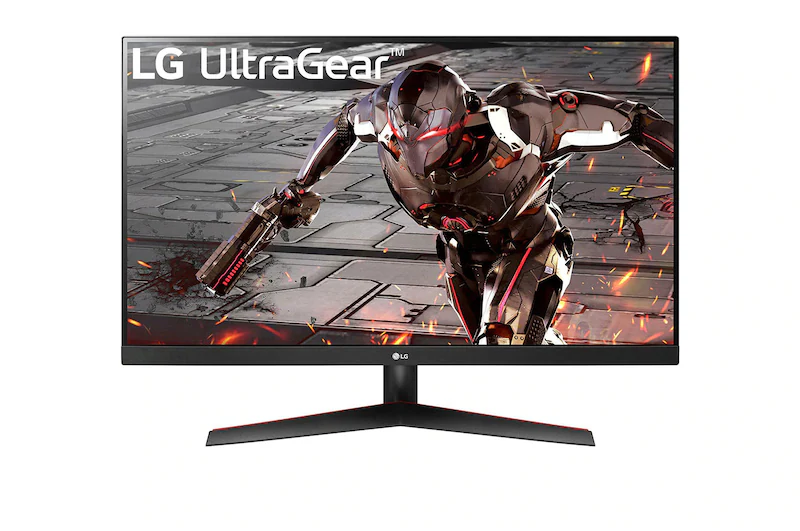
LG UltraGear 32GN600-B QHD 165Hz
Overview
The LG UltraGear 32GN600-B is a precision-engineered solution built to deliver high performance, stability, and durability for demanding workloads.
Key Technical Specifications
- Built specifically: Built specifically for the Console's ecosystem
- Constructed using: Constructed using high-grade components for extended reliability and thermal stability
- Engineered to: Engineered to meet rigorous industry standards for performance and compatibility
- Seamless integration: Seamless integration with existing PC setups and desktop configurations
Practical Applications & Performance
Everyday computing, high-performance tasks, gaming setups, and professional workstations.
Who It's Built For
Ideal for enthusiasts, gamers, and computing professionals who demand uncompromising performance, rock-solid stability, and premium build quality.
R 3,800.00

Intel SSD 520 Series 180GB 2.5" SATA 6Gb/s SSD
Overview
Engineered for instantaneous boot times and lightning-fast game loading, this M.2 NVMe SSD unlocks blazing fast read and write transfer rates.
Key Technical Specifications
- 180GB storage: 180GB storage capacity in a compact M.2 2280 form factor
- PCIe 3.0: PCIe 3.0 NVMe interface delivering high sequential read/write speeds
- Advanced controller: Advanced controller and 3D NAND flash architecture for sustained durability
- Superior thermal: Superior thermal management ensuring consistent performance under prolonged load
Practical Applications & Performance
Fast OS boot times, rapid game level load times, and instantaneous transfer of massive 4K video files.
Who It's Built For
Ideal for gamers, creators, and professionals needing reliable high-speed solid-state storage. who demand uncompromising performance, rock-solid stability, and premium build quality.
R 350.00

ADATA Ultimate SU650 2.5" 1TB SATA 6Gb/s SSD
Overview
Engineered for instantaneous boot times and lightning-fast game loading, this M.2 NVMe SSD unlocks blazing fast read and write transfer rates.
Key Technical Specifications
- 1TB storage: 1TB storage capacity in a compact M.2 2280 form factor
- PCIe 3.0: PCIe 3.0 NVMe interface delivering high sequential read/write speeds
- Advanced controller: Advanced controller and 3D NAND flash architecture for sustained durability
- Superior thermal: Superior thermal management ensuring consistent performance under prolonged load
Practical Applications & Performance
Fast OS boot times, rapid game level load times, and instantaneous transfer of massive 4K video files.
Who It's Built For
Ideal for gamers, creators, and professionals needing reliable high-speed solid-state storage. who demand uncompromising performance, rock-solid stability, and premium build quality.
R 1,200.00
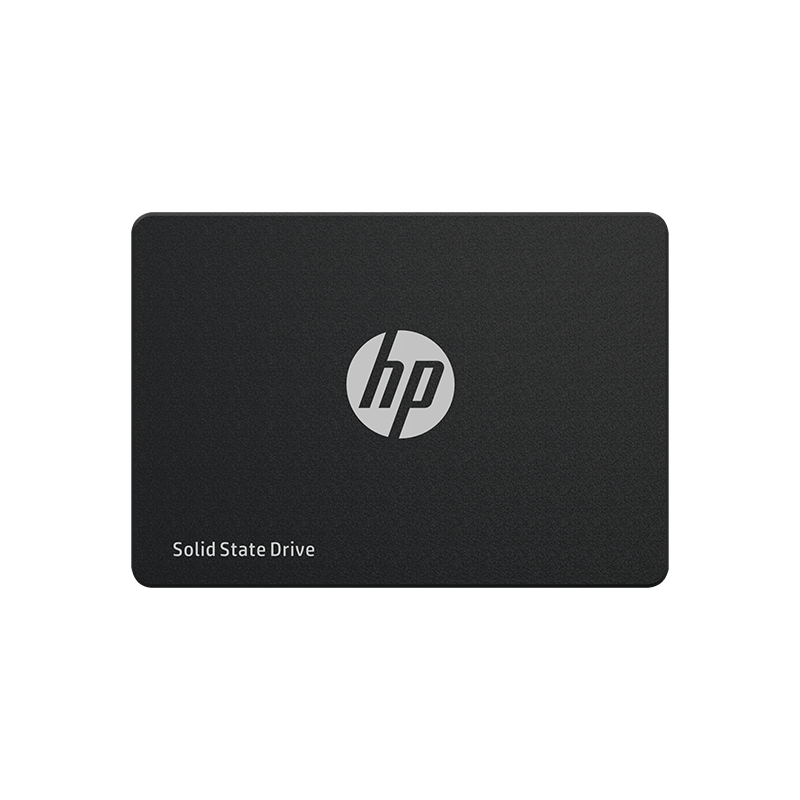
HP SSD S700 2.5" 1TB
Overview
Engineered for instantaneous boot times and lightning-fast game loading, this M.2 NVMe SSD unlocks blazing fast read and write transfer rates.
Key Technical Specifications
- 1TB storage: 1TB storage capacity in a compact M.2 2280 form factor
- PCIe 3.0: PCIe 3.0 NVMe interface delivering high sequential read/write speeds
- Advanced controller: Advanced controller and 3D NAND flash architecture for sustained durability
- Superior thermal: Superior thermal management ensuring consistent performance under prolonged load
Practical Applications & Performance
Fast OS boot times, rapid game level load times, and instantaneous transfer of massive 4K video files.
Who It's Built For
Ideal for gamers, creators, and professionals needing reliable high-speed solid-state storage. who demand uncompromising performance, rock-solid stability, and premium build quality.
R 1,200.00

OCZ Octane 2.5" SATA III 256GB Solid State Drive
Overview
The OCZ Octane 2.5" SATA III 256GB Solid State Drive is a precision-engineered solution built to deliver high performance, stability, and durability for demanding workloads.
Key Technical Specifications
- Built specifically: Built specifically for the SATA SSD's ecosystem
- Constructed using: Constructed using high-grade components for extended reliability and thermal stability
- Engineered to: Engineered to meet rigorous industry standards for performance and compatibility
- Seamless integration: Seamless integration with existing PC setups and desktop configurations
Practical Applications & Performance
Everyday computing, high-performance tasks, gaming setups, and professional workstations.
Who It's Built For
Ideal for enthusiasts, gamers, and computing professionals who demand uncompromising performance, rock-solid stability, and premium build quality.
R 450.00

Netac N535S 2.5" SATA 6Gb/s Solid State Drive 240GB
Overview
The Netac N535S 240GB 2.5-inch Solid State Drive is an ultra-reliable, high-efficiency storage solution engineered to replace sluggish mechanical hard drives and unlock the performance potential of legacy and modern platforms. Built around a standardized 7mm slim profile, the N535S drops seamlessly into desktop drive bays and thin-and-light notebook chassis. By leveraging multi-layer 3D NAND Flash memory, Netac ensures higher data density, enhanced endurance, and superior power efficiency relative to traditional planar NAND architectures.
Architecture & Performance
Operating over the SATA III 6Gb/s interface, the Netac N535S saturates the bus with sequential read throughput up to 560 MB/s and sequential write speeds reaching up to 500 MB/s. Powered by an optimized solid-state controller with native support for dynamic SLC caching, the drive handles bursts of file transfers, system boot sequences, and application launches with ultra-low latency. The controller integrates an advanced Low-Density Parity-Check (LDPC) Error Correction Code (ECC) algorithm to ensure end-to-end data integrity over long-term read/write cycles. With native TRIM command support, wear-leveling algorithms, and S.M.A.R.T. telemetry, the N535S maintains optimal transfer rates even under continuous drive fill conditions.
Key Technical Specifications
- Storage Capacity & Type: 240GB Multi-Layer 3D TLC NAND Flash
- Controller Architecture: High-efficiency SATA III controller with Dynamic SLC Caching
- Interface & Form Factor: SATA 6Gb/s (SATA Revision 3.0, backward compatible with SATA 3Gb/s and 1.5Gb/s), 2.5-inch (7mm z-height)
- Sustained Sequential Performance: Sequential Read up to 560 MB/s; Sequential Write up to 500 MB/s
- Data Integrity & Longevity: LDPC ECC Engine, TRIM Optimization, S.M.A.R.T. command set, Bad Block Management
- Reliability & Power: 1,500,000 Hours MTBF, shock-resistant design up to 1500G/0.5ms, low-power active and idle states
Who It's Built For
The Netac N535S 240GB SSD is engineered for everyday PC users, budget system builders, and IT technicians looking to breathe high-speed responsiveness into aging laptops and desktops. It serves as an ideal high-speed OS boot drive or dedicated application disk, providing silent operation, zero moving parts, and instant responsiveness across office productivity suites, web browsing, and casual computing workloads.
R 450.00

Netac N535S 2.5" SATA 6Gb/s Solid State Drive 120GB
Overview
The Netac N535S 2.5" SATA 6Gb/s Solid State Drive 120GB is a precision-engineered solution built to deliver high performance, stability, and durability for demanding workloads.
Key Technical Specifications
- Built specifically: Built specifically for the SATA SSD's ecosystem
- Constructed using: Constructed using high-grade components for extended reliability and thermal stability
- Engineered to: Engineered to meet rigorous industry standards for performance and compatibility
- Seamless integration: Seamless integration with existing PC setups and desktop configurations
Practical Applications & Performance
Everyday computing, high-performance tasks, gaming setups, and professional workstations.
Who It's Built For
Ideal for enthusiasts, gamers, and computing professionals who demand uncompromising performance, rock-solid stability, and premium build quality.
R 350.00

Hiksemi Wave SSD 512G
Overview
The Hiksemi Wave SSD 512G is a high-reliability, 2.5-inch internal solid-state drive engineered to deliver an immediate performance overhaul for desktop rigs and laptops reliant on legacy mechanical hard drives. Built within a slim 7mm form factor, the Wave series pairs high-density 3D NAND flash technology with a proven SATA 6Gb/s interface, eliminating mechanical latency, spindle noise, and physical vulnerability to shock and vibration.
Architecture & Performance
Operating across the standard SATA III (6.0 Gb/s) protocol, the Hiksemi Wave 512GB maximizes the SATA bus ceiling with sequential read speeds of up to 530 MB/s and sequential write speeds up to 450 MB/s. Under the hood, an optimized multi-channel controller leverages intelligent SLC caching algorithms and hardware-level LDPC (Low-Density Parity-Check) ECC to ensure sustained data integrity and extended write endurance. By bypassing the mechanical rotational delay of traditional 5400/7200 RPM drives, random 4K read/write response times are drastically slashed, enabling instantaneous system boots, seamless background multitasking, and rapid asset loading in modern gaming environments.
Key Technical Specifications
- Capacity & Form Factor: 512GB, standard 2.5-inch (7mm casing for desktop & ultrabook compatibility)
- Interface & Controller: SATA III 6Gb/s (backward compatible with SATA II 3Gb/s), high-efficiency DRAM-less multi-channel controller
- Flash Memory: High-density multi-layer 3D NAND
- Sequential Read Speed: Up to 530 MB/s
- Sequential Write Speed: Up to 450 MB/s
- Reliability & Data Management: 1,500,000 hours MTBF, TRIM command support, S.M.A.R.T. health monitoring, advanced dynamic/static wear leveling, and LDPC ECC
- Power & Thermals: Ultra-low active power draw (< 2.0W), 0°C to 70°C operating temperature tolerance, zero acoustic output
Who It's Built For
The Hiksemi Wave 512GB SSD is the ideal choice for everyday power users and PC builders looking to resurrect older laptops or desktop platforms with high-speed solid-state responsiveness. It also serves as an affordable, reliable secondary mass-storage volume for gamers and content creators wanting a dedicated installation drive for modern game libraries, scratch disks, or local media storage without consuming valuable M.2 NVMe motherboard slots.
R 850.00

Avant 240GB 6Gb/s SATA 3 Solid State Drive
Overview
The Avant 240GB 2.5-inch SATA III 6Gb/s Solid State Drive is engineered to deliver reliable, high-efficiency solid-state storage for systems constrained by traditional mechanical storage bottlenecks. Built with a low-profile 7mm casing, this drive integrates high-density 3D TLC NAND flash memory driven by a dedicated multi-channel controller, creating a high-reliability storage medium that drastically outpaces legacy mechanical hard drives in throughput and latency.
Harnessing standard 2.5-inch mounting dimensions and universal SATA interface standards, the drive is engineered for frictionless plug-and-play deployment across desktop towers, small-form-factor PCs, and laptops. Without moving mechanical platters or read/write heads, the solid-state design delivers robust physical shock and vibration resistance, ensuring heightened data durability alongside whisper-quiet, low-heat operation.
Architecture & Performance
Operating over the SATA Revision 3.0 bus, the Avant 240GB SSD saturates available interface bandwidth with sequential read speeds peaking at up to 540 MB/s and sequential write speeds reaching up to 480 MB/s. This yields an immediate 4x to 5x uplift in bulk data transfers and application load speeds relative to traditional 7200 RPM HDDs, while delivering the rapid responsiveness necessary to reduce Windows boot sequences to single-digit seconds.
The drive controller integrates advanced flash management architecture, including Native Command Queuing (NCQ) up to 32 commands, TRIM command optimization, and proactive garbage collection algorithms. With robust wear-leveling algorithms balancing program/erase cycles across the 3D NAND cells, the drive preserves peak sustained throughput and sustained data integrity under persistent daily workloads.
Key Technical Specifications
- Form Factor & Interface: 2.5-Inch (7mm z-height) | SATA III 6Gb/s (backwards compatible with SATA II 3Gb/s)
- Capacity & Flash Type: 240GB Capacity | High-Density 3D TLC NAND
- Sequential Throughput: Up to 540 MB/s Sequential Read | Up to 480 MB/s Sequential Write
- Random I/O Operations: Up to 70,000 IOPS 4K Random Read | Up to 65,000 IOPS 4K Random Write
- Data Integrity & Features: TRIM Support, S.M.A.R.T. Diagnostics, Static and Dynamic Wear-Leveling, ECC Protection
- Thermal & Power Consumption: Active Draw < 2.5W | Idle Draw < 0.5W | 1.5 Million Hours MTBF
Who It's Built For
The Avant 240GB SATA III SSD is tailored for system integrators, budget PC builders needing a cost-effective and responsive primary OS drive, and IT professionals refurbishing legacy laptops or office desktops that suffer from the heavy I/O latency of mechanical hard drives.
R 450.00
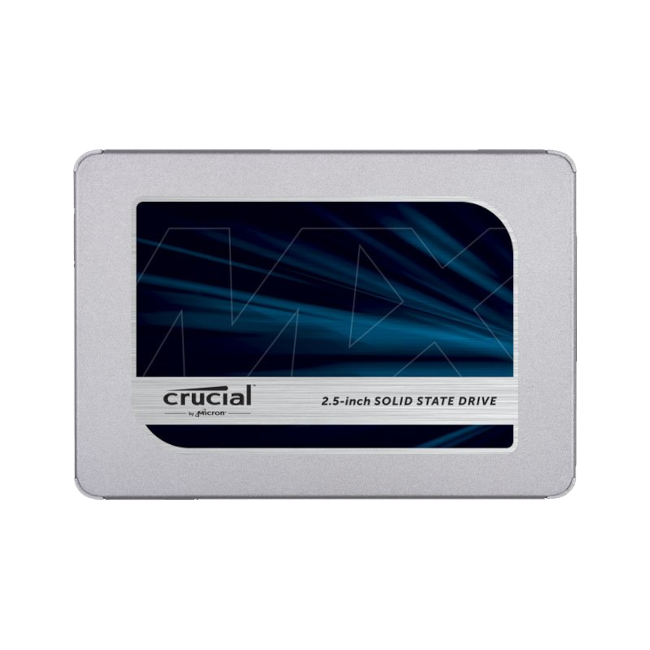
Crucial MX500 2.5" 250GB SATA 6Gb/s SSD
Overview
The Crucial MX500 250GB is an industry-benchmark 2.5-inch internal solid-state drive engineered to deliver sustained, dependable performance over the SATA 6Gb/s interface. Built within a durable 7mm brushed aluminum enclosure, the MX500 utilizes Micron's proven 3D TLC NAND technology paired with an active DRAM cache buffer and an advanced Silicon Motion controller. Designed as an effortless drop-in upgrade for aging mechanical hard drives or entry-level secondary storage, the MX500 balances cost efficiency, enterprise-grade data protection, and maximum bus saturation.
Architecture & Performance
Operating on the SATA III (6Gb/s) physical interface, the MX500 pushes the protocol to its architectural limits, delivering sequential read speeds up to 560 MB/s and sequential write speeds up to 510 MB/s. Random 4K operations reach up to 95,000 IOPS for reads and 90,000 IOPS for writes, drastically reducing system boot times, software load intervals, and file indexing delays compared to legacy rotational media. Underpinning the drive is Micron Dynamic Write Acceleration, which employs an adaptable single-level cell (SLC) cache pool to process burst write workloads with minimal latency. Data integrity is fortified at the silicon level by Redundant Array of Independent NAND (RAIN) architecture, Integrated Power Loss Immunity to prevent corruption during sudden power drops, and hardware-based AES 256-bit encryption compliant with TCG Opal 2.0 standards.
Key Technical Specifications
- Form Factor & Interface: 2.5-inch (7mm z-height) | SATA 6Gb/s (SATA III, backwards compatible with SATA II/I)
- Controller & NAND Flash: Silicon Motion SM2258 4-Channel Controller | Micron 3D TLC NAND
- Cache & Throughput: Dedicated onboard DRAM Cache | Sequential Read: 560 MB/s | Sequential Write: 510 MB/s
- Random 4K Performance: 4K Random Read: Up to 95,000 IOPS | 4K Random Write: Up to 90,000 IOPS
- Endurance & Reliability: 100 TBW (Terabytes Written) | 1.8 Million Hours MTTF | Integrated Power Loss Immunity
- Security & Features: Hardware-based AES 256-bit Encryption, TCG Opal 2.0, IEEE-1667, SMART & TRIM Support
Who It's Built For
The Crucial MX500 250GB is ideal for everyday power users, system builders, and IT administrators looking to revitalize older desktop and laptop systems burdened by sluggish mechanical hard drives. It serves as an ultra-reliable, dedicated boot drive for operating systems and core productivity suites, as well as dependable solid-state storage for light workstation tasks, point-of-sale systems, and home lab servers.
R 450.00
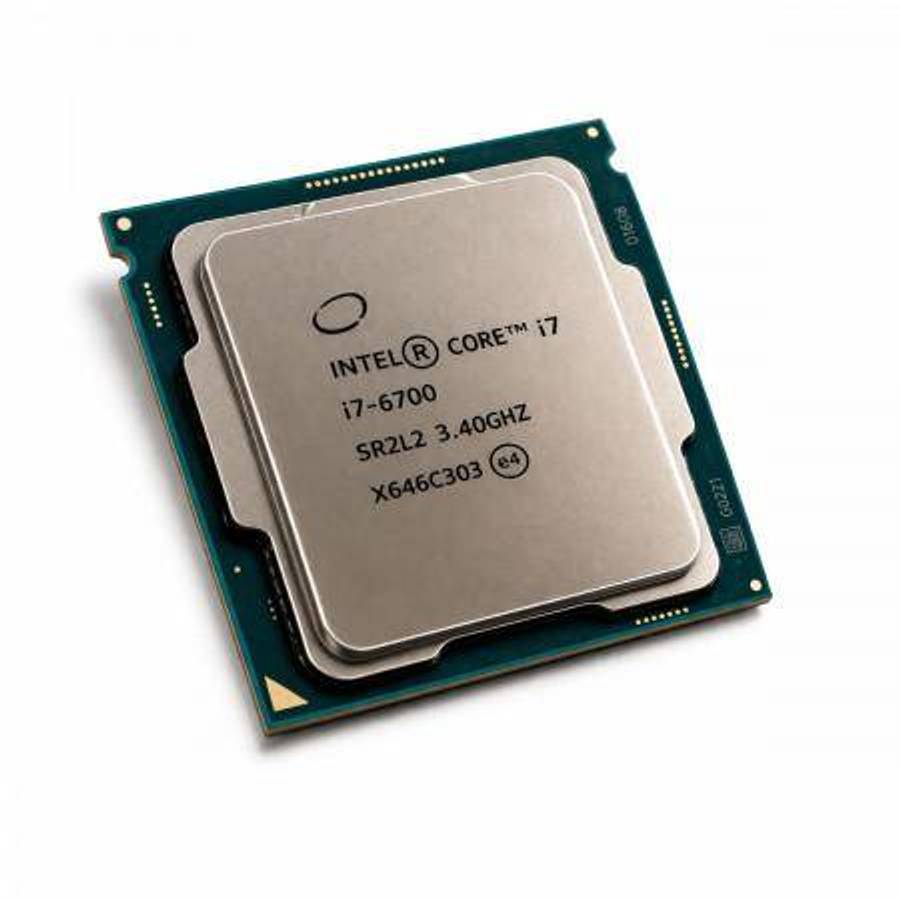
Intel Core i7-6700 | Quad-Core 3.40 GHz LGA1151 CPU
Overview
The Intel Core i7-6700 is a dependable 6th-Generation Skylake desktop processor designed to balance multi-threaded productivity with low power consumption. Built on Intel's 14nm lithography process, this quad-core processor delivers exceptional stability and sustained computational performance for home office setups, business workstations, and budget-friendly desktop builds on the LGA1151 platform.
Featuring Intel Hyper-Threading Technology and integrated graphics, the i7-6700 provides a complete CPU solution that eliminates the immediate requirement for a dedicated graphics card while offering plenty of headroom for future expansion.
Architecture & Performance
Powered by the Skylake microarchitecture, the Core i7-6700 features 4 physical cores and 8 computational threads running at a base clock speed of 3.40 GHz. Under demanding workloads, Intel Turbo Boost Technology 2.0 dynamically increases core frequency up to 4.00 GHz, providing rapid single-threaded response times and efficient multi-tasking across heavy application suites.
Equipped with 8MB of Intel Smart Cache and an integrated dual-channel memory controller supporting up to 64GB of DDR4-2133 or DDR3L-1600 RAM, the processor minimizes memory latency for smooth system responsiveness. Onboard Intel HD Graphics 530 drives high-resolution displays up to 4K @ 60Hz via DisplayPort, while 16 PCIe 3.0 lanes allow easy pairing with discrete GPUs for smooth 1080p entry-level gaming and hardware-accelerated video playback.
Key Technical Specifications
- Processor Architecture: 6th Gen Skylake (14nm Lithography), 4 Cores / 8 Threads
- Clock Speeds: 3.40 GHz Base Frequency, 4.00 GHz Max Turbo Frequency
- Cache & Memory Support: 8MB Intel Smart Cache; Dual-Channel DDR4-1866/2133 & DDR3L-1333/1600 (Max 64GB)
- Integrated Graphics: Intel HD Graphics 530 (350 MHz Base, 1.15 GHz Max Dynamic Frequency, 4K Support)
- Thermal & Power: 65W TDP (Thermal Design Power) for high energy efficiency and easy cooling requirement
- Socket & Expansion: LGA1151 Socket (Intel 100/200 Series Chipsets), 16 PCIe Gen 3.0 Lanes, DMI3 8 GT/s
Who It's Built For
The Intel Core i7-6700 is the ideal choice for business professionals, home office power users, and budget-conscious PC builders looking to assemble or refresh an LGA1151 workstation. It excels in general multitasking, document processing, media consumption, and light content creation, while providing a solid multi-threaded foundation when paired with a mid-range discrete graphics card.
R 900.00
Asus Prime B460M-A
Overview
The Asus Prime B460M-A is a precision-engineered solution built to deliver high performance, stability, and durability for demanding workloads.
Key Technical Specifications
- Built specifically: Built specifically for the Motherboard ecosystem
- Constructed using: Constructed using high-grade components for extended reliability and thermal stability
- Engineered to: Engineered to meet rigorous industry standards for performance and compatibility
- Seamless integration: Seamless integration with existing PC setups and desktop configurations
Practical Applications & Performance
Everyday computing, high-performance tasks, gaming setups, and professional workstations.
Who It's Built For
Ideal for enthusiasts, gamers, and computing professionals who demand uncompromising performance, rock-solid stability, and premium build quality.
R 1,000.00

ADATA Ultimate SU650 2.4" 240GB SATA 6Gb/s SSD
Overview
The ADATA Ultimate SU650 240GB 2.5-inch SATA 6Gb/s SSD is a high-efficiency solid-state drive engineered to deliver an immediate performance boost over legacy mechanical hard drives. Constructed with advanced 3D NAND Flash technology and a lightweight 7mm form factor, the SU650 combines higher storage density, enhanced structural durability, and superior power efficiency for seamless integration into modern desktop rigs and ultra-thin laptops.
Architecture & Performance
Leveraging the legacy-compatible SATA III (6Gb/s) interface, the SU650 features 3D NAND TLC architecture managed by a high-efficiency controller. By implementing an intelligent SLC Caching algorithm, the drive operates NAND memory in single-level cell mode to accelerate peak sequential read speeds up to 520 MB/s and sequential write speeds up to 450 MB/s. To ensure data integrity over extended usage, it incorporates advanced Low-Density Parity-Check (LDPC) Error Correcting Code (ECC) technology to detect and fix data errors, contributing to a Mean Time Between Failures (MTBF) rating of up to 2,000,000 hours.
Key Technical Specifications
- Form Factor & Capacity: 2.5-inch (7mm height) / 240GB
- Interface & Storage Type: SATA 6Gb/s (SATA III), 3D NAND Flash
- Sequential Performance: Up to 520 MB/s Read, Up to 450 MB/s Write
- Reliability & Error Correction: LDPC ECC Technology, 2,000,000 Hours MTBF
- Durability & Environmental: Shock Resistance 1500G/0.5ms, Operating Temp 0°C to 70°C
- Software Support: ADATA SSD Toolbox and Migration Utility
Who It's Built For
The ADATA Ultimate SU650 240GB SSD is the ideal upgrade solution for everyday PC users, budget-conscious system builders, and office IT departments looking to replace slow spinning hard drives. It delivers fast operating system boot times, snappy application responsiveness, and silent, power-efficient operation for home, school, and work PCs.
R 450.00
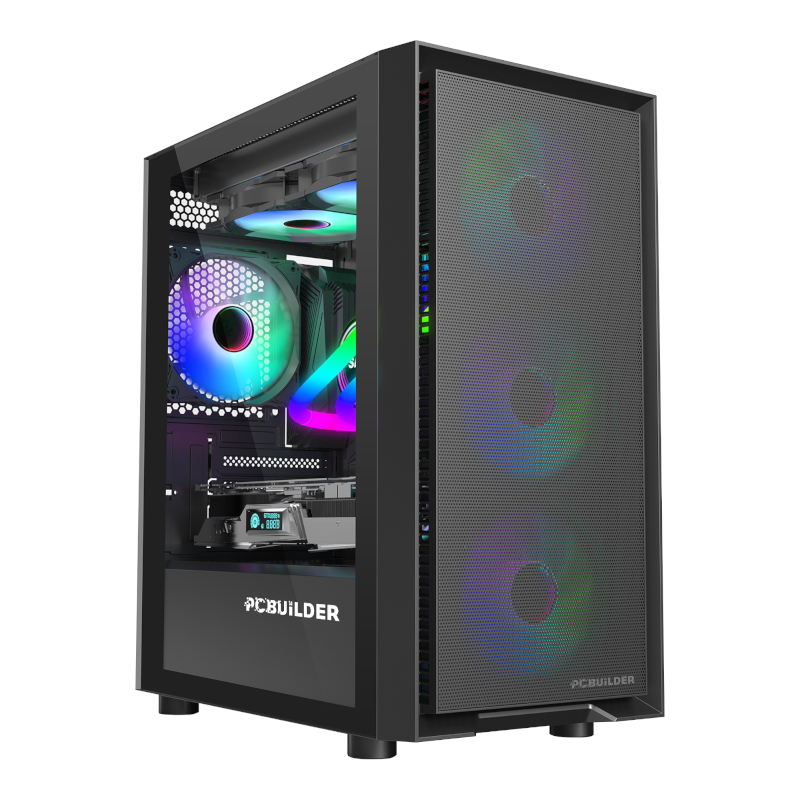
Pc Builder With 4 Fans
Overview
The PC Builder 4-Fan chassis is an airflow-optimized Mid-Tower enclosure engineered for DIY builders seeking exceptional out-of-the-box thermal dynamics. Constructed from high-tensile 0.7mm SPCC cold-rolled steel and paired with a 4.0mm edge-to-edge tempered glass side panel, this chassis blends rugged structural integrity with full hardware visibility. Its front fascia utilizes a micro-perforated steel mesh design to minimize intake resistance, ensuring sustained ambient air delivery to high-TDP modern architectures.
Architecture & Performance
Thermal management is governed by four pre-installed 120mm hydraulic bearing fans configured in an optimized positive-pressure layout: three front intake fans driving fresh air across the motherboard, VRMs, and graphics card, paired with a rear 120mm exhaust fan for immediate expulsion of thermal buildup. Internal clearances accommodate flagship graphics hardware up to 350mm in length—readily housing modern triple-fan NVIDIA GeForce RTX 40-series and AMD Radeon RX 7000-series graphics cards. For liquid cooling configurations, the chassis supports up to a 360mm radiator in the front intake position and a 240mm/280mm radiator on the top exhaust mount, alongside clearance for CPU air towers up to 165mm tall.
Key Technical Specifications
- Form Factor Support: ATX, Micro-ATX, Mini-ITX
- Cooling Configuration: 4x 120mm Pre-Installed ARGB Fans (3x Front Intake, 1x Rear Exhaust)
- Radiator Support: Front: 240mm / 280mm / 360mm; Top: 240mm / 280mm; Rear: 120mm
- Hardware Clearances: Maximum GPU Length: 350mm; Maximum CPU Cooler Height: 165mm; Maximum PSU Length: 180mm (ATX)
- Storage Architecture: 2x 3.5-inch HDD caddies, 2x 2.5-inch dedicated SSD trays
- Expansion: 7 standard PCIe expansion slots with reusable brackets
- Front I/O Interface: 1x USB 3.0 Type-A, 2x USB 2.0 Type-A, HD Audio (3.5mm Headphone & Mic jacks), Power, Reset/LED Control switch
- Dust Filtration: Top magnetic high-density mesh, bottom PSU intake slide-out dust filter
Who It's Built For
This chassis is precision-engineered for PC builders, hardware enthusiasts, and competitive gamers who demand direct, uncompromising component cooling straight out of the box. It provides the ideal thermal foundation for mid-to-high-tier gaming rigs and content-creation workstations powered by multi-core CPUs and modern, high-draw GPUs without requiring immediate aftermarket fan investments.
R 500.00

Xigmatek Ultra Aqua Air
Overview
The Xigmatek Ultra Aqua Air is a precision-engineered solution built to deliver high performance, stability, and durability for demanding workloads.
Key Technical Specifications
- Built specifically: Built specifically for the Chasis ecosystem
- Constructed using: Constructed using high-grade components for extended reliability and thermal stability
- Engineered to: Engineered to meet rigorous industry standards for performance and compatibility
- Seamless integration: Seamless integration with existing PC setups and desktop configurations
Practical Applications & Performance
Everyday computing, high-performance tasks, gaming setups, and professional workstations.
Who It's Built For
Ideal for enthusiasts, gamers, and computing professionals who demand uncompromising performance, rock-solid stability, and premium build quality.
R 1,600.00

AsusTufGaming A520M-plus wifi
Overview
The ASUS TUF Gaming A520M-Plus WiFi is engineered to deliver battle-tested durability and rock-solid stability for the AMD AM4 platform. Built with military-grade TUF components, an upgraded power solution, and comprehensive cooling options, this micro-ATX motherboard provides a dependable foundation for low-to-mid tier gaming builds and general productivity rigs. Its understated industrial aesthetic is complemented by subtle Aura Sync RGB lighting headers for clean system customization.
Featuring the AMD A520 chipset, this board focuses on essential performance without unnecessary complexity. Designed around a high-density PCB, reinforced SafeSlot Core+ PCIe structure, and ESD Guards to prevent damage from electrostatic discharge, the TUF Gaming A520M-Plus WiFi ensures continuous long-term operational integrity under sustained hardware workloads.
Architecture & Performance
Built for the AMD AM4 socket, the board fully supports AMD Ryzen 3000, 4000 G-Series, and 5000 Series desktop processors based on the Zen 2 and Zen 3 architectures. Memory subsystem topology features four dual-channel DDR4 DIMM slots supporting up to 128GB with overclocked frequencies reaching up to 4866MHz (OC).
Storage throughput is driven by an onboard NVMe M.2 slot operating over PCIe 3.0 x4, yielding theoretical maximum bandwidth up to 32Gbps for rapid boot times and quick application loading. Graphics expansion is handled via a dedicated PCIe 3.0 x16 slot. For built-in graphics capabilities on compatible Ryzen APUs, the rear I/O delivers multi-display functionality across HDMI 2.1, DisplayPort 1.2, and D-Sub outputs, making it highly versatile for 1080p esports gaming or multi-monitor workstation setups.
Key Technical Specifications
- Processor & Socket: AMD Socket AM4 for Ryzen 5000 / 4000 G-Series / 3000 Series Desktop Processors; AMD A520 Chipset
- Memory Support: 4 x DIMM, Max. 128GB DDR4 (Up to 4866MHz OC), Dual-Channel Architecture, ECC/Non-ECC Un-buffered Memory
- Storage Interfaces: 1 x M.2 Socket (Key M, Type 2242/2260/2280 PCIe 3.0 x4 & SATA modes), 4 x SATA 6Gb/s ports with RAID 0/1/10 support
- Power & Thermal Design: Digi+ VRM with military-grade TUF Chokes & Capacitors; dedicated VRM heat sink; Fan Xpert 2+ thermal management controls
- Wireless & Networking: Integrated Wi-Fi 5 (802.11 a/b/g/n/ac 2.4/5GHz), Bluetooth 5.0, Realtek 1Gb Ethernet with TUF LANGuard protection
- Expansion & Rear I/O: 1 x PCIe 3.0 x16, 2 x PCIe 3.0 x1, 4 x USB 3.2 Gen 1 Type-A, 2 x USB 2.0, DisplayPort 1.2, HDMI 2.1, D-Sub, 3 x Audio Jacks
Who It's Built For
The ASUS TUF Gaming A520M-Plus WiFi is ideal for budget-conscious PC builders, esports gamers targeting 1080p performance, and home office power users who require integrated Wi-Fi 5 out of the box. It offers exceptional reliability for users installing Ryzen 5000 series CPUs without paying a premium for chipset features they do not need.
R 1,200.00

Gamdias CHIONE E4-360 (am5 brackets)
Overview
The Gamdias CHIONE E4-360 (am5 brackets) is a precision-engineered solution built to deliver high performance, stability, and durability for demanding workloads.
Key Technical Specifications
- Built specifically: Built specifically for the COOLER'S ecosystem
- Constructed using: Constructed using high-grade components for extended reliability and thermal stability
- Engineered to: Engineered to meet rigorous industry standards for performance and compatibility
- Seamless integration: Seamless integration with existing PC setups and desktop configurations
Practical Applications & Performance
Everyday computing, high-performance tasks, gaming setups, and professional workstations.
Who It's Built For
Ideal for enthusiasts, gamers, and computing professionals who demand uncompromising performance, rock-solid stability, and premium build quality.
R 1,000.00

Msi ventus 2x Rtx 3070
Overview
The Msi ventus 2x Rtx 3070 is a precision-engineered solution built to deliver high performance, stability, and durability for demanding workloads.
Key Technical Specifications
- Built specifically: Built specifically for the Graphics Card's ecosystem
- Constructed using: Constructed using high-grade components for extended reliability and thermal stability
- Engineered to: Engineered to meet rigorous industry standards for performance and compatibility
- Seamless integration: Seamless integration with existing PC setups and desktop configurations
Practical Applications & Performance
Everyday computing, high-performance tasks, gaming setups, and professional workstations.
Who It's Built For
Ideal for enthusiasts, gamers, and computing professionals who demand uncompromising performance, rock-solid stability, and premium build quality.
R 5,500.00

Kingston FURY Beast RGB EXPO black 32GB 6000MT/s DDR5 CL32 DIMM Desktop Gaming Memory Kit of 2
Overview
Built for peak stability and low latency, this high-performance DDR5 memory module ensures fast data transfer rates between your CPU and system memory.
Key Technical Specifications
- 32GB total: 32GB total capacity engineered for modern multitasking
- DDR5 technology: DDR5 technology operating at 6000MHz
- Precision aluminum: Precision aluminum heat spreader for efficient heat dissipation
- Intel XMP: Intel XMP and AMD EXPO profile support for one-click overclocking
Practical Applications & Performance
Smooth high-framerate gaming, seamless browser tab switching, video rendering, and heavy multitasking.
Who It's Built For
Ideal for PC builders looking to upgrade memory bandwidth and system responsiveness. who demand uncompromising performance, rock-solid stability, and premium build quality.
R 8,500.00

Patriot Viper Steel RGB DDR4 3600 MHZ Kit-2x8 GB
Overview
Built for peak stability and low latency, this high-performance DDR4 memory module ensures fast data transfer rates between your CPU and system memory.
Key Technical Specifications
- 8GB total: 8GB total capacity engineered for modern multitasking
- DDR4 technology: DDR4 technology operating at 3600MHz
- Precision aluminum: Precision aluminum heat spreader for efficient heat dissipation
- Intel XMP: Intel XMP and AMD EXPO profile support for one-click overclocking
Practical Applications & Performance
Smooth high-framerate gaming, seamless browser tab switching, video rendering, and heavy multitasking.
Who It's Built For
Ideal for PC builders looking to upgrade memory bandwidth and system responsiveness. who demand uncompromising performance, rock-solid stability, and premium build quality.
R 2,500.00

Crcial E100 Pcle Gen 4 1T NVME
Overview
Engineered for instantaneous boot times and lightning-fast game loading, this M.2 NVMe SSD unlocks blazing fast read and write transfer rates.
Key Technical Specifications
- 1TB storage: 1TB storage capacity in a compact M.2 2280 form factor
- PCIe 4.0: PCIe 4.0 NVMe interface delivering high sequential read/write speeds
- Advanced controller: Advanced controller and 3D NAND flash architecture for sustained durability
- Superior thermal: Superior thermal management ensuring consistent performance under prolonged load
Practical Applications & Performance
Fast OS boot times, rapid game level load times, and instantaneous transfer of massive 4K video files.
Who It's Built For
Ideal for gamers, creators, and professionals needing reliable high-speed solid-state storage. who demand uncompromising performance, rock-solid stability, and premium build quality.
R 1,800.00

ASUS Dual Series RTX3050 Graphics Card OC Edition 6GB
Overview
The ASUS GeForce RTX 3050 O6G delivers efficient 1080p gaming performance in a highly versatile, compact package. Built upon NVIDIA's Ampere architecture, this factory-overclocked graphics card brings hardware-accelerated Ray Tracing and AI-driven graphics to budget-conscious builds. Designed with power efficiency at its core, the card operates at a ultra-low 75W TDP, requiring no external PCIe power connectors and drawing all its energy directly from the motherboard slot.
Architecture & Performance
Driven by the GA107 graphics processor, the RTX 3050 6GB features 2304 CUDA cores, 72 Tensor Cores, and 18 2nd-Gen Ray Tracing Cores. Engine clock speeds reach up to 1537 MHz in OC Mode. Accompanied by 6GB of GDDR6 VRAM across a 96-bit memory bus running at 14 Gbps (168 GB/s bandwidth), it provides solid high-definition performance. With full support for NVIDIA DLSS, gamers can boost frame rates in demanding titles, making 1080p gaming smooth and enjoyable while ensuring low latency with NVIDIA Reflex in competitive esports games like CS2, Valorant, and Apex Legends.
Key Technical Specifications
- NVIDIA Ampere GPU: 2304 CUDA Cores | 8nm Process
- Clock Speeds: OC Mode: 1537 MHz Boost | Default Mode: 1507 MHz Boost
- Memory Configuration: 6GB GDDR6 | 96-bit Bus | 14 Gbps Speed | 168 GB/s Bandwidth
- Power & Efficiency: 75W TDP | Bus-Powered (No 6-pin/8-pin PCIe power cable required) | Recommended PSU: 300W
- Interface: PCI Express 4.0 x8
- Display Connectivity: 1x Native DisplayPort 1.4a, 1x Native HDMI 2.1, 1x DVI-D
- Software & API Support: DirectX 12 Ultimate, OpenGL 4.6, HDCP 2.3, ASUS GPU Tweak III
Who It's Built For
The ASUS GeForce RTX 3050 6GB OC is the ultimate solution for budget gamers, home office upgrades, and compact PC builds. It is ideal for users upgrading office desktop PCs or pre-built systems with low-wattage power supplies that lack extra PCIe power cables, offering an effortless plug-and-play upgrade for 1080p gaming and multimedia streaming.
R 3,500.00
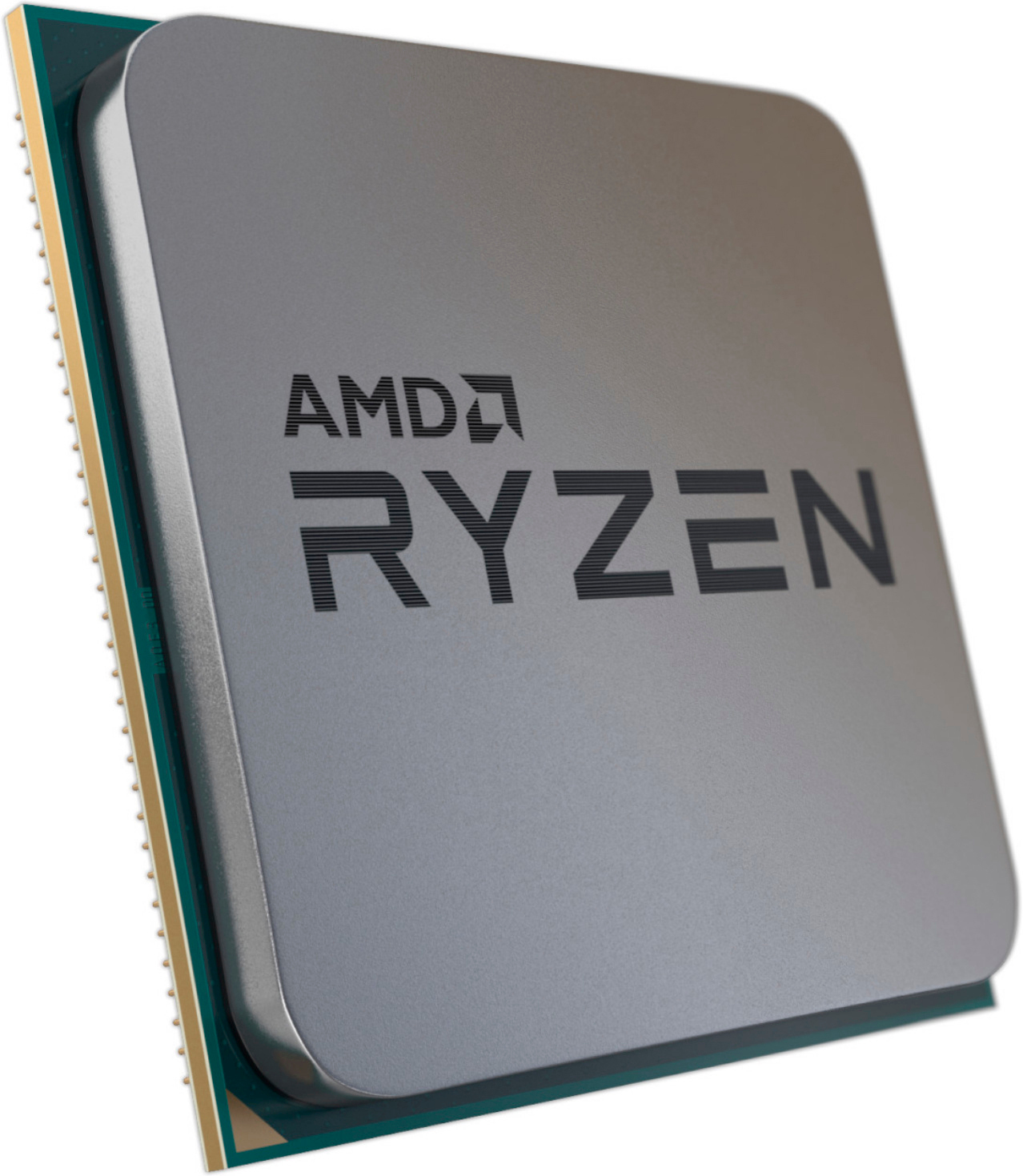
AMD Ryzen 5 5600XT 6-Core Processor
Overview
The AMD Ryzen 5 5600XT delivers elevated clock speeds and optimized power efficiency for the mature, accessible AM4 platform. Built on TSMC's refined 7nm FinFET manufacturing process, this 6-core, 12-thread desktop processor leverages high single-core IPC (Instructions Per Cycle) performance to deliver high responsiveness across modern gaming titles and multi-threaded desktop applications.
Architecture & Performance
Driven by AMD's 'Vermeer' Zen 3 core architecture, the Ryzen 5 5600XT utilizes a unified 8-core Complex (CCX) design, granting all six active cores direct, seamless access to the 32MB of L3 cache. This drastically reduces inter-core communication latency and cache retrieval delays, resulting in smoother frame delivery and higher 1% low framerates in latency-sensitive competitive games. Featuring a base clock speed of 3.8 GHz with boost clocks reaching up to 4.7 GHz, this processor reliably drives high-refresh 1080p esports environments and solid 1440p AAA gaming workloads when paired with modern PCIe Gen 4 graphics cards.
Key Technical Specifications
- Processor Details: 6 Cores, 12 Threads, Zen 3 Microarchitecture, TSMC 7nm FinFET, Socket AM4
- Clock Speeds & Cache: 3.8 GHz Base Clock, up to 4.7 GHz Max Boost Clock, 32MB L3 Cache, 3MB L2 Cache (35MB Total Cache)
- Memory & Expansion: Dual-Channel DDR4 memory support (up to DDR4-3200 native, higher via XMP/DOCP), 24 total PCIe 4.0 lanes
- Thermal & Power Efficiency: 65W Default TDP, unlocked for precision overclocking, includes thermal-efficient AMD Wraith Stealth cooler
Who It's Built For
The AMD Ryzen 5 5600XT is an ideal drop-in upgrade for existing AM4 motherboard users looking to maximize gaming performance without upgrading to DDR5 RAM or AM5 motherboards. It is tailored for competitive 1080p esports players, 1440p budget-conscious gamers, and general power users who demand reliable multi-tasking and strong single-thread efficiency at 65W power consumption.
R 2,300.00

i7 13700F
Overview
The Intel Core i7-13700F is a high-performance desktop processor engineered on Intel's refined Raptor Lake architecture (Intel 7 process). Designed to drop into the versatile LGA1700 socket, this 16-core CPU delivers enterprise-grade performance while operating at a balanced 65W base power rating. As an 'F' SKU, it skips integrated silicon graphics to prioritize pure compute density, demanding a discrete GPU to unlock its full potential.
Architecture & Performance
Built upon Intel's hybrid architecture, the i7-13700F deploys 8 high-clocked Raptor Cove Performance-cores (P-cores) and 8 high-density Gracemont Efficient-cores (E-cores), combining for a massive 24 threads managed directly by Intel Thread Director. With Turbo Boost Max Technology 3.0 delivering clock speeds up to 5.2 GHz, single-threaded throughput is primed for ultra-high-refresh-rate gaming across 1080p esports and unconstrained 1440p/4K AAA gameplay when paired with modern high-end GPUs. Concurrently, the 24 threads deliver immense multi-core throughput, drastically cutting render times in heavy Cinebench runs, 4K video transcoding in Adobe Premiere Pro, and complex code compilation.
Key Technical Specifications
- Core & Thread Configuration: 16 Cores (8 P-Cores, 8 E-Cores), 24 Threads
- Clock Frequencies: 2.10 GHz P-core Base / 5.20 GHz Max Turbo Boost Max 3.0 (4.10 GHz E-core Max Turbo)
- Cache Hierarchy: 30MB Intel Smart Cache (L3) + 24MB L2 Cache (54MB Total Cache)
- Memory Support: Dual-channel DDR5-5600 MT/s and DDR4-3200 MT/s (Up to 192GB maximum capacity)
- PCIe Connectivity: Up to 20 CPU PCIe Lanes (16x PCIe 5.0 lanes + 4x PCIe 4.0 lanes)
- Power & Thermals: 65W Processor Base Power (PBP), 219W Maximum Turbo Power (MTP)
- Socket Compatibility: LGA1700 (Compatible with Intel 600-series and 700-series chipsets)
- Integrated Graphics: None (Dedicated graphics card required)
Who It's Built For
The Intel Core i7-13700F is built for high-end gamers, live-streamers, and creative professionals who demand near-flagship compute performance without the extreme heat, power draw, or cost overhead associated with manual overclocking. It is an ideal anchor for premium gaming rigs and workstation setups pairing high-tier discrete GPUs with ultra-fast DDR5 memory.
R 4,200.00
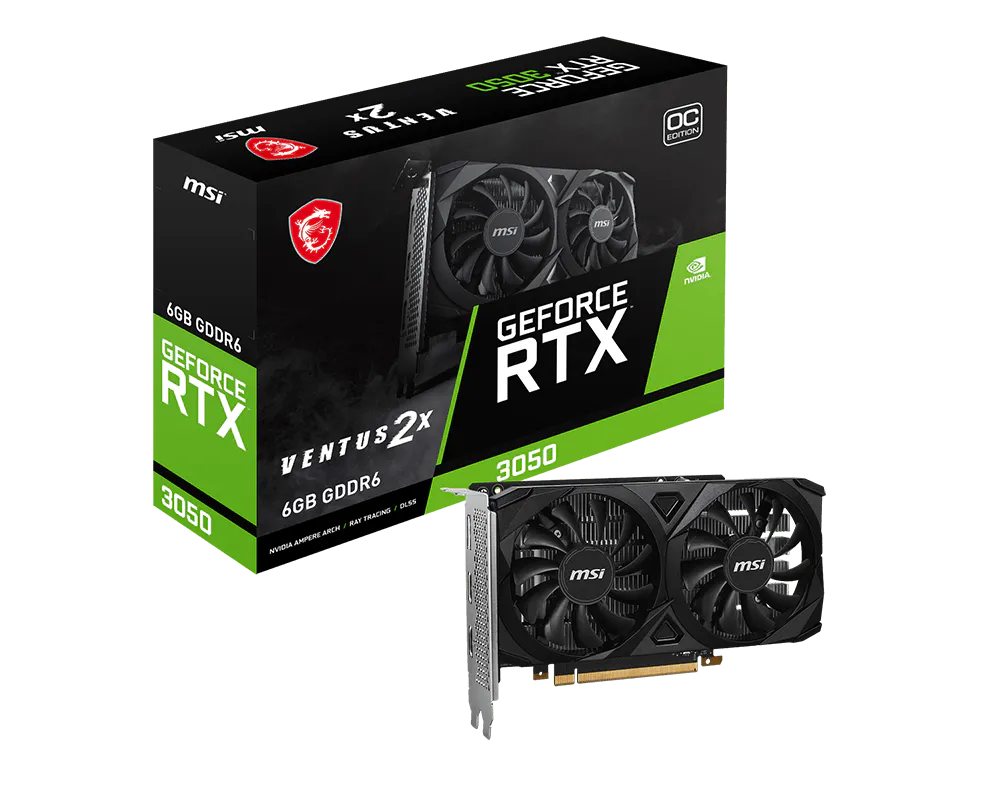
GeForce RTX 3050 VENTUS x2 6G OC
R 3,500.00
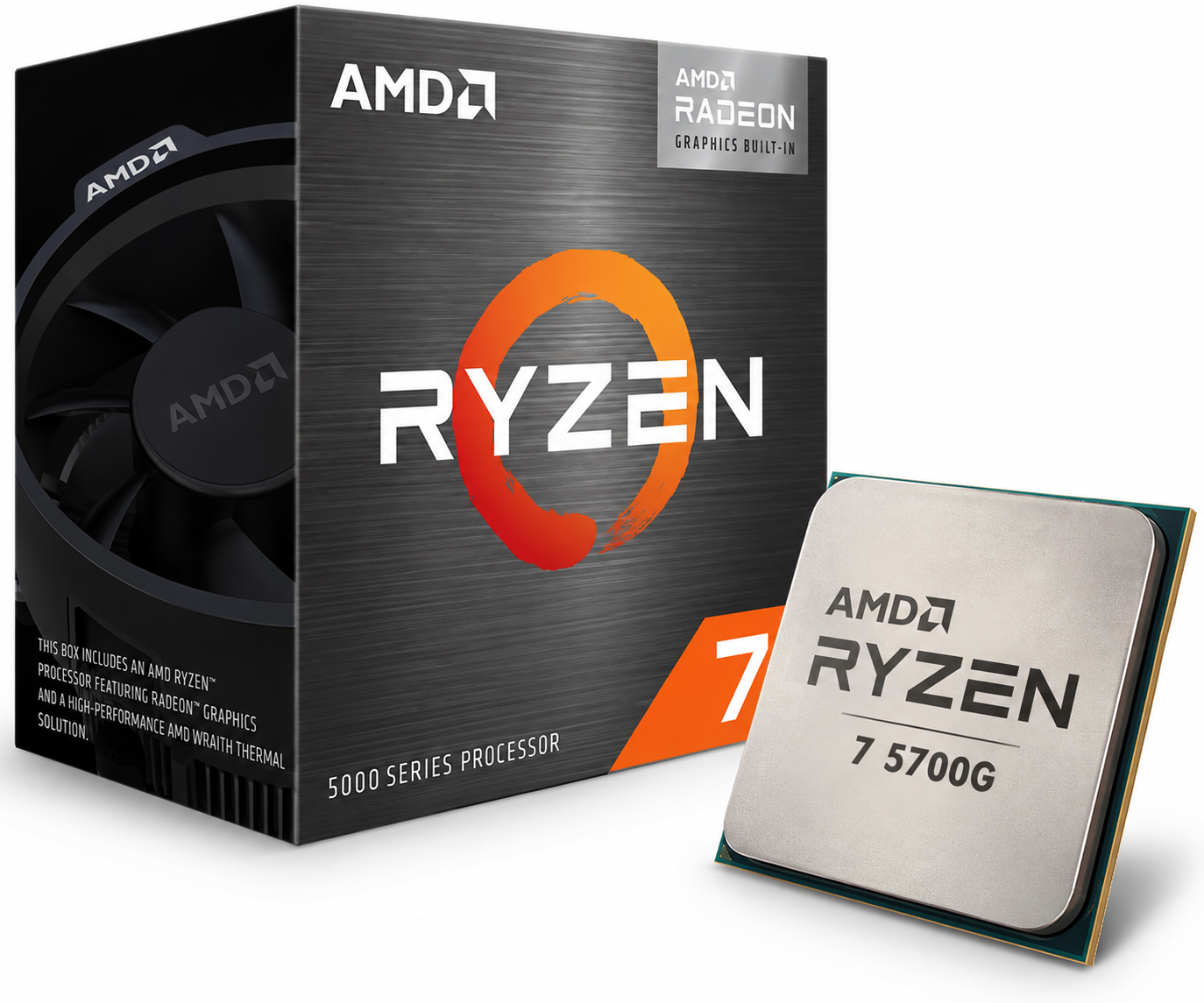
Ryzen 7 5700G
Overview
The Ryzen 7 5700G is a precision-engineered solution built to deliver high performance, stability, and durability for demanding workloads.
Key Technical Specifications
- Built specifically: Built specifically for the Processor ecosystem
- Constructed using: Constructed using high-grade components for extended reliability and thermal stability
- Engineered to: Engineered to meet rigorous industry standards for performance and compatibility
- Seamless integration: Seamless integration with existing PC setups and desktop configurations
Practical Applications & Performance
Everyday computing, high-performance tasks, gaming setups, and professional workstations.
Who It's Built For
Ideal for enthusiasts, gamers, and computing professionals who demand uncompromising performance, rock-solid stability, and premium build quality.
R 3,000.00
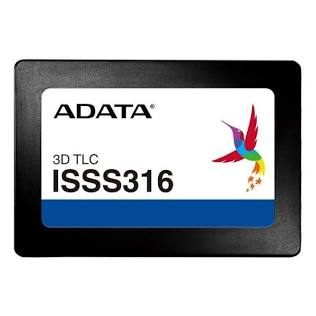
ADATA 2.5 SATA 6GB\s SSD ISSS316
R 450.00


PATRIOT BURST ELITE 2.5 SSD 6GB/sSATA 3 240 GB
R 450.00

HELIOS M1 850B
R 800.00

2.5'SATA6GB/s SSD SU650 240 GB
R 450.00

Western Digital Red 3TB NAS Hard Drive (WD30EFRX)
Overview
The Western Digital Red 3TB (WD30EFRX) is purpose-engineered from the ground up for connected home, SOHO, and small business network attached storage (NAS) environments operating up to 8 bays. Built utilizing proven Conventional Magnetic Recording (CMR) technology, the drive fundamentally avoids the RAID rebuild penalties and write-cliff slowdowns associated with SMR alternatives, ensuring deterministic and dependable performance across continuous 24/7 multi-user write cycles.
At the heart of the drive is Western Digital's exclusive NASware 3.0 advanced firmware technology. NASware 3.0 fine-tunes drive parameters to match NAS system workloads, addressing compatibility, integration, upgradeability, reliability, and total cost of ownership that standard desktop hard drives are not designed to handle.
Architecture & Performance
Operating on the SATA 6 Gb/s interface, the WD30EFRX features a 5,400 RPM class spindle speed paired with a 64MB multi-segmented DRAM cache buffer. This balance of rotational velocity and data caching delivers sustained internal data transfer rates of up to 147 MB/s, while maintaining exceptionally low thermal output and acoustic profiles.
To combat RAID degradation, NASware 3.0 integrates intelligent Time-Limited Error Recovery (TLER), preventing the drive from being prematurely dropped from a storage array during extended bad-sector recovery cycles. Additionally, the drive incorporates 3D Active Balance Plus—an advanced dual-plane balance control technology that drastically reduces rotational vibration and chassis resonance in dense multi-drive enclosures. Rated for a 1,000,000-hour Mean Time Between Failures (MTBF) and an annual workload rating of up to 180 TB/year, the WD30EFRX provides enterprise-grade reliability in an energy-efficient consumer NAS form factor.
Key Technical Specifications
- Form Factor & Capacity: 3.5-inch, 3TB Raw Storage Capacity
- Recording Architecture: CMR (Conventional Magnetic Recording)
- Interface & Transfer Speed: SATA III 6 Gb/s, up to 147 MB/s sustained internal data rate
- Spindle Speed & Cache: 5,400 RPM class rotational speed, 64MB high-speed DDR cache
- Firmware & Array Features: NASware 3.0 with Time-Limited Error Recovery (TLER) & 3D Active Balance Plus
- Reliability & Workload Rating: 1,000,000 Hours MTBF, 180 TB/year Workload Rate (WRL), non-recoverable read errors < 1 in 10^14
- Power Efficiency: 4.1W (Read/Write), 2.7W (Idle), 0.4W (Standby/Sleep)
- Acoustics: 23 dBA (Idle), 24 dBA (Seek Average)
- Enclosure Support: Engineered for 1-bay to 8-bay NAS towers and rackmount arrays
Who It's Built For
The WD Red 3TB WD30EFRX is designed specifically for homelab builders, IT administrators, content creators, and small businesses deploying 1-to-8 bay NAS appliances (such as Synology, QNAP, or Asustor) or DIY TrueNAS and Unraid storage servers. It is the premier choice for users demanding continuous 24/7 data integrity for Plex media streaming, centralized multi-client PC backups, and redundant RAID 1, RAID 5, or RAID 10 environments.
R 550.00

GeForce GTX 1080 Ti GAMING X 11G
Overview
The GeForce GTX 1080 Ti GAMING X 11G is a precision-engineered solution built to deliver high performance, stability, and durability for demanding workloads.
Key Technical Specifications
- Built specifically: Built specifically for the Graphics Card's ecosystem
- Constructed using: Constructed using high-grade components for extended reliability and thermal stability
- Engineered to: Engineered to meet rigorous industry standards for performance and compatibility
- Seamless integration: Seamless integration with existing PC setups and desktop configurations
Practical Applications & Performance
Everyday computing, high-performance tasks, gaming setups, and professional workstations.
Who It's Built For
Ideal for enthusiasts, gamers, and computing professionals who demand uncompromising performance, rock-solid stability, and premium build quality.
R 3,500.00

Kingston HyperX Fury 120GB SATA 2.5-inch SSD
Overview
Engineered for instantaneous boot times and lightning-fast game loading, this M.2 NVMe SSD unlocks blazing fast read and write transfer rates.
Key Technical Specifications
- 120GB storage: 120GB storage capacity in a compact M.2 2280 form factor
- PCIe 3.0: PCIe 3.0 NVMe interface delivering high sequential read/write speeds
- Advanced controller: Advanced controller and 3D NAND flash architecture for sustained durability
- Superior thermal: Superior thermal management ensuring consistent performance under prolonged load
Practical Applications & Performance
Fast OS boot times, rapid game level load times, and instantaneous transfer of massive 4K video files.
Who It's Built For
Ideal for gamers, creators, and professionals needing reliable high-speed solid-state storage. who demand uncompromising performance, rock-solid stability, and premium build quality.
R 350.00

Samsung V-NAND SSD 860 EVO SATA M.2 250GB
Overview
The Samsung V-NAND SSD 860 EVO M.2 250GB delivers uncompromising solid-state reliability engineered into a space-saving M.2 2280 form factor. Utilizing Samsung's advanced 64-layer 3D V-NAND technology paired with the refined Samsung MJX controller, this drive brings top-tier SATA performance without the clutter of traditional 2.5-inch drive bays and SATA data/power cabling. Designed for seamless system integration, it optimizes thermal dissipation and power efficiency directly from the motherboard slot.
Architecture & Performance
Built on the saturated SATA III 6Gb/s interface, the 860 EVO operates at the absolute ceiling of the bus standard. Driven by the Samsung MJX controller and backed by 512MB of dedicated low-power LPDDR4 DRAM, the drive executes multi-threaded host communications effortlessly. Samsung's Intelligent TurboWrite technology utilizes an elastic SLC buffer to accelerate workloads, pushing sequential read speeds up to 550 MB/s and sequential write speeds up to 520 MB/s. For everyday responsiveness and multi-tasking under OS environments, it achieves random 4K read and write speeds of up to 97,000 IOPS and 88,000 IOPS respectively.
Key Technical Specifications
- Storage Controller & NAND: Samsung MJX Controller; Samsung 64-Layer 3-bit MLC (TLC) V-NAND
- Cache & Transfer Rates: 512MB Low Power DDR4 (LPDDR4); Sequential Read up to 550 MB/s; Sequential Write up to 520 MB/s
- Random IOPS: Up to 97,000 IOPS Read / 88,000 IOPS Write (4KB, QD32)
- Endurance & Power: 150 TBW (Terabytes Written); 1.5 Million Hours MTBF; Device Sleep (DevSleep) support at ~2mW
- Form Factor & Interface: M.2 2280 (SATA 6 Gb/s, compatible with B & M key M.2 SATA slots)
- Encryption: AES 256-bit Hardware-based Encryption (Class 0), TCG/Opal v2.0, IEEE1667
Who It's Built For
The Samsung 860 EVO M.2 250GB is purpose-built for users looking to maximize legacy or ultra-thin hardware configurations. It is the premier choice for ultrabook upgrades, Small Form Factor (SFF) desktop builds, HTPCs, and compact workstations that feature SATA-enabled M.2 slots and demand a rock-solid, cable-free operating system drive with industry-leading endurance.
R 450.00
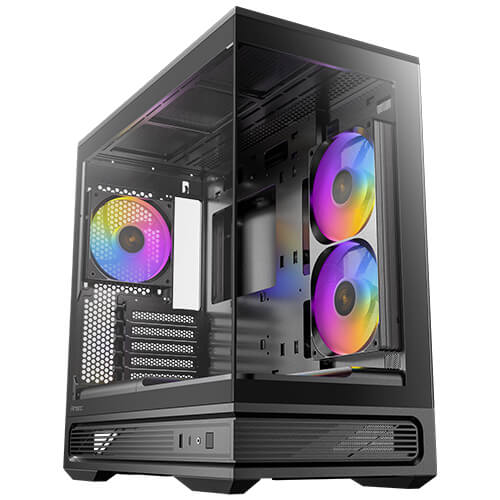
Antec C2M ARGB
Overview
The Antec C2M ARGB is a precision-engineered solution built to deliver high performance, stability, and durability for demanding workloads.
Key Technical Specifications
- Built specifically: Built specifically for the Chasis ecosystem
- Constructed using: Constructed using high-grade components for extended reliability and thermal stability
- Engineered to: Engineered to meet rigorous industry standards for performance and compatibility
- Seamless integration: Seamless integration with existing PC setups and desktop configurations
Practical Applications & Performance
Everyday computing, high-performance tasks, gaming setups, and professional workstations.
Who It's Built For
Ideal for enthusiasts, gamers, and computing professionals who demand uncompromising performance, rock-solid stability, and premium build quality.
R 1,000.00

PremiumSUN C918BS Gaming Case with 4 ARGB LED Fans
Overview
The PremiumSUN C918BS Gaming Case with 4 ARGB LED Fans is a precision-engineered solution built to deliver high performance, stability, and durability for demanding workloads.
Key Technical Specifications
- Built specifically: Built specifically for the Chasis ecosystem
- Constructed using: Constructed using high-grade components for extended reliability and thermal stability
- Engineered to: Engineered to meet rigorous industry standards for performance and compatibility
- Seamless integration: Seamless integration with existing PC setups and desktop configurations
Practical Applications & Performance
Everyday computing, high-performance tasks, gaming setups, and professional workstations.
Who It's Built For
Ideal for enthusiasts, gamers, and computing professionals who demand uncompromising performance, rock-solid stability, and premium build quality.
R 950.00
Micron 8GB DDR4
Overview
Built for peak stability and low latency, this high-performance DDR4 memory module ensures fast data transfer rates between your CPU and system memory.
Key Technical Specifications
- 8GB total: 8GB total capacity engineered for modern multitasking
- DDR4 technology: DDR4 technology operating at 3200MHz
- Precision aluminum: Precision aluminum heat spreader for efficient heat dissipation
- Intel XMP: Intel XMP and AMD EXPO profile support for one-click overclocking
Practical Applications & Performance
Smooth high-framerate gaming, seamless browser tab switching, video rendering, and heavy multitasking.
Who It's Built For
Ideal for PC builders looking to upgrade memory bandwidth and system responsiveness. who demand uncompromising performance, rock-solid stability, and premium build quality.
R 500.00
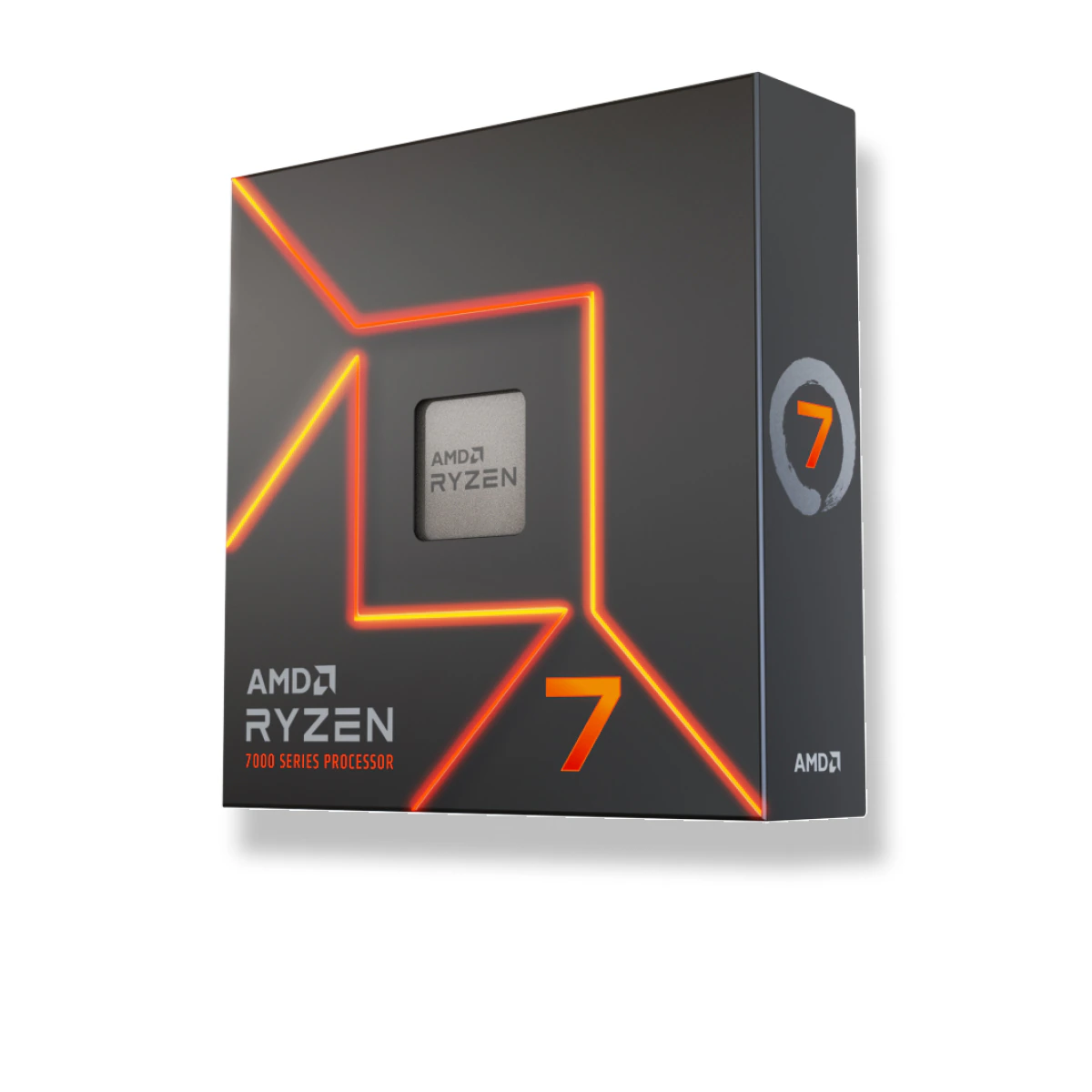
Ryzen 7 7700x
Overview
The Ryzen 7 7700x is a precision-engineered solution built to deliver high performance, stability, and durability for demanding workloads.
Key Technical Specifications
- Built specifically: Built specifically for the Processor ecosystem
- Constructed using: Constructed using high-grade components for extended reliability and thermal stability
- Engineered to: Engineered to meet rigorous industry standards for performance and compatibility
- Seamless integration: Seamless integration with existing PC setups and desktop configurations
Practical Applications & Performance
Everyday computing, high-performance tasks, gaming setups, and professional workstations.
Who It's Built For
Ideal for enthusiasts, gamers, and computing professionals who demand uncompromising performance, rock-solid stability, and premium build quality.
R 4,800.00
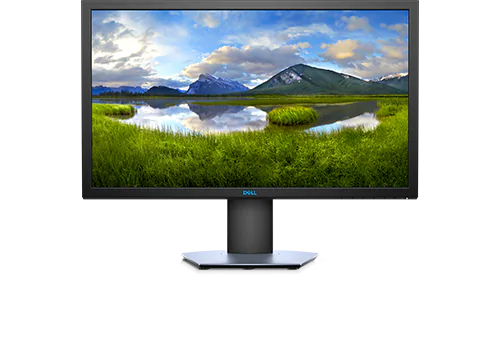
Dell S2419HGF 24-Inch FHD (1920x1080) 144Hz 1ms Gaming Monitor
Overview
Designed to give competitive gamers and visual artists an elite viewing experience, this display pairs a fluid 144Hz refresh rate with vivid color accuracy.
Key Technical Specifications
- Full HD: Full HD (1920 x 1080) display resolution delivering crisp visual fidelity
- Ultra-smooth 144Hz: Ultra-smooth 144Hz refresh rate for competitive motion clarity
- VA panel: VA panel technology with wide viewing angles and vivid color reproduction
- Adaptive-Sync technology: Adaptive-Sync technology (AMD FreeSync / NVIDIA G-SYNC compatible) preventing screen tearing
- Low input: Low input lag and rapid response time for instantaneous reflex response
Practical Applications & Performance
High-FPS competitive esports, cinematic gaming, and professional color-accurate content creation.
Who It's Built For
Ideal for gamers and creative professionals looking for pristine visual clarity and fluid motion. who demand uncompromising performance, rock-solid stability, and premium build quality.
R 1,600.00

Mushkin 1TB M.2 NVMe PCle Gen4 x4 SSD (Model: MKNSSDV71TB-D8)
Overview
The Mushkin Vortex-LX 1TB M.2 NVMe PCIe Gen4 x4 SSD (Model: MKNSSDV71TB-D8) is an ultra-responsive solid-state solution engineered to maximize bandwidth on modern desktop, laptop, and console platforms. Built to the standard M.2 2280 single-sided form factor, this drive leverages high-density 3D TLC NAND paired with an advanced Gen4 controller architecture to eliminate data bottlenecks and unlock seamless transfer rates across data-intensive consumer workloads.
Architecture & Performance
Driven by the high-efficiency InnoGrit IG5220 12nm controller compliant with the NVMe 1.4 specification, the MKNSSDV71TB-D8 utilizes Host Memory Buffer (HMB) technology alongside advanced SLC caching algorithms to deliver high-tier DRAMless throughput. Communicating over four native PCI Express 4.0 lanes, the drive reaches sustained sequential read speeds of up to 5,000 MB/s and sequential write speeds of up to 4,500 MB/s. With random 4K read and write ratings exceeding up to 700,000 IOPS, it drastically reduces game loading screens, boosts DirectStorage execution in next-gen titles, and ensures near-instantaneous boot times and asset-scrubbing responsiveness in high-bitrate video editing timelines.
Key Technical Specifications
- Form Factor & Interface: M.2 2280, PCIe Gen4 x4, NVMe 1.4
- Controller & Flash: InnoGrit IG5220 Controller, High-Density 3D TLC NAND
- Sequential Throughput: Up to 5,000 MB/s (Read) | Up to 4,500 MB/s (Write)
- Random I/O Performance: Up to 700,000 IOPS (4K Read) | Up to 700,000 IOPS (4K Write)
- Endurance & Reliability: 600 TBW (Terabytes Written), 1.5 Million Hours MTBF, Advanced LDPC ECC
- Power & Thermals: Active APST/ASPM power management, integrated dynamic thermal throttling protection, Host Memory Buffer (HMB) support
Who It's Built For
The Mushkin Vortex-LX 1TB is engineered for mainstream gamers demanding fast DirectStorage load times, system builders seeking rapid boot and application performance on AMD AM5 and Intel LGA 1700 motherboards, and creative professionals requiring dependable, high-bandwidth scratch disks for photo editing and 4K video rendering.
R 1,700.00
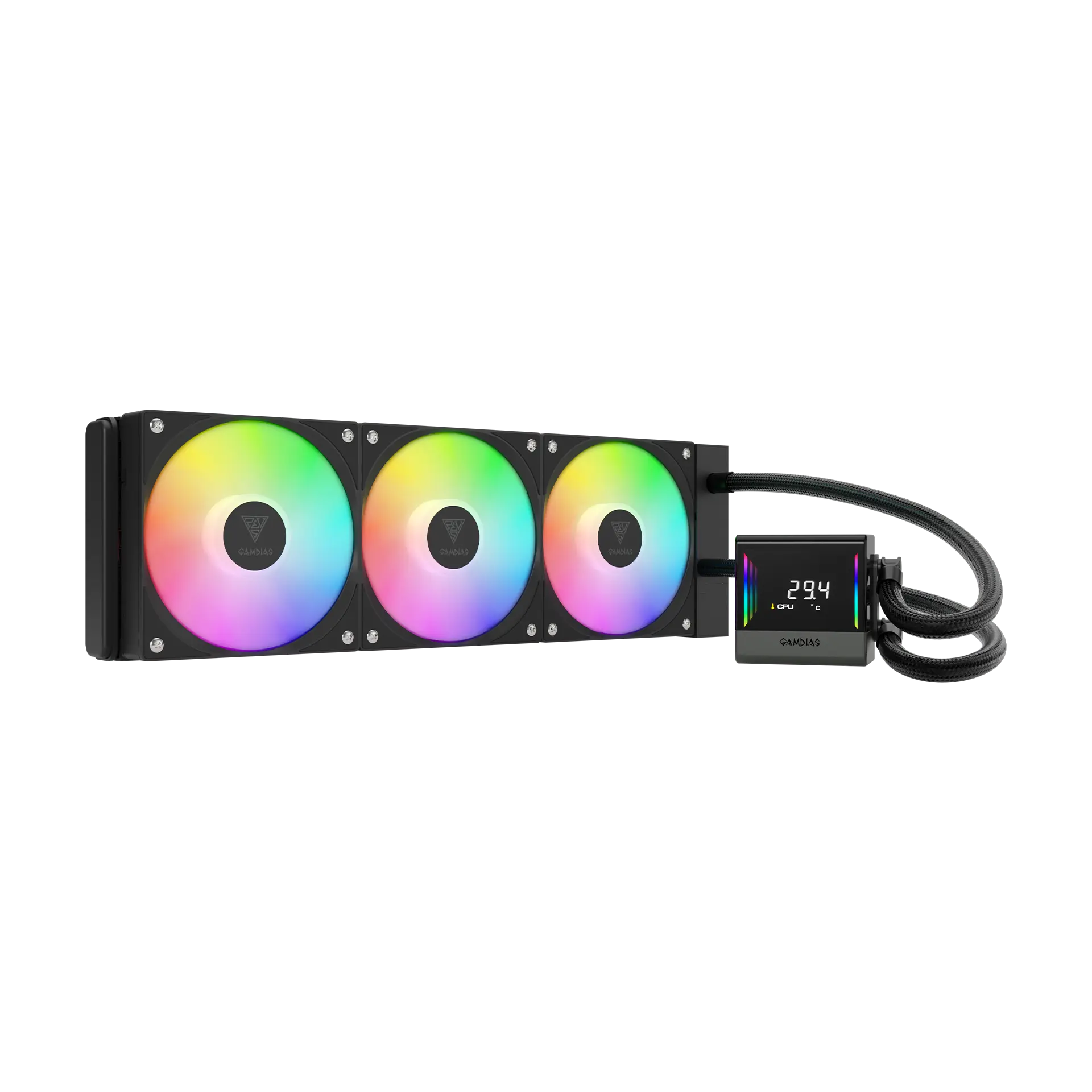
Gamdias CHIONE E4-360 (LGA1851 brackets only)
Overview
The Gamdias CHIONE E4-360 is a high-performance 360mm All-in-One (AIO) liquid CPU cooler engineered to deliver maximum thermal dissipation for high-draw desktop processors. Built with a high-density aluminum radiator and a precision-engineered micro-channel copper cold plate, the CHIONE E4-360 rapidly transfers thermal energy away from the processor die. This specific variant comes equipped with dedicated mounting hardware tailored specifically for the Intel LGA1851 socket ecosystem.
Featuring integrated Addressable RGB (ARGB) lighting across its three high-static pressure fans and pump head, this cooler combines low thermal resistance with vibrant aesthetic customization, ensuring stable operating temperatures in modern high-performance desktop rigs.
Architecture & Performance
Designed to handle high thermal loads reaching up to 280W TDP, the CHIONE E4-360 utilizes a 394mm aluminum heat-exchanging radiator paired with three 120mm PWM hydraulic bearing fans. Operating dynamically between 800 to 1800 RPM, these fans generate up to 69 CFM of airflow with optimized static pressure to efficiently force air through dense radiator fins. The integrated pump features a long-life motor and micro-skived copper channels that maximize liquid contact area, preventing thermal throttling during sustained multi-threaded rendering, heavy video compilation, and demanding 4K gaming loads on Intel Core Ultra (Arrow Lake) processors.
Key Technical Specifications
- Radiator & Material: 360mm High-Density Aluminum Radiator (394 x 119 x 27 mm)
- CPU Cold Plate: Micro-channel pure copper baseplate for maximum thermal absorption
- Fans & Airflow: 3x 120mm PWM ARGB Fans (800–1800 RPM ±10%, Hydraulic Bearings)
- Thermal Capacity: Rated for up to 280W TDP cooling performance
- Socket Compatibility: Intel LGA1851 exclusively (Dedicated mounting bracket included)
- Tubing & Lighting: Anti-evaporation sleeved Teflon tubing; standard 5V 3-Pin ARGB motherboard sync
Who It's Built For
The Gamdias CHIONE E4-360 is built for PC enthusiasts, gamers, and workstation professionals adopting the Intel LGA1851 platform (Intel Core Ultra series) who demand rock-solid thermal headroom, low noise profiles, and efficient cooling during intensive 3D rendering, video editing, and high-FPS gaming.
R 1,000.00
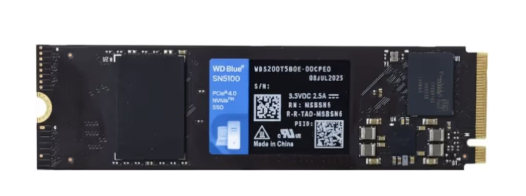
WD Blue SN 5100 NVMe Solid State Drive
Overview
Engineered for instantaneous boot times and lightning-fast game loading, this M.2 NVMe SSD unlocks blazing fast read and write transfer rates.
Key Technical Specifications
- 1TB storage: 1TB storage capacity in a compact M.2 2280 form factor
- PCIe 3.0: PCIe 3.0 NVMe interface delivering high sequential read/write speeds
- Advanced controller: Advanced controller and 3D NAND flash architecture for sustained durability
- Superior thermal: Superior thermal management ensuring consistent performance under prolonged load
Practical Applications & Performance
Fast OS boot times, rapid game level load times, and instantaneous transfer of massive 4K video files.
Who It's Built For
Ideal for gamers, creators, and professionals needing reliable high-speed solid-state storage. who demand uncompromising performance, rock-solid stability, and premium build quality.
R 950.00
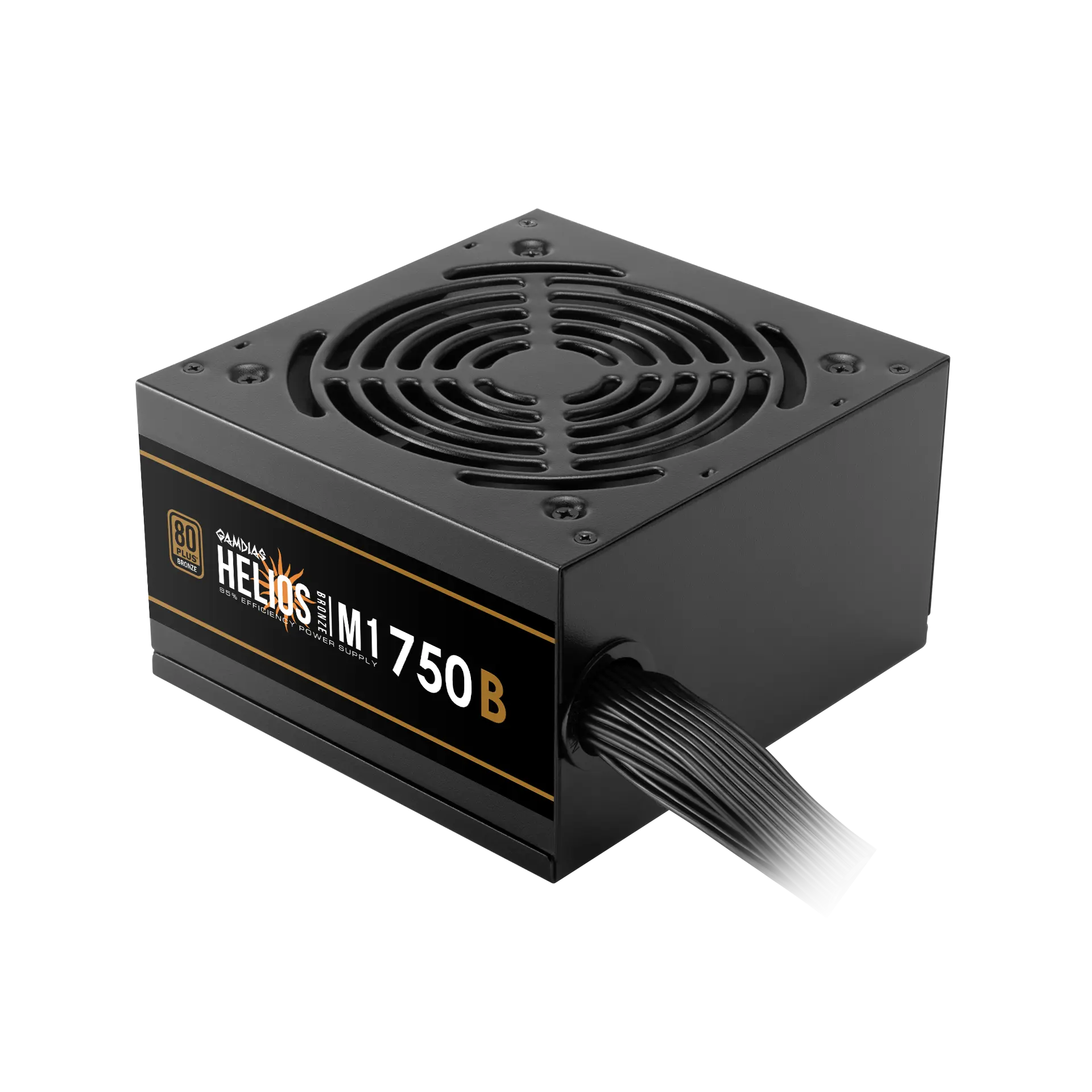
HELIOS M1-750B
Overview
The HELIOS M1-750B is a precision-engineered solution built to deliver high performance, stability, and durability for demanding workloads.
Key Technical Specifications
- Built specifically: Built specifically for the Power Supplies ecosystem
- Constructed using: Constructed using high-grade components for extended reliability and thermal stability
- Engineered to: Engineered to meet rigorous industry standards for performance and compatibility
- Seamless integration: Seamless integration with existing PC setups and desktop configurations
Practical Applications & Performance
Everyday computing, high-performance tasks, gaming setups, and professional workstations.
Who It's Built For
Ideal for enthusiasts, gamers, and computing professionals who demand uncompromising performance, rock-solid stability, and premium build quality.
R 800.00
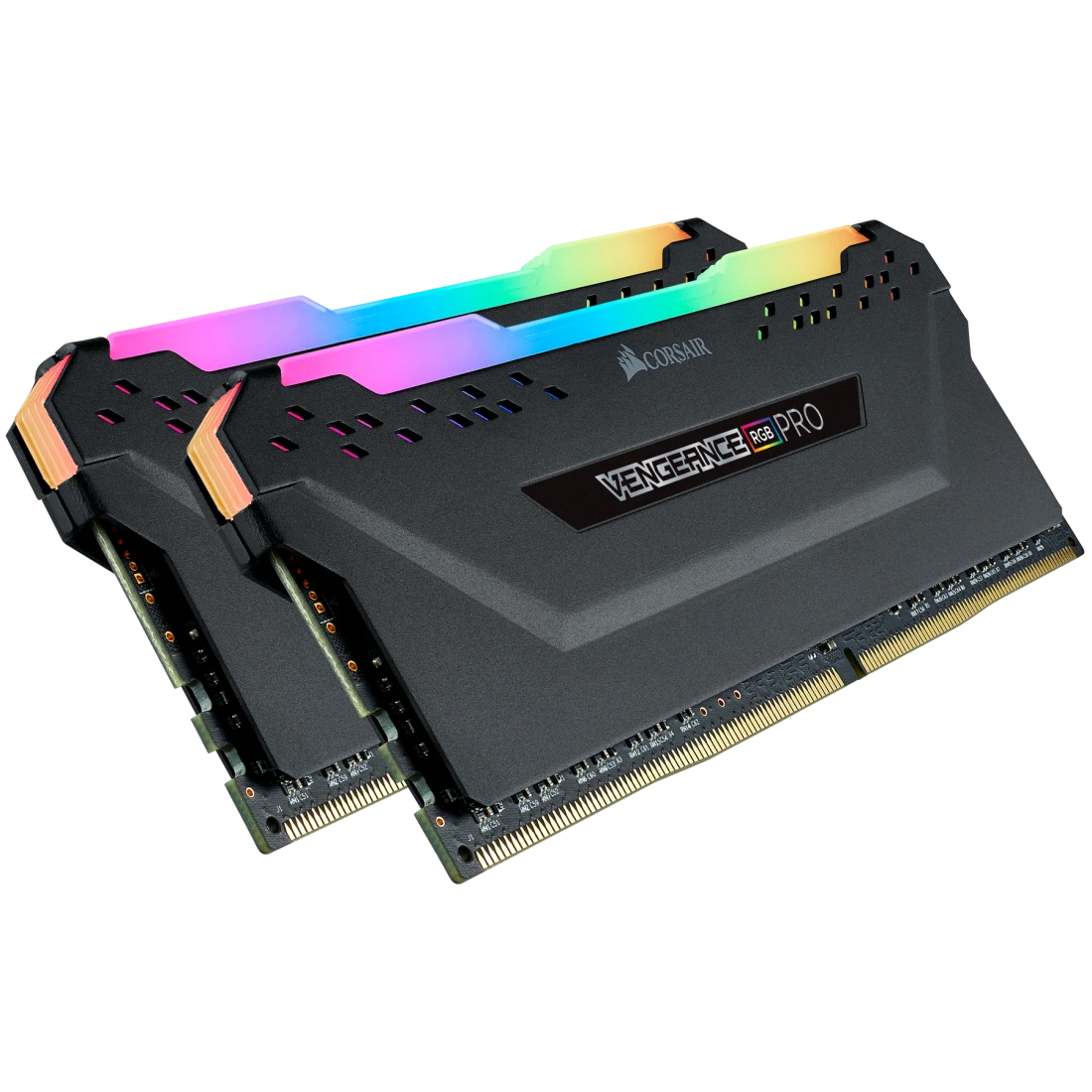
CORSAIR Vengeance RGB PRO 32GB (2 x 16GB) DDR4 DRAM 3200MHz C16 Memory Kit
R 4,000.00
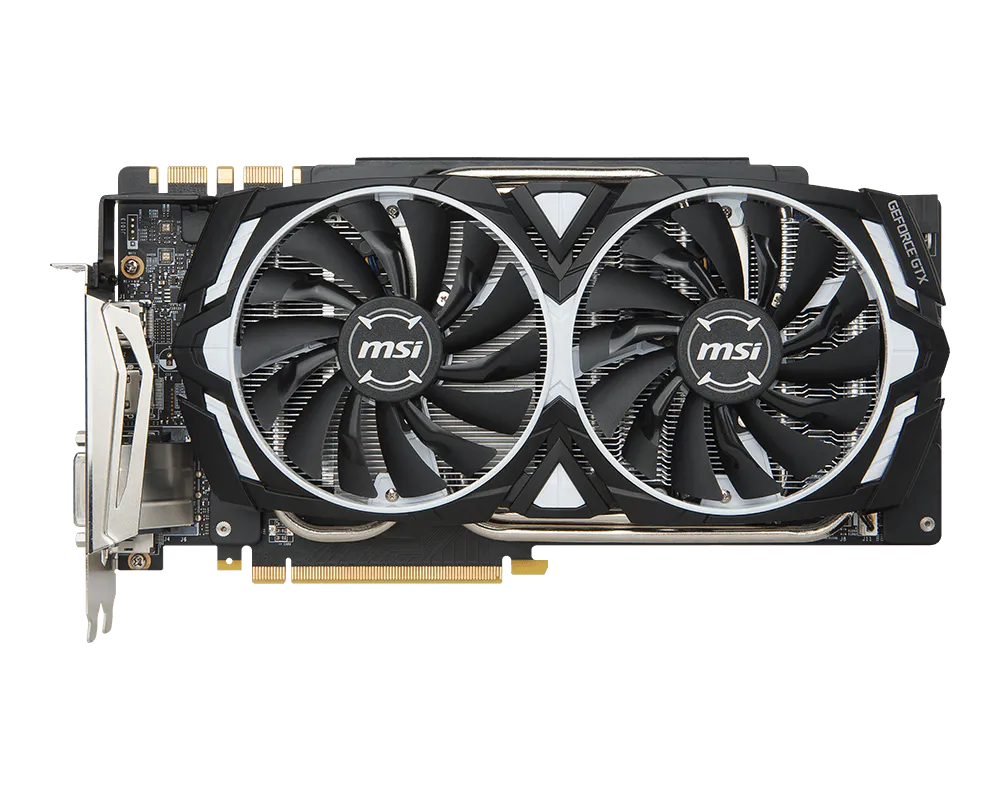
Msi Armor Gtx 1080 ti 11gb
Overview
The MSI GeForce GTX 1080 Ti Armor 11G is built on NVIDIA's legendary Pascal architecture, representing a high-water mark for raw rasterization performance. Sporting a sleek black-and-white armor-inspired shroud, this graphics card is engineered for gamers and creators who demand massive frame buffer capacity and high-throughput processing. The Armor series utilizes a premium custom PCB, reinforced with high-grade Military Class 4 components—including Hi-c CAPs, Solid CAPs, and Super Ferrite Chokes—to ensure exceptional power delivery, stability, and longevity under sustained heavy workloads.
Architecture & Performance
Powered by the GP102 silicon, the GTX 1080 Ti Armor boasts an incredible 3,584 CUDA cores operating at a boost clock of up to 1645 MHz. Paired with 11GB of ultra-fast GDDR5X memory running across a wide 352-bit bus, it pumps out a massive 484 GB/s of memory bandwidth. This hardware configuration bypasses modern VRAM bottlenecks, making it highly capable of driving modern AAA titles at 1440p Ultra settings and delivering competitive 144+ FPS in esports titles. Its raw compute power also excels in legacy rendering tasks, compute-heavy workloads, and high-resolution texture processing.
Key Technical Specifications
- GPU Architecture: NVIDIA Pascal GP102 with 3,584 CUDA Cores; Base Clock: 1531 MHz / Boost Clock: 1645 MHz.
- Memory Subsystem: 11GB GDDR5X VRAM, 352-bit Memory Bus, 11016 MHz effective memory clock, 484 GB/s bandwidth.
- Thermal & Power: MSI Armor 2X thermal design with patented TORX Fans, Zero Frozr technology (semi-passive cooling), 250W TDP via 2x 8-pin PCIe power connectors.
- Connectivity & Display: PCIe 3.0 x16 interface; 2x DisplayPort 1.4, 2x HDMI 2.0b, and 1x Dual-Link DVI-D; Max resolution support up to 7680x4320 @ 60Hz.
Who It's Built For
The MSI GTX 1080 Ti Armor 11G is built for budget-conscious PC enthusiasts, competitive 1080p/1440p esports gamers, and entry-level 3D animators who require a massive 11GB frame buffer without the premium price tag of current-gen architectures. It remains a legendary workhorse for legacy rendering pipelines, GPU-accelerated computing, and high-fidelity rasterized gaming.
R 3,500.00
Apacer 128GB SSD
Overview
Engineered for instantaneous boot times and lightning-fast game loading, this M.2 NVMe SSD unlocks blazing fast read and write transfer rates.
Key Technical Specifications
- 128GB storage: 128GB storage capacity in a compact M.2 2280 form factor
- PCIe 3.0: PCIe 3.0 NVMe interface delivering high sequential read/write speeds
- Advanced controller: Advanced controller and 3D NAND flash architecture for sustained durability
- Superior thermal: Superior thermal management ensuring consistent performance under prolonged load
Practical Applications & Performance
Fast OS boot times, rapid game level load times, and instantaneous transfer of massive 4K video files.
Who It's Built For
Ideal for gamers, creators, and professionals needing reliable high-speed solid-state storage. who demand uncompromising performance, rock-solid stability, and premium build quality.
R 300.00
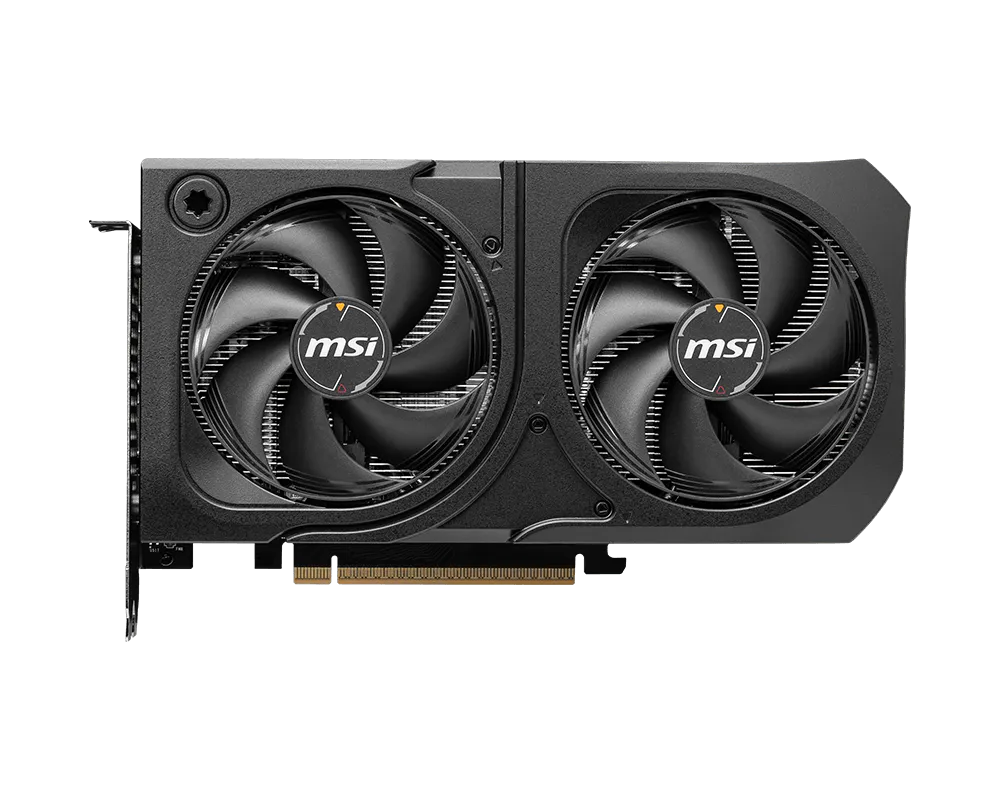
MSI GeForce RTX™ 5060 Ti 16G SHADOW 2X OC PLUS
Overview
The RTX 5060 Ti Shadow 16GB leverages NVIDIA's cutting-edge Blackwell architecture to redefine mainstream-tier graphics performance. Built with a sleek, stealth-inspired matte black shroud and a structurally reinforced aluminum backplate, the Shadow edition prioritizes silent efficiency, sustained clock stability, and understated aesthetics. Engineered for longevity and modern memory-heavy gaming, it integrates an expansive 16GB high-speed memory buffer to eliminate modern VRAM bottlenecks in demanding titles and compute tasks.
Architecture & Performance
Under the hood, the RTX 5060 Ti Shadow is driven by the Blackwell GB206 die, featuring 4,608 CUDA Cores, 5th-Generation Tensor Cores, and 4th-Generation Ray Tracing Cores. Operating at an aggressive base clock of 2,220 MHz with dynamic boost capabilities exceeding 2,650 MHz, this GPU delivers formidable compute density. The subsystem is anchored by 16GB of ultra-fast GDDR7 memory clocked at 28 Gbps over a 128-bit interface, yielding 448 GB/s of raw memory bandwidth, heavily augmented by an expanded 32MB L2 cache.
Designed primarily to dominate high-refresh 1440p gaming at Ultra presets, the RTX 5060 Ti Shadow fully leverages DLSS Frame Generation and advanced neural rendering to maintain fluid framerates in heavy path-traced environments like Cyberpunk 2077 and Alan Wake 2. Content creators benefit from updated dual 8th-Gen NVENC engines featuring full AV1 hardware encoding, delivering seamless 4K editing and streaming performance.
Key Technical Specifications
- GPU Architecture: NVIDIA Blackwell (GB206 silicon, 4,608 CUDA Cores)
- Clock Speeds: 2,220 MHz Base Clock / 2,655 MHz Boost Clock
- VRAM & Memory Subsystem: 16GB GDDR7, 128-bit memory bus, 28 Gbps, 448 GB/s bandwidth
- Ray Tracing & AI Acceleration: 36 4th-Gen RT Cores, 144 5th-Gen Tensor Cores
- Thermal Design & Power: 175W TGP, dual-fan Shadow axial cooler with 4x 6mm nickel-plated copper heatpipes, zero-RPM idle mode
- Bus Interface & Display Outputs: PCIe 5.0 x16 (x8 electrical), 3x DisplayPort 2.1b (UHBR13.5), 1x HDMI 2.1a
Who It's Built For
The RTX 5060 Ti Shadow 16GB is the definitive graphics solution for enthusiast gamers targeting high-refresh 1440p gaming without sacrificing texture resolution or ray-tracing features. Its 16GB VRAM frame buffer also makes it an essential tool for video editors working with dense 4K timelines, 3D artists needing adequate geometry caching, and developers running local LLMs and AI generation models requiring large memory footprints at an accessible power profile.
R 12,500.00
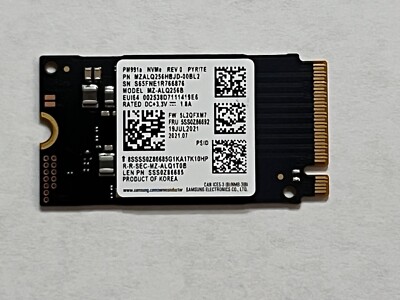
Samsung PM991a 256GB NVMe M.2 SSD (Short Form Factor)
R 450.00
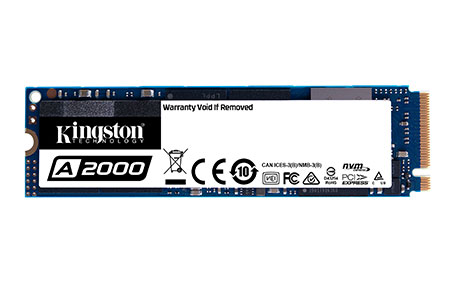
Kingston A2000 256GB NVMe PCIe SSD
R 450.00

KLEVV CRAS C720 M.2 256GB SSD
R 450.00
Antec AX61 Elite Mid Tower
Overview
The Antec AX61 Elite is a high-airflow, performance-oriented ATX mid-tower chassis engineered to deliver exceptional thermal management and modern aesthetics. Constructed from high-density SPCC steel and ABS plastic, it features a striking geometric mesh front panel designed to maximize cold air intake. A tool-free 4mm tempered glass side panel showcases your internal components and custom lighting profiles with crystal-clear visibility.
Architecture & Performance
Designed with thermal dynamics in mind, the AX61 Elite features a dual-chamber layout that isolates the power supply unit to minimize heat transfer to the core components. The chassis comes pre-equipped with four 120mm ARGB fans (three intake in the front, one exhaust in the rear), establishing an efficient front-to-back positive pressure airflow path. For advanced cooling configurations, the front panel supports up to a 360mm liquid cooling radiator, while the interior accommodates CPU air coolers up to 160mm in height and high-end graphics cards up to 320mm in length, making it fully compatible with modern triple-fan GPUs.
Key Technical Specifications
- Motherboard Support: ATX, Micro-ATX, Mini-ITX
- Material: SPCC Steel, ABS Plastic, 4mm Tempered Glass
- Drive Bays: 2 x 3.5" / 2.5" Convertible, 2 x 2.5" Dedicated SSD mounts
- Expansion Slots: 7 Standard PCI Express slots
- Pre-Installed Cooling: 3 x 120mm ARGB fans (Front), 1 x 120mm ARGB fan (Rear)
- Radiator Compatibility: Front: 120mm / 240mm / 360mm; Rear: 120mm
- Max Clearance: GPU Length: 320mm; CPU Cooler Height: 160mm; PSU Length: 165mm (with HDD tray) / 345mm (without HDD tray)
- Front I/O Ports: 1 x USB 3.0, 2 x USB 2.0, Mic/Audio HD jacks, Power, LED Control Button
Who It's Built For
The Antec AX61 Elite is built for budget-conscious gamers, system builders, and hardware enthusiasts who demand high-airflow performance, integrated addressable RGB lighting, and clean cable management without paying a premium. It is ideal for mid-to-high-tier gaming rigs and workstation builds utilizing multi-fan GPUs and AIO liquid coolers.
R 600.00
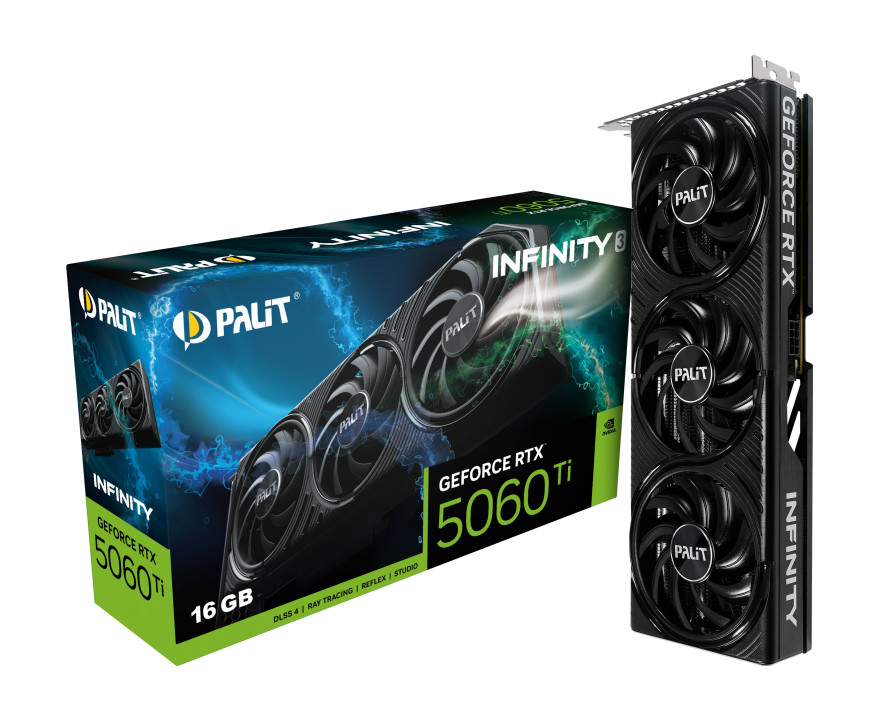
RTX 5060 TI INFINITY 3 16GB GDDR7 128bit 3-DP HDMI
Overview
The RTX 5060 TI INFINITY 3 16GB GDDR7 128bit 3-DP HDMI is a precision-engineered solution built to deliver high performance, stability, and durability for demanding workloads.
Key Technical Specifications
- Built specifically: Built specifically for the Graphics Card's ecosystem
- Constructed using: Constructed using high-grade components for extended reliability and thermal stability
- Engineered to: Engineered to meet rigorous industry standards for performance and compatibility
- Seamless integration: Seamless integration with existing PC setups and desktop configurations
Practical Applications & Performance
Everyday computing, high-performance tasks, gaming setups, and professional workstations.
Who It's Built For
Ideal for enthusiasts, gamers, and computing professionals who demand uncompromising performance, rock-solid stability, and premium build quality.
R 12,500.00
VJC-STAR 27-inch Curved Gaming Monitor (YC270A) is a 27-inch Full HD
Overview
Designed to give competitive gamers and visual artists an elite viewing experience, this display pairs a fluid 165Hz refresh rate with vivid color accuracy.
Key Technical Specifications
- Full HD: Full HD (1920 x 1080) display resolution delivering crisp visual fidelity
- Ultra-smooth 165Hz: Ultra-smooth 165Hz refresh rate for competitive motion clarity
- VA panel: VA panel technology with wide viewing angles and vivid color reproduction
- Adaptive-Sync technology: Adaptive-Sync technology (AMD FreeSync / NVIDIA G-SYNC compatible) preventing screen tearing
- Low input: Low input lag and rapid response time for instantaneous reflex response
Practical Applications & Performance
High-FPS competitive esports, cinematic gaming, and professional color-accurate content creation.
Who It's Built For
Ideal for gamers and creative professionals looking for pristine visual clarity and fluid motion. who demand uncompromising performance, rock-solid stability, and premium build quality.
R 2,300.00
Samsung 200GB SSD
Overview
Engineered for instantaneous boot times and lightning-fast game loading, this M.2 NVMe SSD unlocks blazing fast read and write transfer rates.
Key Technical Specifications
- 200GB storage: 200GB storage capacity in a compact M.2 2280 form factor
- PCIe 3.0: PCIe 3.0 NVMe interface delivering high sequential read/write speeds
- Advanced controller: Advanced controller and 3D NAND flash architecture for sustained durability
- Superior thermal: Superior thermal management ensuring consistent performance under prolonged load
Practical Applications & Performance
Fast OS boot times, rapid game level load times, and instantaneous transfer of massive 4K video files.
Who It's Built For
Ideal for gamers, creators, and professionals needing reliable high-speed solid-state storage. who demand uncompromising performance, rock-solid stability, and premium build quality.
R 400.00
Adata 256GB SSD
Overview
Engineered for instantaneous boot times and lightning-fast game loading, this M.2 NVMe SSD unlocks blazing fast read and write transfer rates.
Key Technical Specifications
- 256GB storage: 256GB storage capacity in a compact M.2 2280 form factor
- PCIe 3.0: PCIe 3.0 NVMe interface delivering high sequential read/write speeds
- Advanced controller: Advanced controller and 3D NAND flash architecture for sustained durability
- Superior thermal: Superior thermal management ensuring consistent performance under prolonged load
Practical Applications & Performance
Fast OS boot times, rapid game level load times, and instantaneous transfer of massive 4K video files.
Who It's Built For
Ideal for gamers, creators, and professionals needing reliable high-speed solid-state storage. who demand uncompromising performance, rock-solid stability, and premium build quality.
R 450.00
Samsung 128GB SSD
Overview
The Samsung 128GB 2.5" SATA III SSD delivers reliable solid-state performance engineered to replace slow, mechanical hard drives. Built with high-grade components housed in a durable 7mm aluminum alloy chassis, this drive leverages Samsung's proven controller architecture and flash memory expertise to bring rapid response times and silent efficiency to desktop and laptop computers.
Architecture & Performance
Operating on the SATA III 6Gb/s interface using the AHCI protocol, this 128GB SSD maximizes the throughput limits of SATA technology. Powered by a dedicated Samsung multi-core controller coupled with 3D V-NAND flash memory, it achieves sequential read speeds of up to 540 MB/s and sequential write speeds up to 520 MB/s. With random read performance reaching up to 90,000 IOPS, it dramatically reduces Windows boot times, speeds up application launches, and eliminates disk bottlenecks compared to traditional 7200RPM HDDs.
Key Technical Specifications
- Form Factor & Interface: 2.5-inch (7mm z-height), SATA III 6.0 Gb/s (backward compatible with SATA 3.0 Gb/s and 1.5 Gb/s)
- Controller & Flash Type: Samsung In-House Controller, 3D V-NAND Flash Memory
- Sequential Speeds: Up to 540 MB/s Read, Up to 520 MB/s Write
- Features & Reliability: TRIM Support, S.M.A.R.T. Monitoring, Auto Garbage Collection, AES 256-bit Hardware Encryption
- Power Efficiency: Active Read/Write power under 2.5W, Device Sleep (DevSleep) low-power mode support
Who It's Built For
This Samsung 128GB SATA SSD is the ideal entry-level storage solution for budget PC builders needing a dedicated, fast boot drive for Windows, IT departments refurbishing office PCs, home network storage (NAS) cache setups, or users looking to breathe new life into an aging laptop or desktop system.
R 300.00
Crucial Micron 256GB SSD
Overview
The Crucial Micron 256GB SATA III Solid State Drive is a highly reliable client storage solution engineered to replace sluggish mechanical hard drives and revitalize legacy computing platforms. Built using premium Micron 3D TLC NAND flash memory and housed in a durable, ultra-slim 7mm 2.5-inch form factor, this SSD delivers exceptional durability, energy efficiency, and sustained performance. Its design philosophy focuses on bringing enterprise-grade flash reliability to everyday consumer and business computing environments.
Architecture & Performance
Utilizing the high-bandwidth SATA III 6Gb/s interface, this SSD is powered by a proven Silicon Motion controller paired with Micron's advanced 3D TLC NAND architecture. By stacking storage cells vertically, it achieves superior data density and endurance compared to legacy planar 2D NAND. The drive maximizes the theoretical limits of the SATA interface, delivering sequential read speeds of up to 540 MB/s and sequential write speeds of up to 500 MB/s. Random read and write performance reaches up to 95,000 and 90,000 IOPS respectively, ensuring near-instantaneous system boot times, rapid application loading, and snappy multi-tasking performance that far outclasses any mechanical HDD.
Key Technical Specifications
- Controller & NAND Flash: Silicon Motion controller paired with premium Micron 3D TLC NAND
- Capacity & Interface: 256GB storage capacity utilizing the SATA III 6.0 Gb/s interface (backward compatible with SATA II 3.0 Gb/s)
- Performance Metrics: Up to 540 MB/s sequential read, up to 500 MB/s sequential write; up to 95K/90K IOPS random read/write
- Power & Reliability: Highly efficient active power consumption (less than 3.0W), DevSleep low-power mode support, 1.5 million hours MTTF, and an endurance rating of up to 80TBW (Terabytes Written)
- Form Factor: Standard 2.5-inch (7mm z-height) for seamless compatibility with desktop bays and slim laptop chassis
Who It's Built For
This Crucial Micron SSD is engineered for budget-conscious system builders, IT administrators upgrading fleets of office PCs, and everyday users looking to breathe new life into older laptops and desktops. It serves as an excellent, cost-effective dedicated boot drive for operating systems, a reliable secondary storage drive for essential applications, or a robust, shock-resistant storage upgrade for legacy hardware.
R 450.00
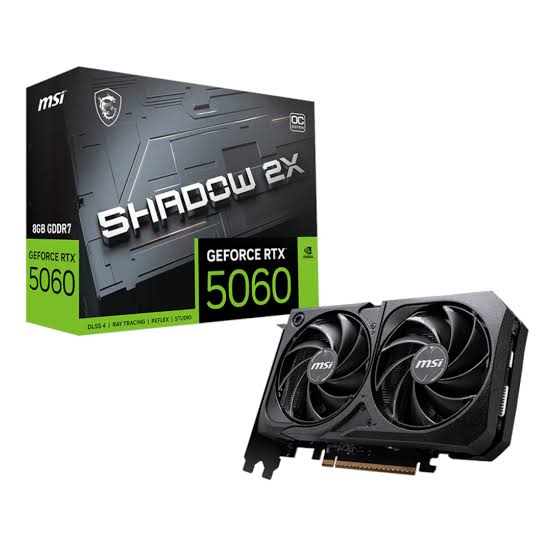
GeForce RTX™ 5060 8G SHADOW 2X OC
Overview
The GeForce RTX™ 5060 8G SHADOW 2X OC is a precision-engineered solution built to deliver high performance, stability, and durability for demanding workloads.
Key Technical Specifications
- Built specifically: Built specifically for the Computer Hardware ecosystem
- Constructed using: Constructed using high-grade components for extended reliability and thermal stability
- Engineered to: Engineered to meet rigorous industry standards for performance and compatibility
- Seamless integration: Seamless integration with existing PC setups and desktop configurations
Practical Applications & Performance
Everyday computing, high-performance tasks, gaming setups, and professional workstations.
Who It's Built For
Ideal for enthusiasts, gamers, and computing professionals who demand uncompromising performance, rock-solid stability, and premium build quality.
R 8,000.00
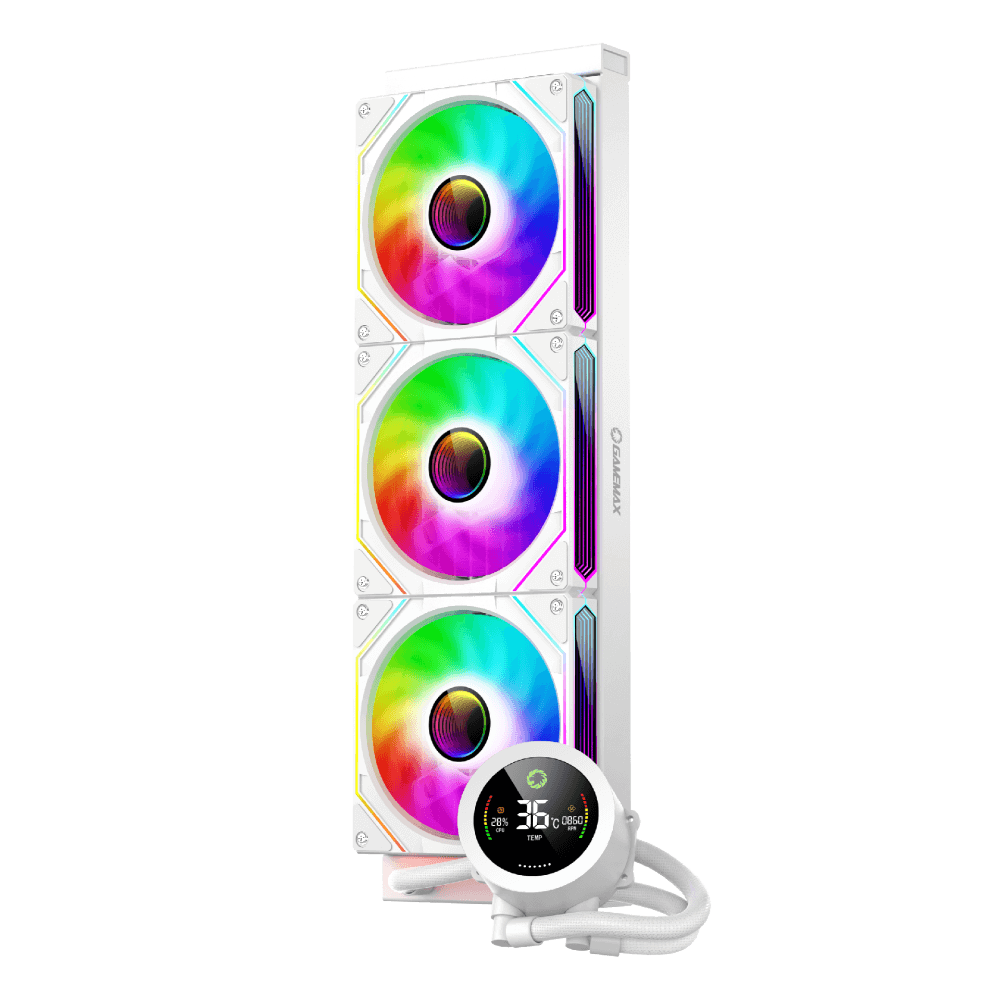
GameMax Iceburg 360 Digital White Liquid CPU Cooler
R 1,300.00

ASRock Radeon RX 9060 XT Challenger 16GB OC Graphics Card (RDNA™ 4, PCIe 5.0)
R 9,500.00
Samsung MZ-NLF1280 128GB SSD
Overview
Engineered for instantaneous boot times and lightning-fast game loading, this M.2 NVMe SSD unlocks blazing fast read and write transfer rates.
Key Technical Specifications
- 128GB storage: 128GB storage capacity in a compact M.2 2280 form factor
- PCIe 3.0: PCIe 3.0 NVMe interface delivering high sequential read/write speeds
- Advanced controller: Advanced controller and 3D NAND flash architecture for sustained durability
- Superior thermal: Superior thermal management ensuring consistent performance under prolonged load
Practical Applications & Performance
Fast OS boot times, rapid game level load times, and instantaneous transfer of massive 4K video files.
Who It's Built For
Ideal for gamers, creators, and professionals needing reliable high-speed solid-state storage. who demand uncompromising performance, rock-solid stability, and premium build quality.
R 300.00
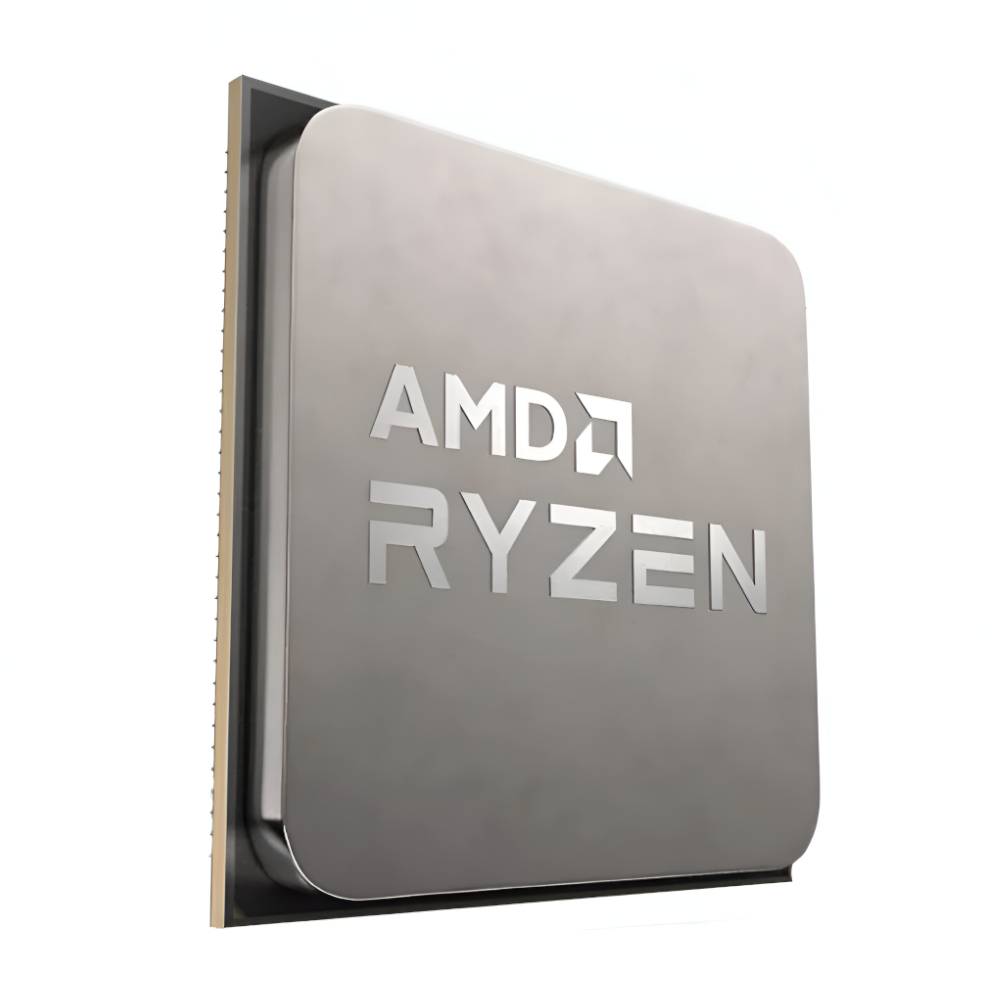
AMD Ryzen 3 4300GE
R 700.00
NVMe KXG60ZNV256G NVM
Overview
Engineered for instantaneous boot times and lightning-fast game loading, this M.2 NVMe SSD unlocks blazing fast read and write transfer rates.
Key Technical Specifications
- 1TB storage: 1TB storage capacity in a compact M.2 2280 form factor
- PCIe 3.0: PCIe 3.0 NVMe interface delivering high sequential read/write speeds
- Advanced controller: Advanced controller and 3D NAND flash architecture for sustained durability
- Superior thermal: Superior thermal management ensuring consistent performance under prolonged load
Practical Applications & Performance
Fast OS boot times, rapid game level load times, and instantaneous transfer of massive 4K video files.
Who It's Built For
Ideal for gamers, creators, and professionals needing reliable high-speed solid-state storage. who demand uncompromising performance, rock-solid stability, and premium build quality.
R 450.00
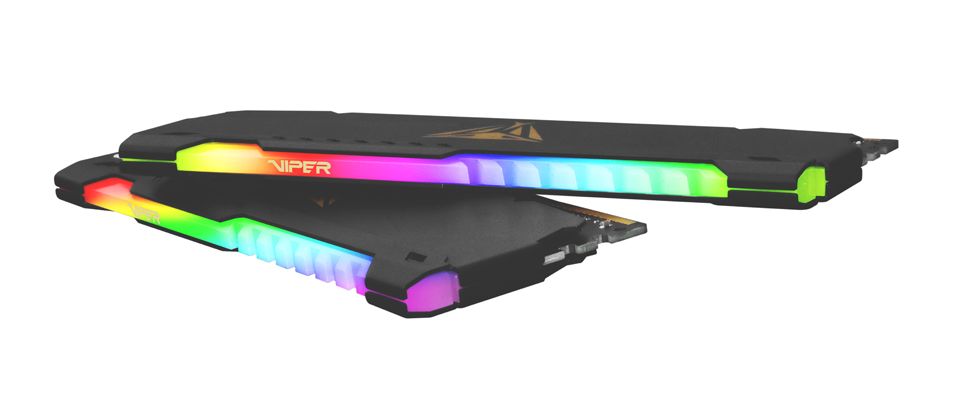
Patriot PVSR432G360C8K Viper Steel ARGB 32GB (2x16GB) DDR4-3600 CL18 1.35V Black Desktop Memory
R 4,000.00

Corsair Vengeance DDR 4 32GB RGB (2x16 GB 3600MHZ)
R 4,000.00
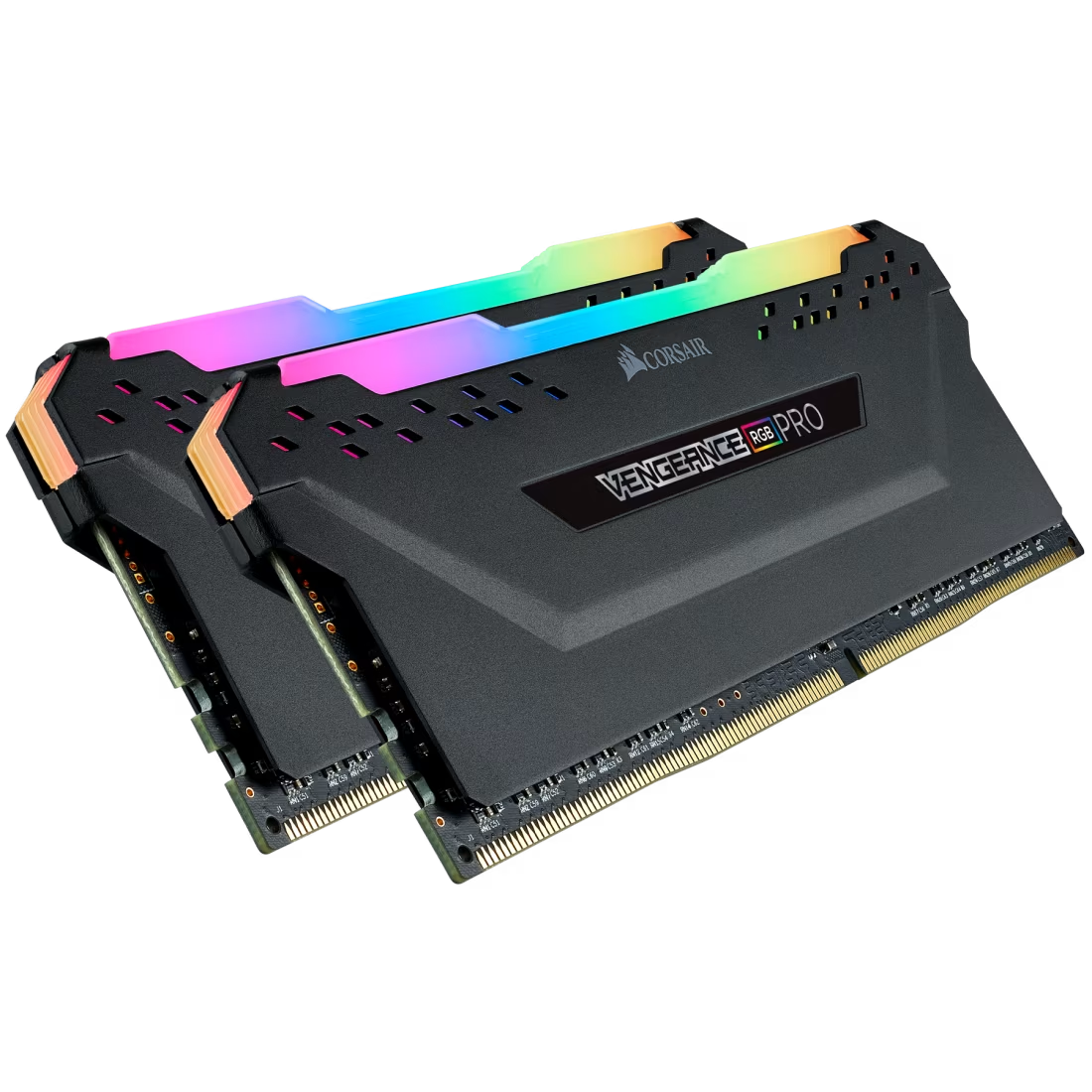
Corsair Vengeance RGB Pro 32GB (2x16GB) DDR4 2666MHz
R 4,000.00
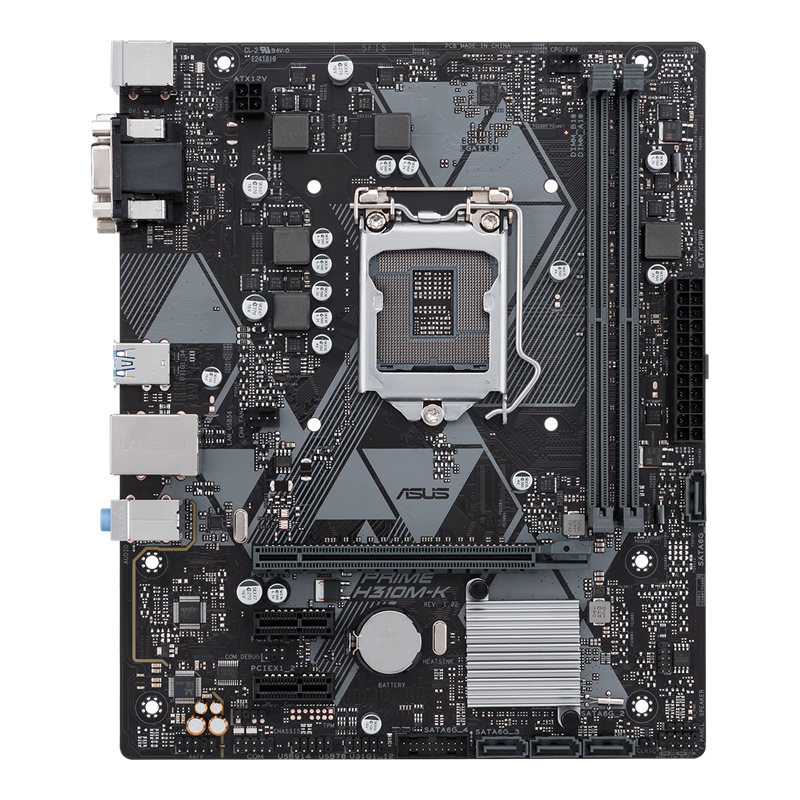
ASUS PRIME H310M-K
R 1,000.00
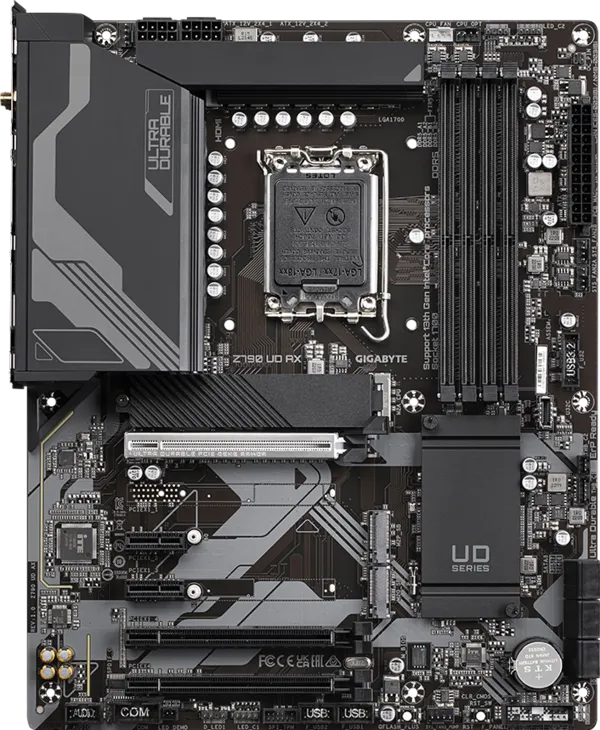
Gigabyte Z790 UD AX
Overview
The Gigabyte Z790 UD AX is a precision-engineered solution built to deliver high performance, stability, and durability for demanding workloads.
Key Technical Specifications
- Built specifically: Built specifically for the Motherboard ecosystem
- Constructed using: Constructed using high-grade components for extended reliability and thermal stability
- Engineered to: Engineered to meet rigorous industry standards for performance and compatibility
- Seamless integration: Seamless integration with existing PC setups and desktop configurations
Practical Applications & Performance
Everyday computing, high-performance tasks, gaming setups, and professional workstations.
Who It's Built For
Ideal for enthusiasts, gamers, and computing professionals who demand uncompromising performance, rock-solid stability, and premium build quality.
R 4,000.00

Aero Cool P500C Mid Tower Case
R 1,050.00
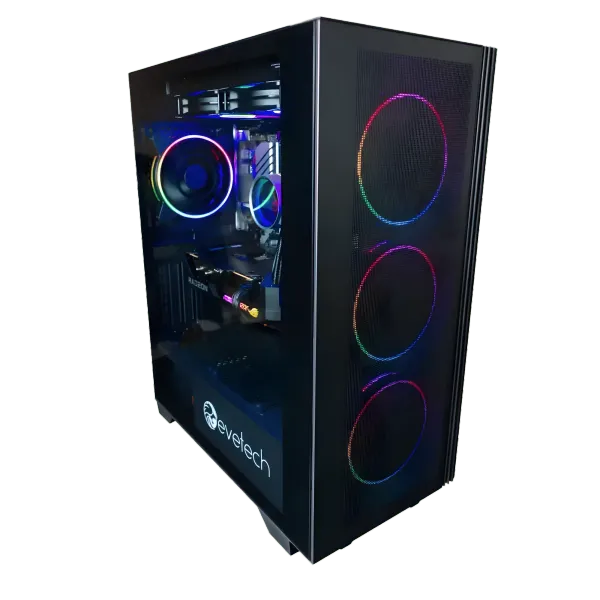
Evetech Onyx
R 850.00
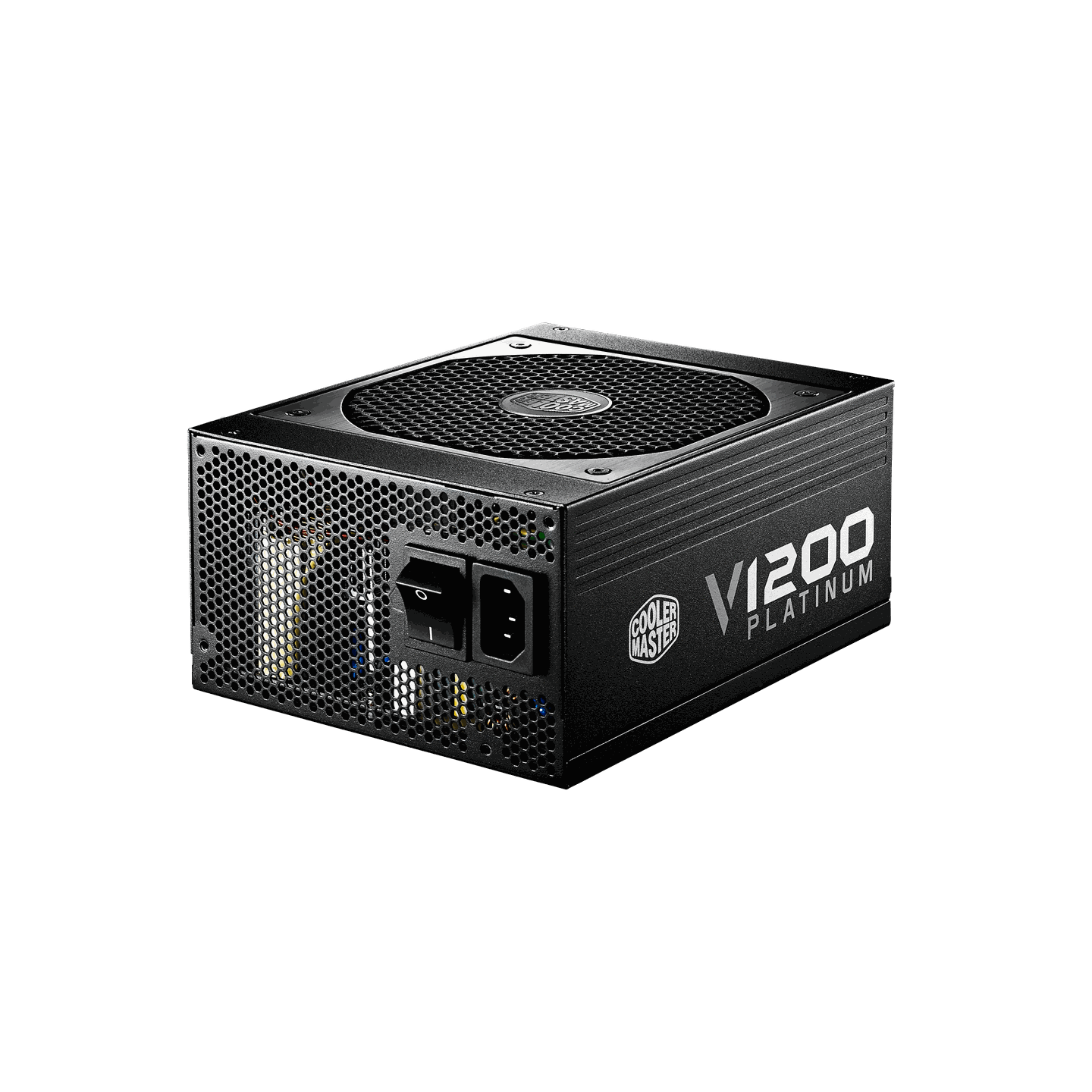
CoolerMaster V1200 1200W 80+ Platinum Fully Modular Power Supply / Silent 135 mm FDB Fan / Japanese Capacitors /
R 1,200.00

I3-8300
R 400.00
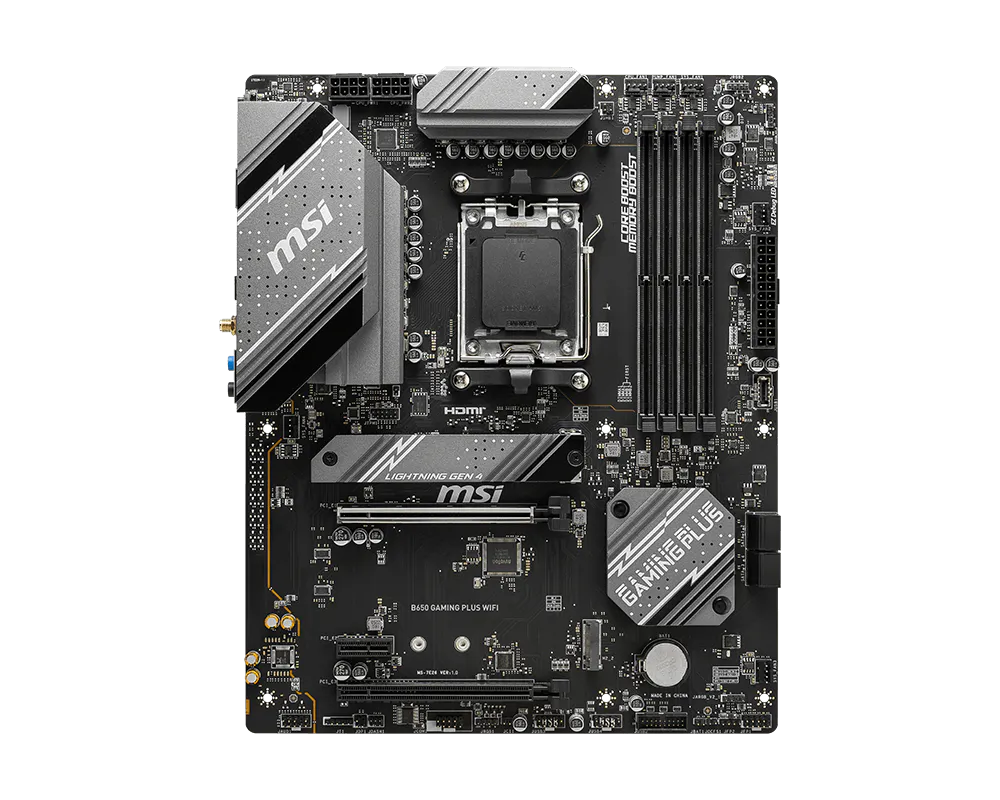
MSI B650 GAMING PLUS WIFI AM5 ATX Motherboard
R 3,000.00
AMD Ryzen 9 7900 12-Core, 24-Thread AM5 Processor
R 6,000.00
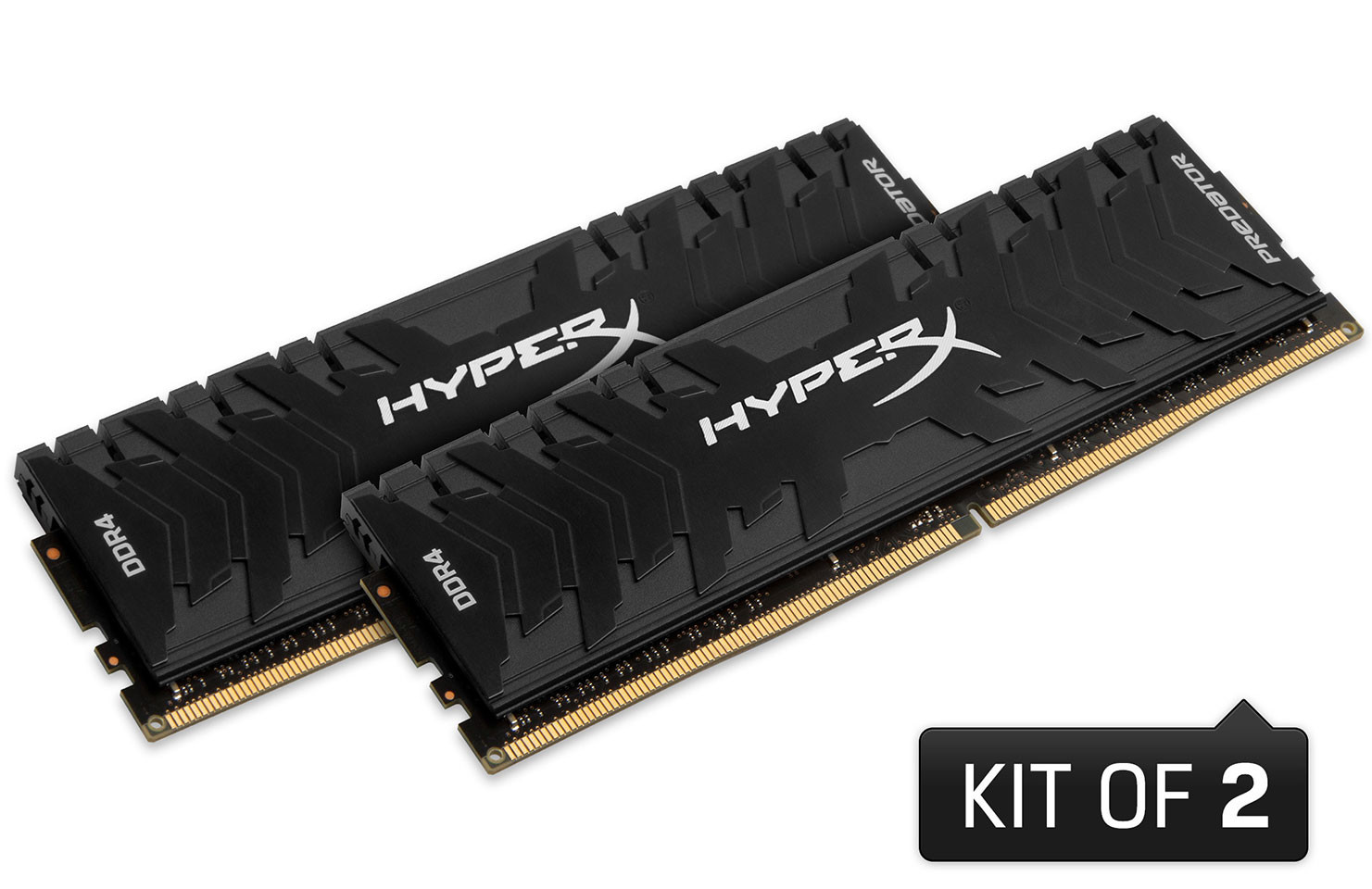
HyperX Predator DDR4 Desktop RAM module 8GB (Kit of 2)
R 500.00
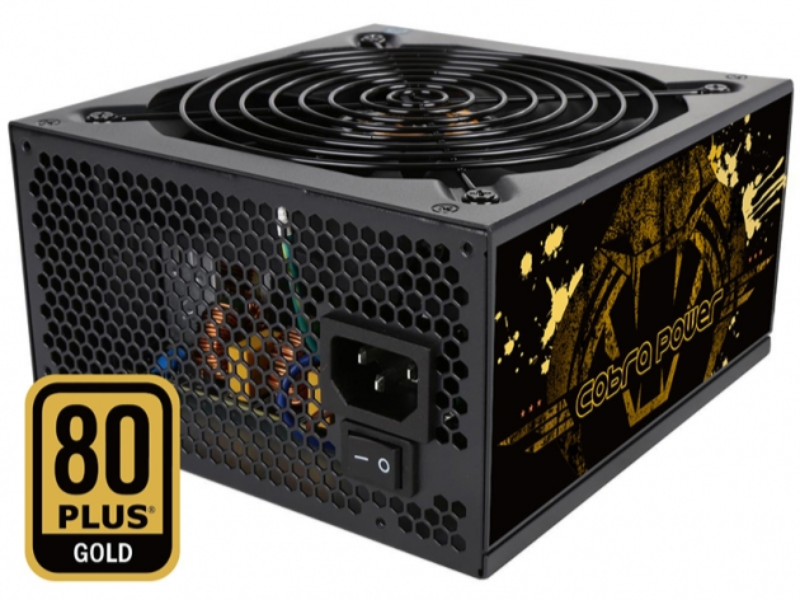
Raidmax cobra power 800w
R 700.00
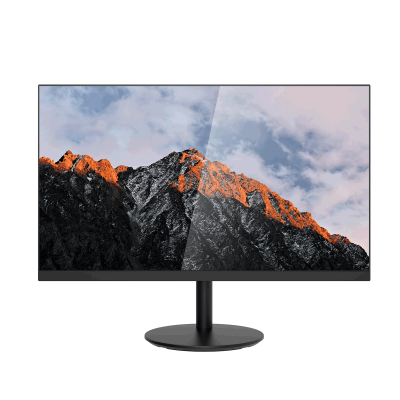
Dahua 21.45" FHD LED Monitor (DHI-LM22-A200V)
R 1,300.00

Kingston HyperX Beast (T3) Memory - 8GB 1600MHz DDR3 CL9 DIMM (Kit of 2)
R 600.00
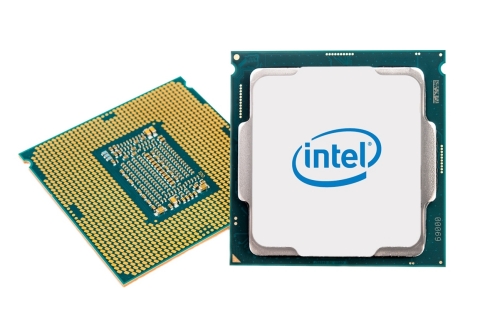
I7-3770
Overview
The I7-3770 is a precision-engineered solution built to deliver high performance, stability, and durability for demanding workloads.
Key Technical Specifications
- Built specifically: Built specifically for the Processor ecosystem
- Constructed using: Constructed using high-grade components for extended reliability and thermal stability
- Engineered to: Engineered to meet rigorous industry standards for performance and compatibility
- Seamless integration: Seamless integration with existing PC setups and desktop configurations
Practical Applications & Performance
Everyday computing, high-performance tasks, gaming setups, and professional workstations.
Who It's Built For
Ideal for enthusiasts, gamers, and computing professionals who demand uncompromising performance, rock-solid stability, and premium build quality.
R 500.00
i3-7100
Overview
The i3-7100 is a precision-engineered solution built to deliver high performance, stability, and durability for demanding workloads.
Key Technical Specifications
- Built specifically: Built specifically for the Processor ecosystem
- Constructed using: Constructed using high-grade components for extended reliability and thermal stability
- Engineered to: Engineered to meet rigorous industry standards for performance and compatibility
- Seamless integration: Seamless integration with existing PC setups and desktop configurations
Practical Applications & Performance
Everyday computing, high-performance tasks, gaming setups, and professional workstations.
Who It's Built For
Ideal for enthusiasts, gamers, and computing professionals who demand uncompromising performance, rock-solid stability, and premium build quality.
R 250.00
Fsp Hexa 400w
Overview
The Fsp Hexa 400w is a precision-engineered solution built to deliver high performance, stability, and durability for demanding workloads.
Key Technical Specifications
- Built specifically: Built specifically for the Power Supplies ecosystem
- Constructed using: Constructed using high-grade components for extended reliability and thermal stability
- Engineered to: Engineered to meet rigorous industry standards for performance and compatibility
- Seamless integration: Seamless integration with existing PC setups and desktop configurations
Practical Applications & Performance
Everyday computing, high-performance tasks, gaming setups, and professional workstations.
Who It's Built For
Ideal for enthusiasts, gamers, and computing professionals who demand uncompromising performance, rock-solid stability, and premium build quality.
R 400.00

Hikvision Wave Series 1TB
Overview
The Hikvision Wave Series 1TB is a precision-engineered solution built to deliver high performance, stability, and durability for demanding workloads.
Key Technical Specifications
- Built specifically: Built specifically for the M.2 ecosystem
- Constructed using: Constructed using high-grade components for extended reliability and thermal stability
- Engineered to: Engineered to meet rigorous industry standards for performance and compatibility
- Seamless integration: Seamless integration with existing PC setups and desktop configurations
Practical Applications & Performance
Everyday computing, high-performance tasks, gaming setups, and professional workstations.
Who It's Built For
Ideal for enthusiasts, gamers, and computing professionals who demand uncompromising performance, rock-solid stability, and premium build quality.
R 1,300.00
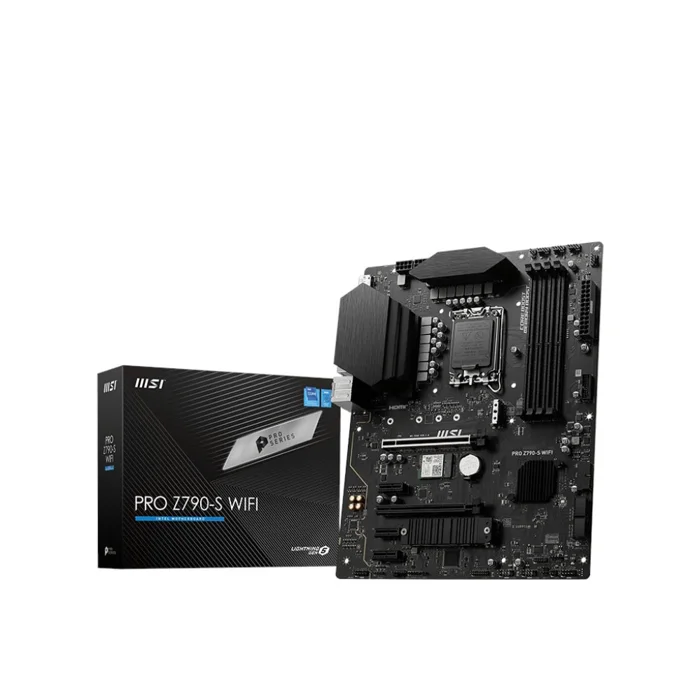
MSI Pro Z790-S WiFi ATX D5 Motherboard
R 3,000.00
H110 DDR4
Overview
The H110 DDR4 motherboard is a highly reliable, cost-effective Micro-ATX (mATX) mainboard engineered around the Intel H110 Express chipset. Designed to support Intel's 6th Generation (Skylake) and 7th Generation (Kaby Lake) Core, Pentium, and Celeron processors on the LGA 1151 socket, this motherboard serves as an excellent foundation for budget-conscious system builders, office workstations, and legacy upgrades. Built with high-density glass fiber PCBs and solid capacitors, it offers superior resistance to moisture and thermal stress, ensuring long-term system stability.
Architecture & Performance
Utilizing Intel's 14nm CPU architecture compatibility, the H110 chipset manages essential system bandwidth efficiently. It features two DDR4 DIMM slots supporting dual-channel memory configurations up to 32GB at speeds of 2133MHz (Skylake) or 2400MHz (Kaby Lake), delivering a significant bandwidth boost and lower power consumption compared to older DDR3 platforms. For expansion, the motherboard features a dedicated PCIe 3.0 x16 slot, allowing the installation of modern discrete graphics cards (such as the GTX 16-series or RX 6000-series) to achieve smooth 1080p esports gaming or multi-monitor productivity. Storage is handled via high-speed SATA III 6Gb/s controllers, maximizing the performance of modern 2.5-inch solid-state drives.
Key Technical Specifications
- Processor Support: Intel LGA 1151 Socket for 6th Gen (Skylake) and 7th Gen (Kaby Lake) Core i7 / i5 / i3 / Pentium / Celeron processors (up to 95W TDP).
- Memory Architecture: Dual-channel DDR4 memory technology; 2x DIMM slots supporting up to 32GB non-ECC, unbuffered memory at 2133/2400 MHz.
- Expansion Slots: 1x PCI Express 3.0 x16 slot for discrete graphics; 1x or 2x PCI Express 2.0 x1 slots for network cards, sound cards, or PCIe expansion.
- Storage Interface: 4x SATA III 6Gb/s ports for high-speed SSDs and high-capacity HDDs.
- Rear I/O Connectivity: 2x USB 3.0 (USB 3.1 Gen 1) ports, 4x USB 2.0 ports, 1x Realtek Gigabit LAN RJ-45 port, 3x Audio Jacks (Line-in, Line-out, Mic).
- Display Outputs: 1x HDMI port and 1x D-Sub (VGA) port supporting integrated Intel HD Graphics dual-display configurations.
- Audio & Networking: Realtek ALC887/897 7.1-Channel High Definition Audio CODEC and Realtek RTL8111 Gigabit Ethernet controller.
Who It's Built For
The H110 DDR4 motherboard is specifically engineered for system integrators, IT administrators setting up corporate office fleets, and budget-oriented PC builders looking to assemble a reliable, everyday productivity machine or a secondary home-theater PC (HTPC). It is also the perfect, cost-effective replacement board for restoring functionality to existing 6th or 7th generation Intel-based desktop systems.
R 550.00

P220 Patriot 256GB SSD
R 450.00
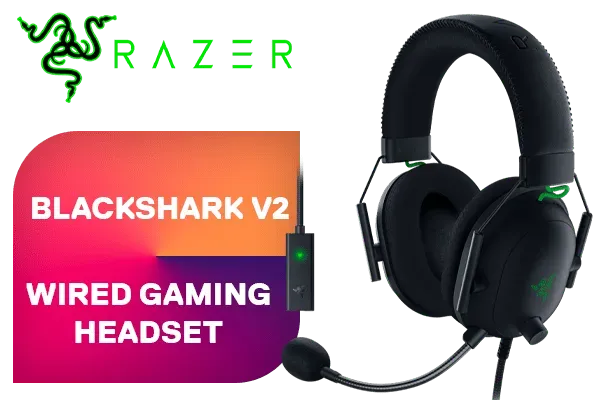
Razer BlackShark V2 Wired Gaming Headset - Black
R 1,000.00
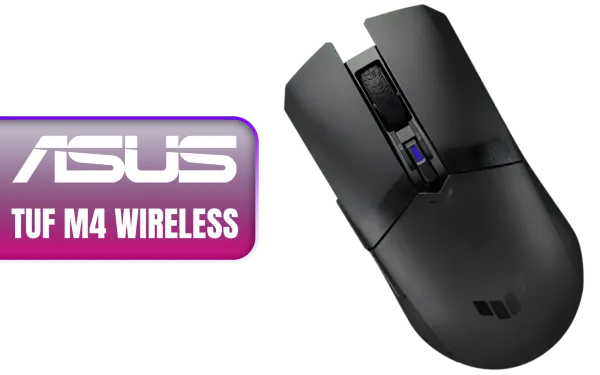
ASUS TUF GAMING M4 MOUSE
R 300.00

CYNOSA LITE Membrane Keyboard
R 450.00
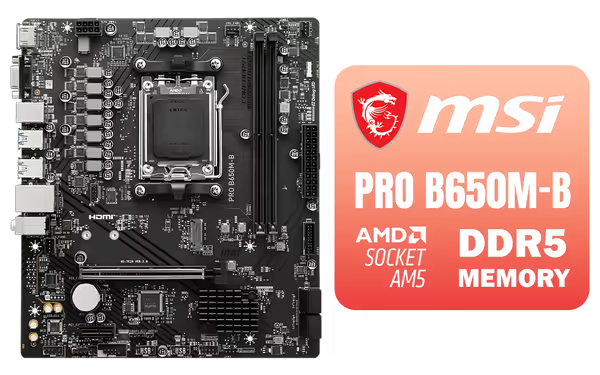
MSI PRO B650M-B
R 2,000.00
Dell 21.5"/ Full HD/ 75HZ monitor with vga and hdmi
Overview
Designed to give competitive gamers and visual artists an elite viewing experience, this display pairs a fluid 75Hz refresh rate with vivid color accuracy.
Key Technical Specifications
- Full HD: Full HD (1920 x 1080) display resolution delivering crisp visual fidelity
- Ultra-smooth 75Hz: Ultra-smooth 75Hz refresh rate for competitive motion clarity
- VA panel: VA panel technology with wide viewing angles and vivid color reproduction
- Adaptive-Sync technology: Adaptive-Sync technology (AMD FreeSync / NVIDIA G-SYNC compatible) preventing screen tearing
- Low input: Low input lag and rapid response time for instantaneous reflex response
Practical Applications & Performance
High-FPS competitive esports, cinematic gaming, and professional color-accurate content creation.
Who It's Built For
Ideal for gamers and creative professionals looking for pristine visual clarity and fluid motion. who demand uncompromising performance, rock-solid stability, and premium build quality.
R 1,100.00
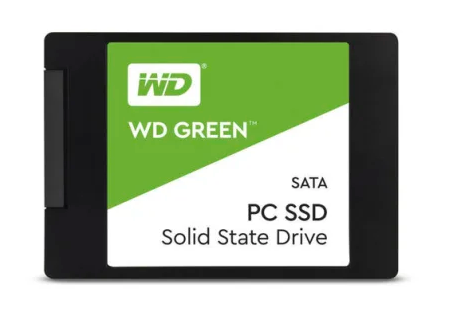
WD Green 120GB 2.5" SATA SSD (WDS120G2GOA-00JH30)
R 300.00

Lenovo ThinkCentre (Core i5-3470 / 4GB RAM / 256GB SSD / GT 620 GPU)
R 1,300.00

Lenovo ThinkCentre (Core i5-2400 / 8GB RAM / 240GB-250GB SSD)
R 1,300.00

HP Compaq (Core i5-2400 / 8GB RAM / 250GB SSD)
R 1,300.00
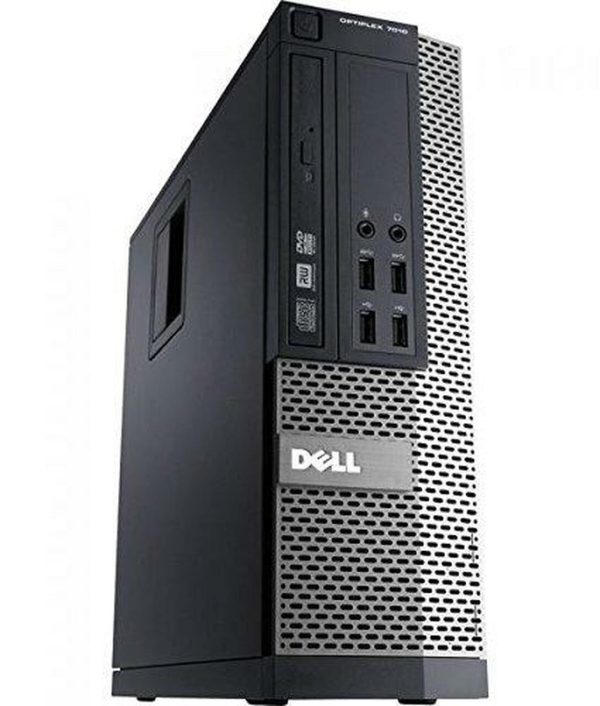
Dell OptiPlex 7010 (Core i5-3470 / 8GB RAM / 250GB SSD)
R 1,300.00

Redragon H211 CRONUS Surround Sound RGB Wired Gaming Headset - Black
R 200.00
UGREEN AX900 Wi-Fi 6 USB Adapter – High-Gain Dual Band 2.4GHz/5GHz Wireless Dongle (CM763 / 35265)
R 200.00

WD Blue 500GB NVME
R 850.00
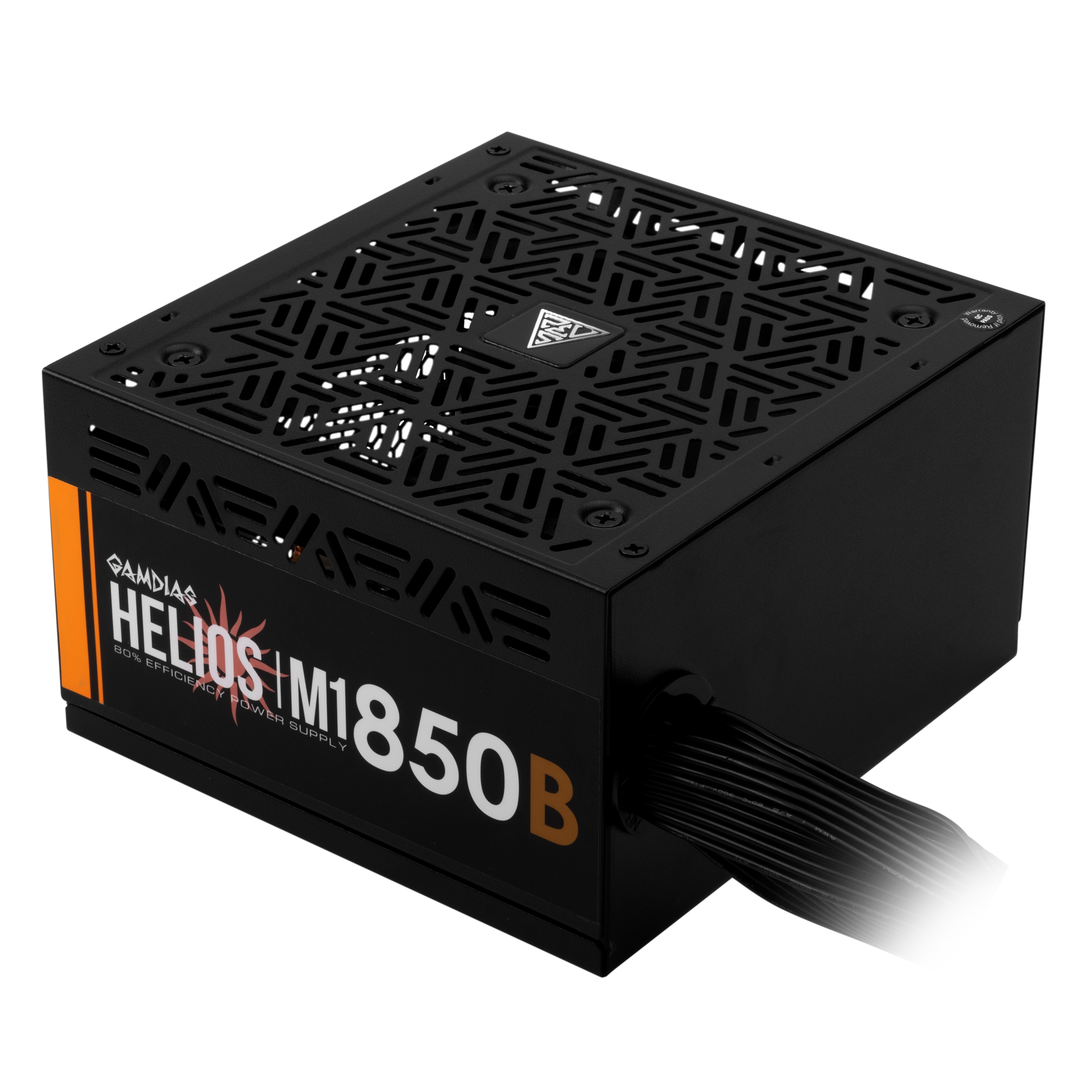
Gamdias Helios M1 850W
Overview
The Gamdias Helios M1 850W is a precision-engineered solution built to deliver high performance, stability, and durability for demanding workloads.
Key Technical Specifications
- Built specifically: Built specifically for the Power Supplies ecosystem
- Constructed using: Constructed using high-grade components for extended reliability and thermal stability
- Engineered to: Engineered to meet rigorous industry standards for performance and compatibility
- Seamless integration: Seamless integration with existing PC setups and desktop configurations
Practical Applications & Performance
Everyday computing, high-performance tasks, gaming setups, and professional workstations.
Who It's Built For
Ideal for enthusiasts, gamers, and computing professionals who demand uncompromising performance, rock-solid stability, and premium build quality.
R 700.00
KLEVV CRAS XR5 RGB 32GB (2x16GB) DDR5-6200MHz Desktop Memory
R 7,500.00

WD PC SN740 256GB PCIe Gen4 x4 M.2 NVMe SSD
R 450.00
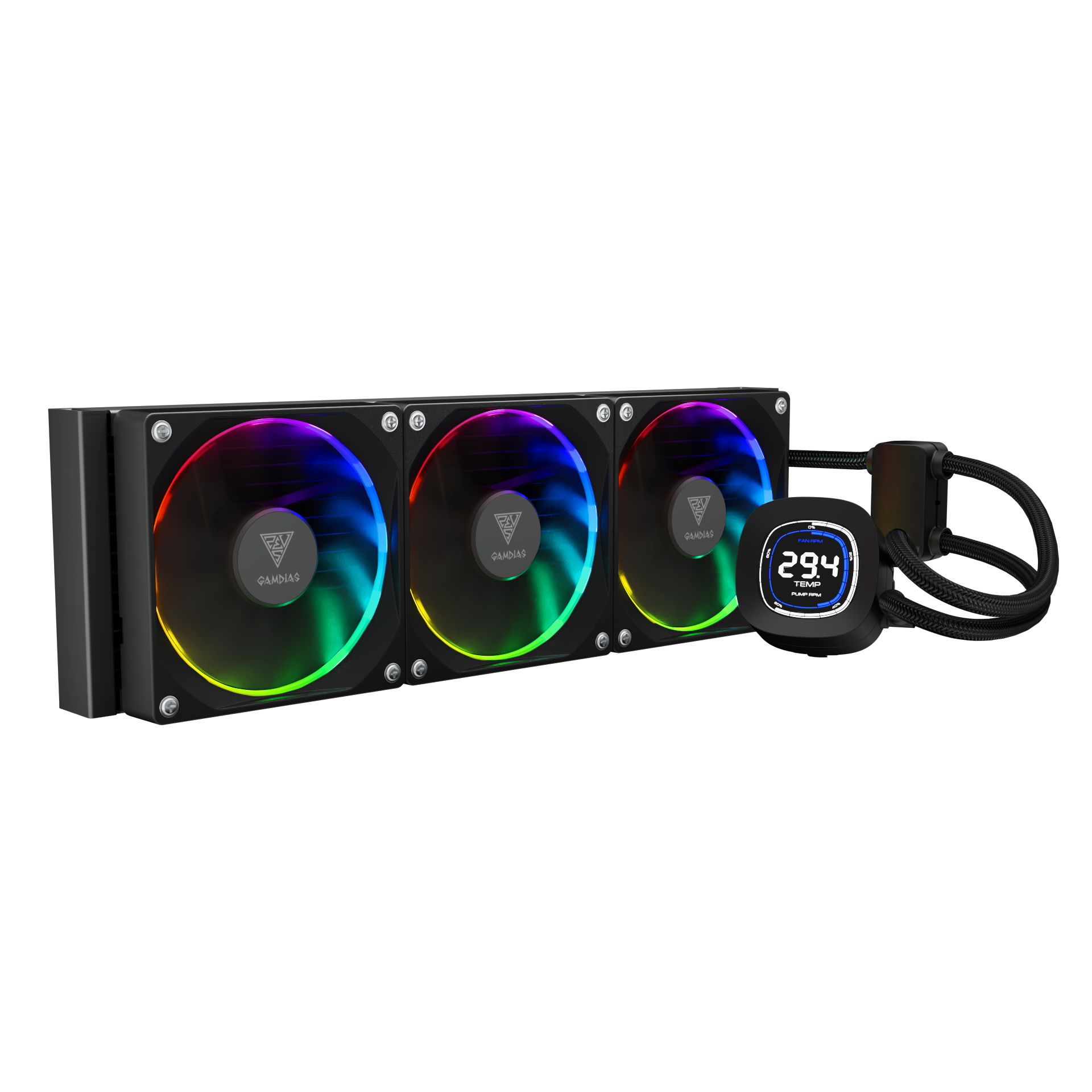
GAMDIAS CHIONE M4-420 ARGB LCD Liquid CPU Cooler
R 1,000.00
DeepCool LS720 360mm Radiator
R 1,000.00
High power 750w
R 550.00

Transcend 256GB SSD
R 450.00

HP EliteDisplay E231 23-inch LED Backlit Monitor (Refurbished / Pre-Owned)
R 900.00
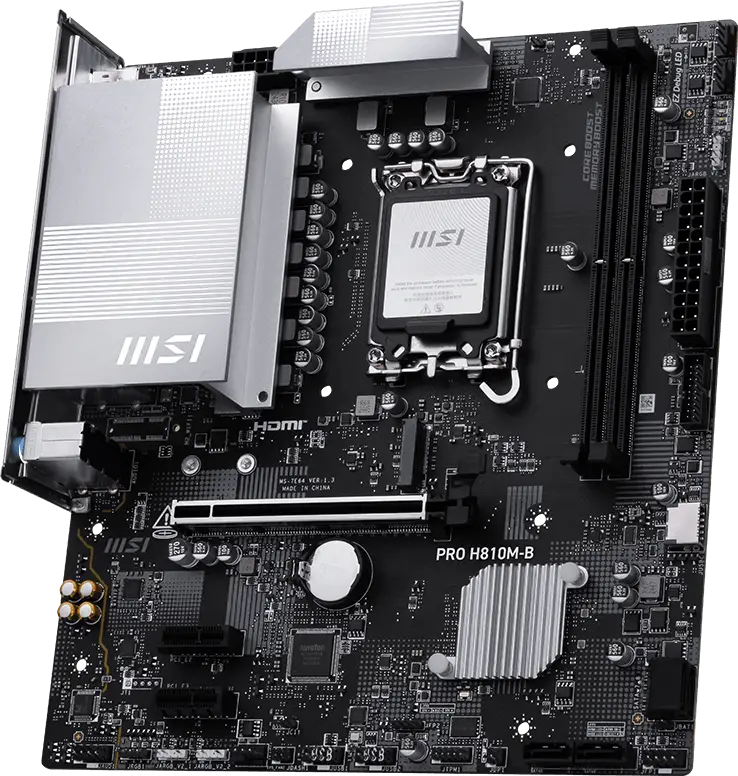
PRO H810M-B
R 2,000.00
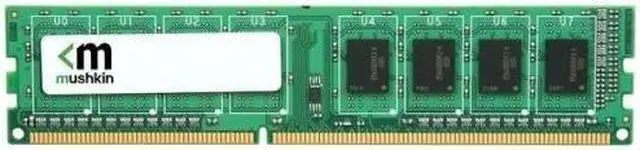
Hiksemi 4GB DDR3
R 150.00
Mushkin 4GB DDR3
R 150.00

i5-4660
R 450.00

Arctic MX-7 Ultimate Performance Thermal Paste – 4g
R 250.00

Arctic MX-4 Premium Performance Thermal Paste – 4g
R 140.00
Thermal Grizzly Aeronaut High-Performance Thermal Paste – 1g
R 100.00
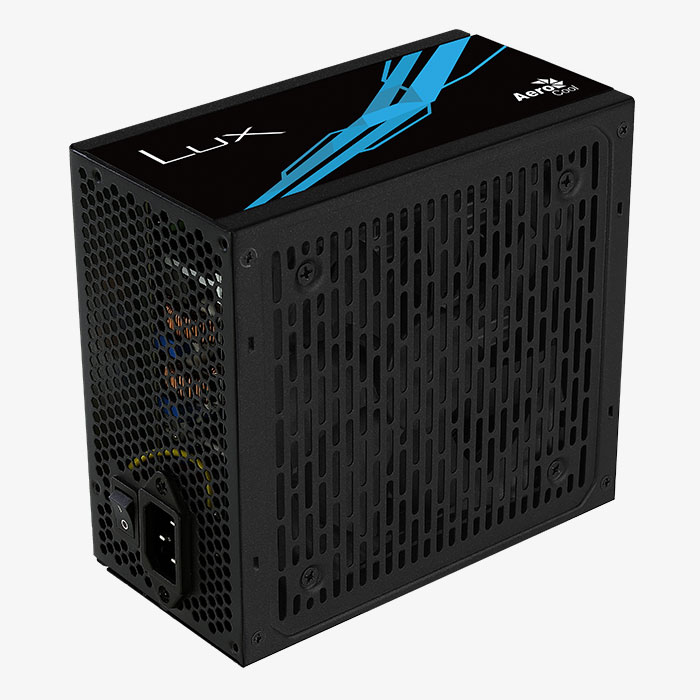
Aerocool LUX 1000W Gold Power Supply Unit
R 1,100.00

Hyper X fury 8GB 2400mhz
R 550.00
Klevv CRAS C910 Gen 4 NVMe 1TB
R 2,000.00
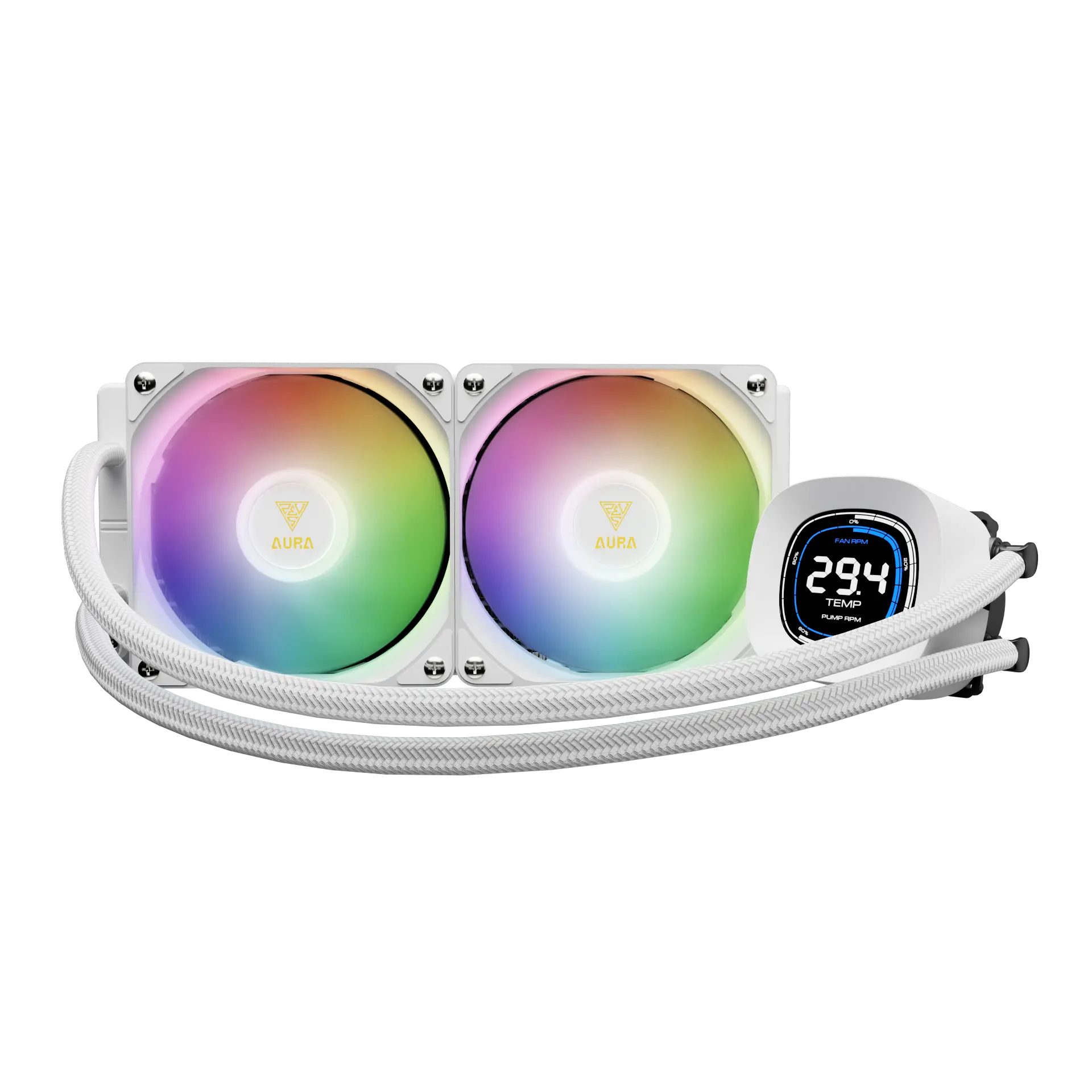
Gamdias AURA GL240 V2 White All-in-One Liquid CPU Cooler
R 900.00
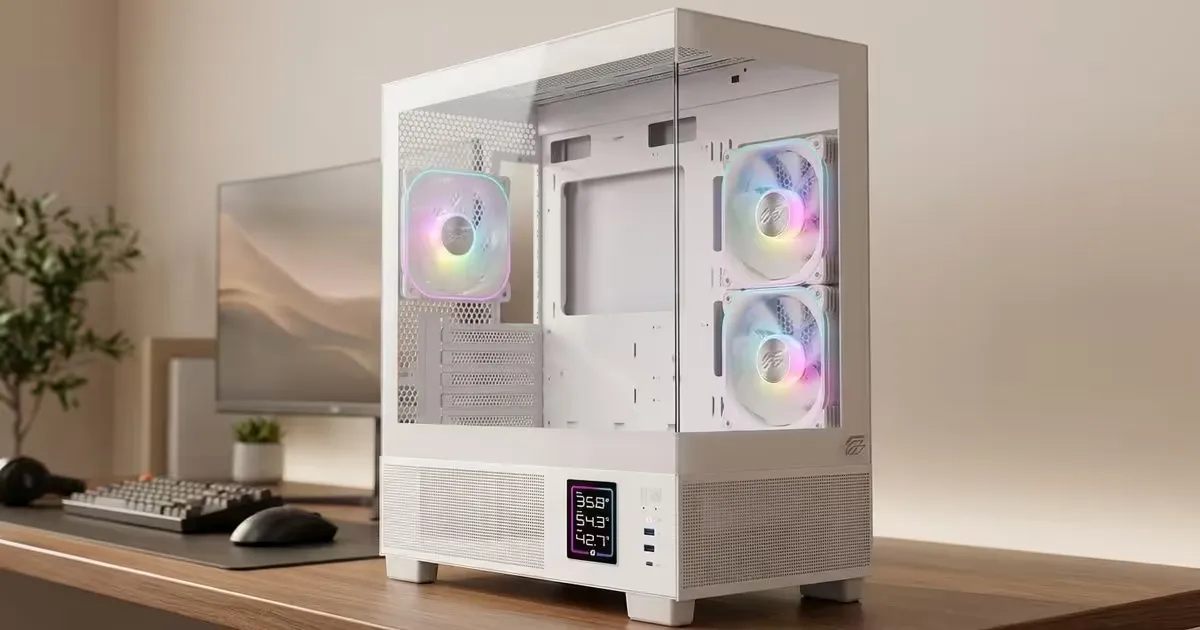
EINAREX Prisma S501D Tempered Glass ATX Mid-Tower Gaming Case - White
R 1,600.00
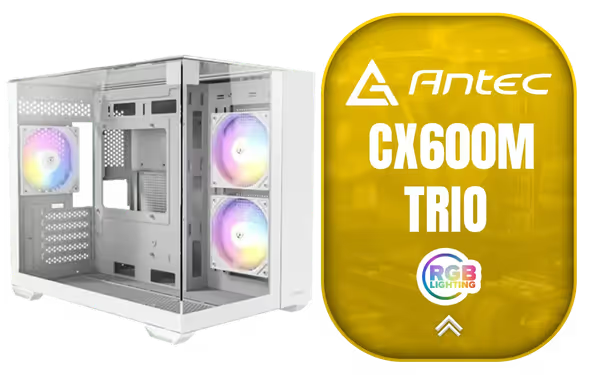
Antec CX600M Trio ARGB Tempered Glass Micro-ATX Gaming Case - White
R 1,300.00
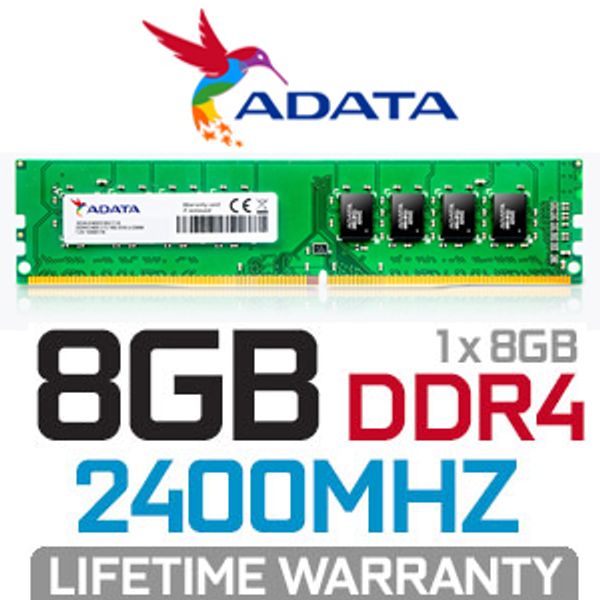
ADATA Premier Seris 8GB (1 x 8GB) 2400MHz DDR4 High Quality Desktop Memory / 8GB 2400MHz DDR4
R 500.00

Samsung 870 EVO 500GB SATA III SSD
R 850.00
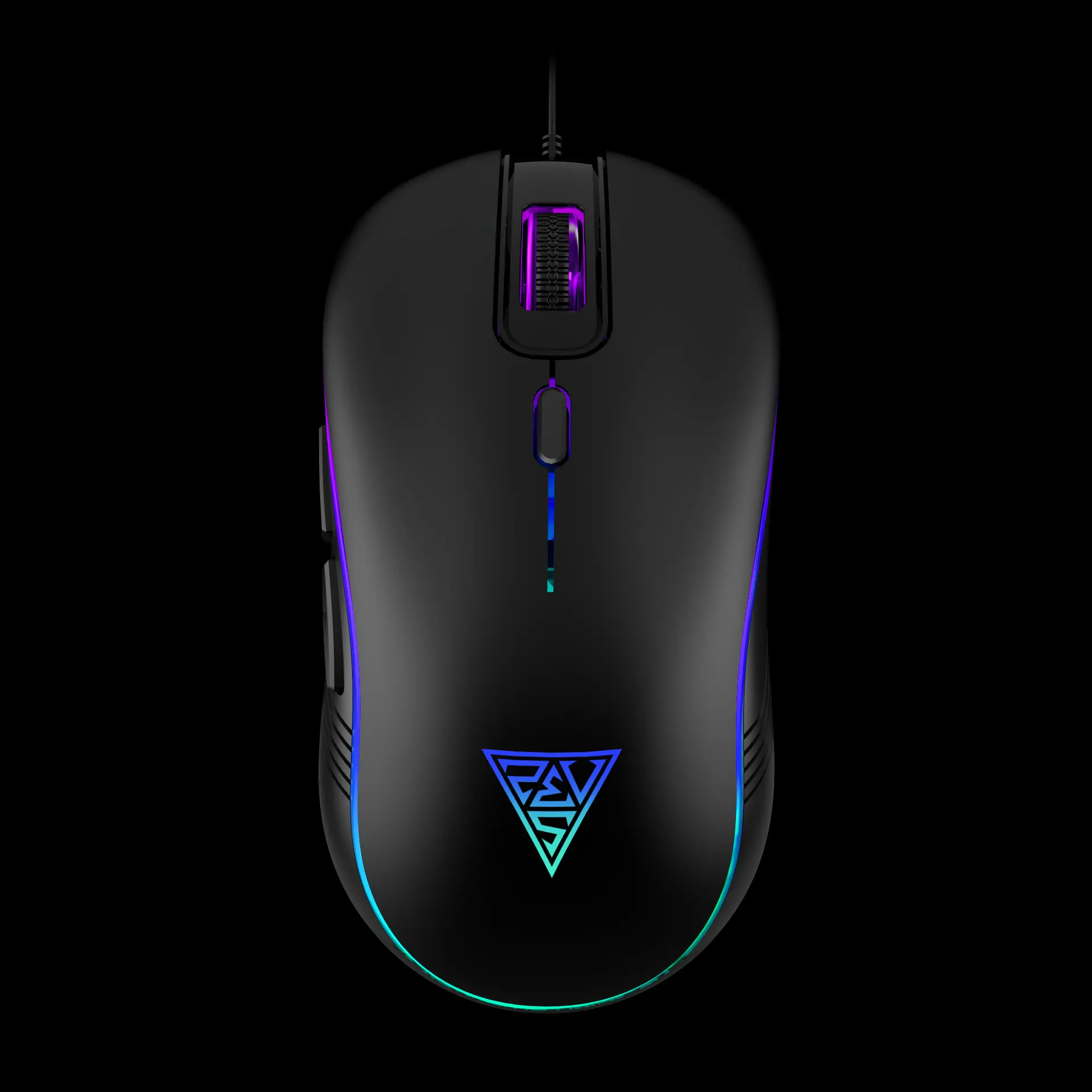
Gamdias AURA GS3 Optical Gaming Mouse
R 100.00
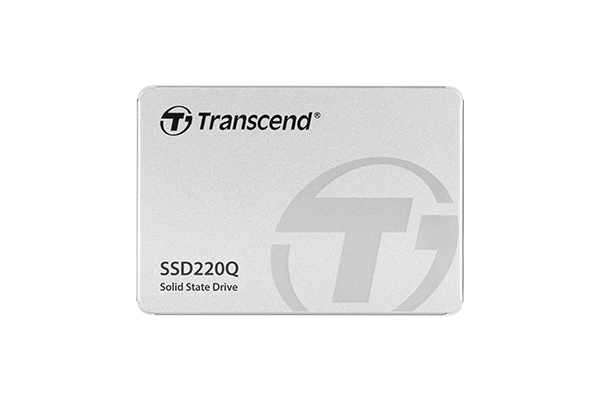
Transcend 500GB SSD
R 850.00

Adata 128GB SSD
R 300.00
HIKSEMI Classic USB 3.0 32GB USB
R 120.00
Nintendo Switch OLED Console
R 4,500.00
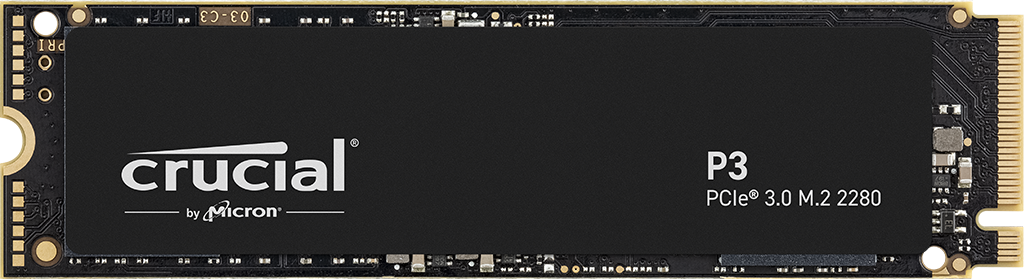
Crucial P3 1TB NVMe SSD
R 1,300.00

Intel Core i5-10400 10th Gen 6-Core 12-Thread LGA1200 Processor
R 1,300.00

Raidmax cobra power 850w
R 700.00

Corsair VS650w
R 700.00
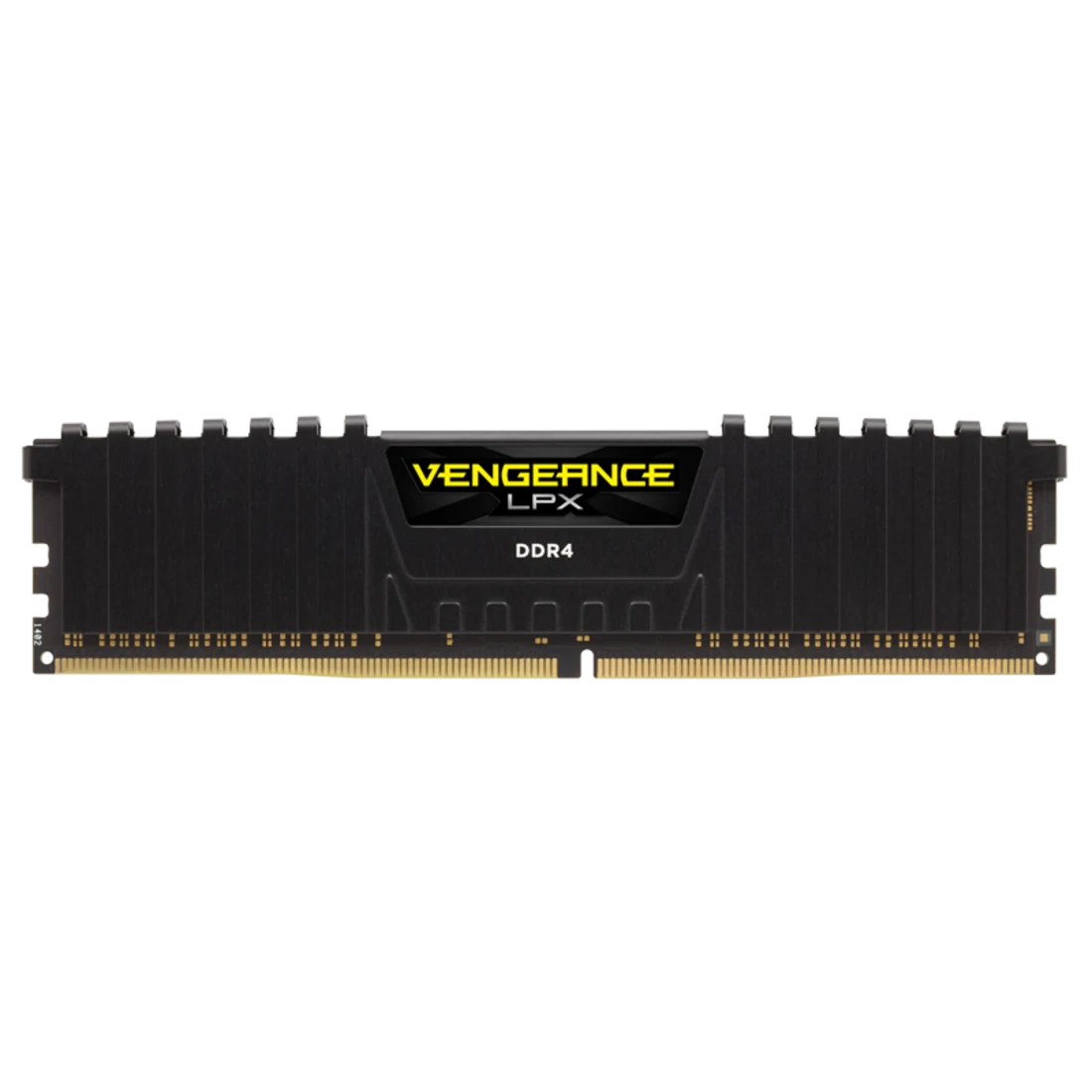
Corsair Vengeance LPX 8GB DDR4 3200MHz Desktop Memory (CMK32GX4M1D3000C16) (sold separately)
R 500.00
Klevv crass xr RGB 16GB (2x8GB) 4000mhz
R 1,600.00

Samsung 256gb ssd
R 450.00
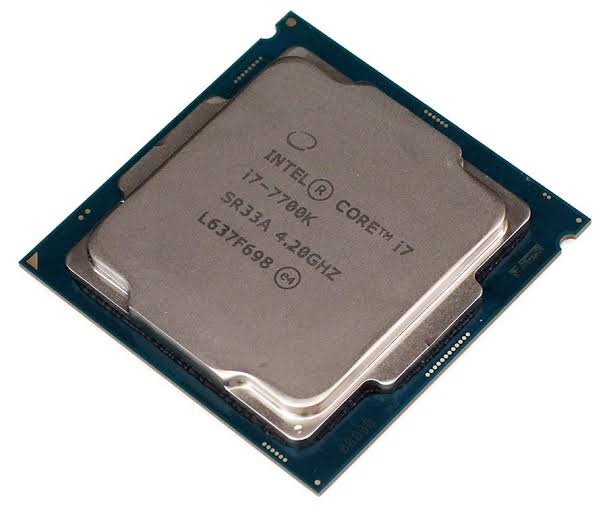
i7-7700k
R 950.00
WINX STORE FAST 2.5" USB TYPE-C ENCLOSURE BK
R 160.00
I7 9700
R 1,500.00

xbox series s controller blue camo
R 850.00
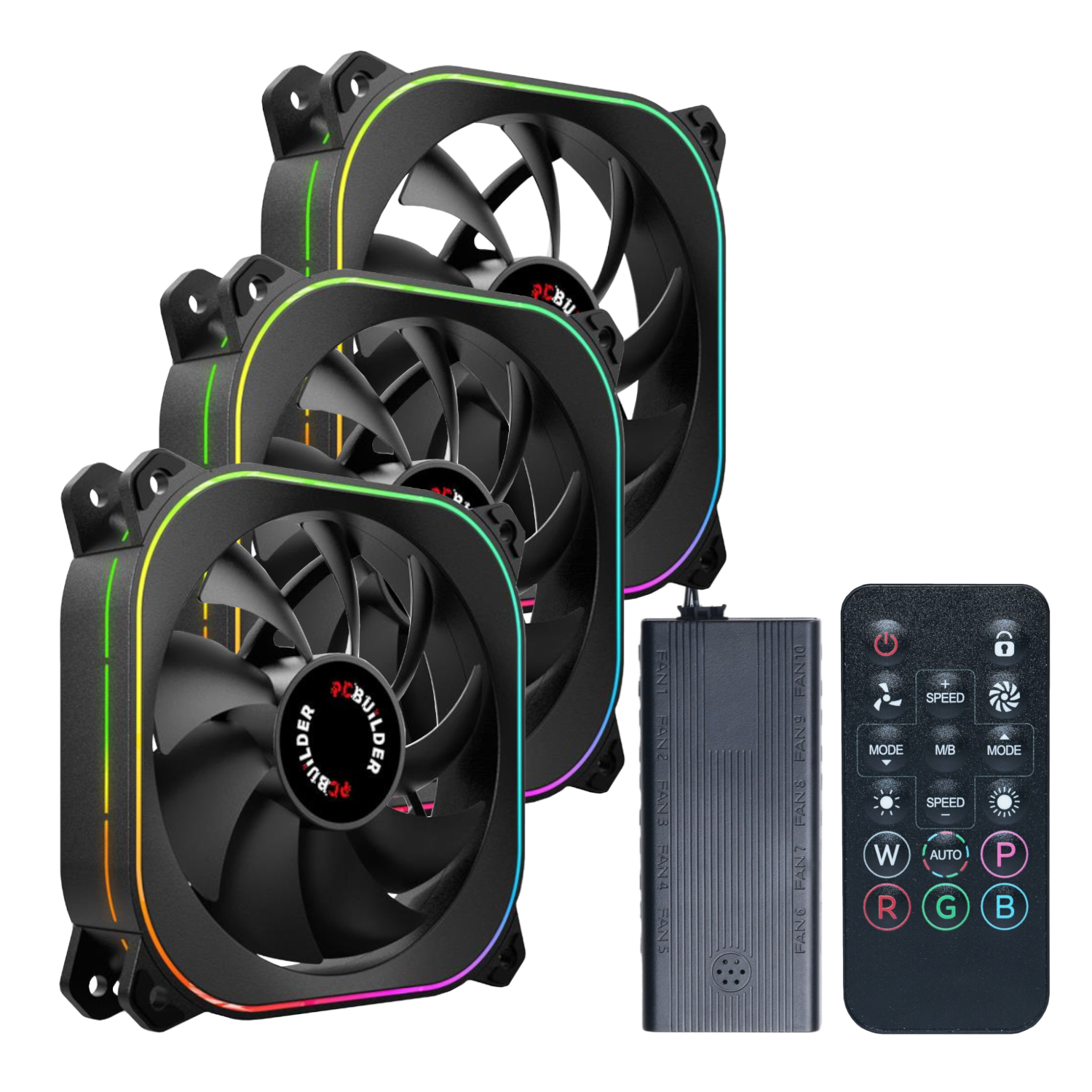
PC BUILDER TORNADO CHILL FAN KIT
R 300.00
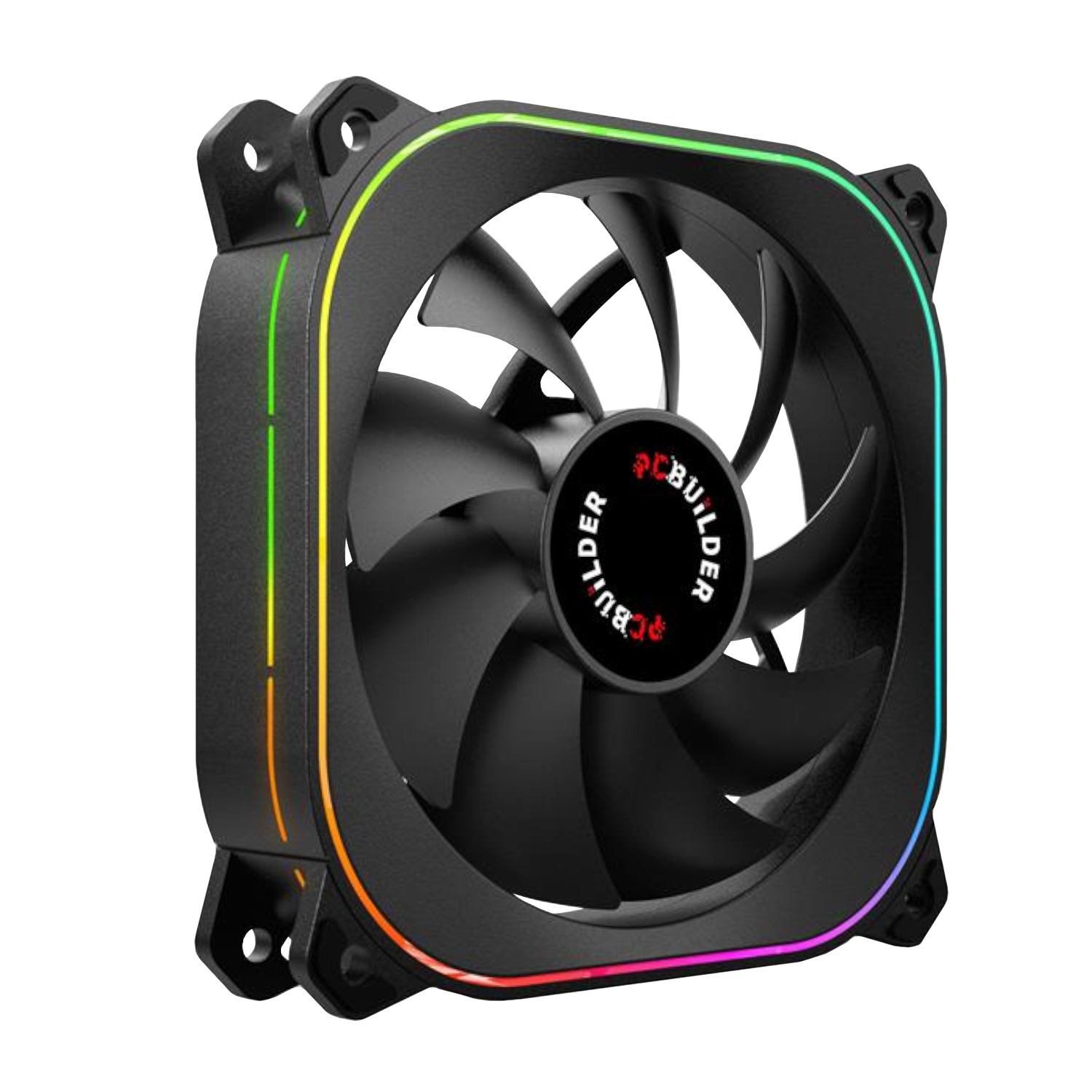
PC BUILDER TORNADO CHILL 120MM ARGB FAN
R 70.00
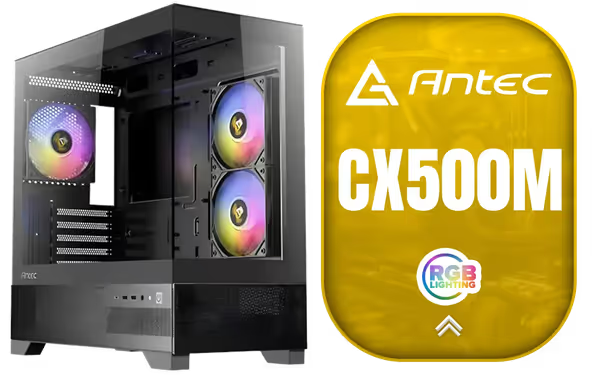
Antec Cx500 with 3 mirror argb fans
R 750.00

Samsung 8GB DDR4
R 500.00

Kimtigo 1TB SSD
R 1,200.00

Gamdias Kratos 750w
R 750.00

Micron 2550 M.2 256GB
Overview
The Micron 2550 M.2 256GB is a compact client-grade solid-state drive in M.2 form factor, delivering 256GB of solid-state storage for laptops and small-form-factor desktops. Micron is a long-established memory manufacturer and the 2550 is positioned as an affordable, reliable option for a primary OS drive or secondary storage upgrade.
Performance and practical use
As an M.2 SSD, the 2550 brings the responsiveness gains you expect from solid-state storage: much faster boot times, snappier application launches and far better random I/O than traditional HDDs. That makes it ideal for everyday productivity, web browsing, office suites and light photo editing. In laptops it also helps conserve battery compared with spinning disks thanks to low active power draw. While a 256GB capacity limits heavy 4K video scratch use, it performs very well as a boot drive or a cache drive alongside a larger mass-storage disk.
Specs summary
- Brand & model: Micron 2550
- Form factor: M.2
- Capacity: 256GB
Who this is best suited for
The Micron 2550 M.2 256GB is best for users upgrading older laptops or desktops who need a responsive OS drive, students, office workers and anyone wanting faster start-up and app load times without spending on high-capacity NVMe flagship drives. It’s an excellent fit as a primary system drive for everyday computing and moderate multimedia tasks.
R 450.00

SK Hynix 256GB BC511 NVMe
Overview
The SK hynix 256GB BC511 NVMe is a compact M.2 solid-state drive that puts NVMe responsiveness into laptops and small-form-factor desktops. As a 256GB NVMe M.2 module from SK hynix—one of the world's largest NAND and memory manufacturers—it’s designed to be an OS/app drive that dramatically improves boot times, application launches and general system snappiness compared with a SATA SSD or hard drive.
Performance & real-world behaviour
NVMe drives use the PCIe bus and the NVMe protocol to deliver much lower latency and higher IOPS than SATA. In everyday use the BC511 will noticeably speed up Windows boot and resume, reduce game and app load times, and make file copies and compressions faster than traditional SATA drives. Actual throughput depends on your host’s PCIe generation (Gen3 vs Gen4) and platform thermal headroom, but modern 256GB NVMe drives from SK hynix typically offer sequential read/write performance that is multiple times faster than SATA, and strong random IOPS for responsive multitasking. SK hynix designs its drives around its own NAND and controllers, optimising for reliability and low power—useful in laptops where battery life and thermals matter.
Specs summary
- Brand & model: SK hynix BC511
- Capacity: 256GB
- Interface: NVMe over PCIe (M.2 form factor)
- Form factor: M.2 (fits standard M.2 NVMe slots)
- Typical NAND: SK hynix 3D NAND (industry-grade flash)
- Best use: OS/app drive, laptop upgrades, fast game load drive
Who this drive is best suited for
Ideal for South African laptop upgrades, office machines and budget gaming rigs that need a fast primary drive for Windows/macOS (boot, applications and a few games). It’s perfect if you want a compact, energy-efficient NVMe drive for everyday speed—less suited as a large 4K video scratch disk or for users who need multiple terabytes of storage.
R 450.00
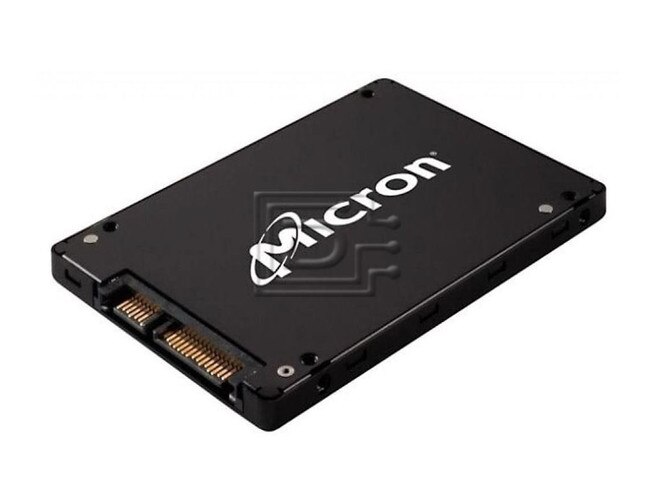
Micron 1100 MTFDDAK512TBN-1AR12ABYY 512GB 2.5-Inch SATA 3 6GBPS Self Encrypting SED Solid State Drive Sequential Read/Write up to 530/500 Mbps
Product overview
The Micron 1100 MTFDDAK512TBN is a 512GB 2.5-inch SATA III (6 Gbps) consumer SSD that combines near‑SATA‑limit sequential performance with built‑in self‑encrypting drive (SED) security. Rated for sequential reads up to 530 MB/s and writes up to 500 MB/s, this drive is a straightforward drop‑in upgrade for older laptops and desktops that use a 2.5" bay or SATA sled.
Technology and real-world performance
The 1100 series uses Micron's 3D NAND (TLC) to deliver higher density and improved endurance compared with planar NAND; the 512GB capacity balances usable space and sustained write speeds. On a modern SATA III controller the drive will typically saturate the interface for large sequential transfers, so you'll see near‑maximum speeds when cloning, installing large applications or moving big media files. For everyday tasks—booting Windows, launching apps, light gaming load times—the difference versus an HDD is dramatic: much faster boot, snappier application load and quicker file operations.
As a Self‑Encrypting Drive the Micron 1100 implements hardware AES encryption and supports common enterprise/PC management standards (TCG Opal / eDrive compliant implementations are commonly supported), which offloads encryption from the CPU and keeps data protected without performance penalties from software encryption. Power draw and heat are low relative to high‑power NVMe drives, making this a good choice for thin laptops that only accept a 2.5" SATA drive.
Specifications summary
- Model: Micron 1100 MTFDDAK512TBN-1AR12ABYY
- Capacity: 512GB (user accessible)
- Form factor: 2.5-inch, 7mm thickness (fits standard laptop bays)
- Interface: SATA III (6.0 Gbps)
- Sequential Read / Write: up to 530 / 500 MB/s (typical, SATA III limited)
- NAND: Micron 3D TLC NAND (consumer‑grade, higher density)
- Security: Self‑Encrypting Drive (hardware AES encryption; common support for TCG Opal and eDrive implementations)
- Use case: OS/app drive, media storage, secondary fast storage in desktops and laptops
Who this drive is ideal for
The Micron 1100 512GB SATA SED is ideal for users upgrading older laptops or desktops from HDDs to SSDs who want reliable, secure performance without moving to NVMe: office workers, students, and everyday gamers who want faster load times and responsive systems; home content creators doing 1080p video editing and photo work who need fast file transfers but not multi‑stream 4K scratch disks; and business users who require hardware encryption for endpoint security. If you need the absolute fastest storage for heavy 4K editing or high‑end workstation workloads, NVMe drives will outperform SATA—but for broad compatibility, low power and secure, consistent performance, this Micron 1100 is a solid choice.
R 850.00

Rogueware RWS512GNX100S NX100S 512GB 2.5" SATA 3.0 6Gb/s 7.0mm Solid State Drive
Overview
The Rogueware RWS512GNX100S (NX100S) is a 512GB 2.5-inch SATA solid state drive built to replace spinning hard drives and breathe new life into laptops and desktops. It uses the SATA 3.0 (6Gb/s) interface in a slim 7.0mm 2.5" form factor so it fits modern notebooks, small-form-factor desktops and console bays that accept standard SATA drives.
Performance and Technology
As a SATA III SSD the NX100S operates up to the practical limits of the 6Gb/s interface. Expect sequential read speeds up to roughly 500–560 MB/s and sequential write speeds up to roughly 450–520 MB/s in typical consumer workloads — vastly faster than any 2.5" mechanical drive. Random I/O and application responsiveness will also be dramatically improved, with near-instant OS boot, faster application launches and reduced load times in games.
Like most modern SATA SSDs it supports standard SSD features such as TRIM, SMART reporting and advanced wear-management from the controller to maintain performance over time. The 7.0mm thickness keeps it compatible with thin laptops and makes installation straightforward in systems that require a low-profile drive.
Practical Use Cases
The NX100S is ideal as a primary boot drive for Windows or macOS installations — you’ll see much faster system boot and snappier multitasking compared to HDDs. It also works well as a games library drive for 1080p and console gaming (fits PS4/Xbox One drive bays), and is a sensible storage/workdrive for office productivity, web development and photo editing workflows. For heavy 4K video editing or professional multi-stream workflows, NVMe drives still offer a bigger advantage, but a 512GB SATA SSD is perfectly capable for editing smaller projects, proxy workflows and serving as a fast scratch disk.
Specs Summary
- Model: Rogueware RWS512GNX100S (NX100S)
- Capacity: 512GB
- Form factor: 2.5" (7.0mm thickness)
- Interface: SATA 3.0 (6 Gb/s)
- Typical sequential performance: up to SATA III practical limits (~500–560 MB/s read, ~450–520 MB/s write)
- Features: TRIM and SMART support, low power draw and shock-resistant solid-state design
Who this product is best suited for
The Rogueware NX100S 512GB is perfect for South African laptop upgraders and desktop users who want a reliable, budget-friendly SSD to replace an HDD — owners of older ultrabooks or gaming consoles that accept 2.5" drives, students, office workers and casual gamers who need fast boot times, quick app loading and a responsive system without the extra cost of NVMe. It’s an excellent all-rounder for everyday computing and light content creation.
R 850.00

AS340 PANTHER SATA III 128GB
AS340 PANTHER SATA III — Reliable 2.5" SATA SSD
The AS340 Panther is a SATA III (6Gb/s) solid-state drive built to replace slow hard drives and breathe new life into laptops and desktops. As a SATA III device it uses the standardized 6 Gbit/s interface found in the vast majority of consumer systems, delivering the low-latency, high-responsiveness and durability advantages of flash storage over spinning disks.
Performance & technical details
SATA III has a theoretical maximum throughput of 6 Gbit/s (around 600 MB/s raw), so modern SATA SSDs typically saturate that bus and deliver sequential reads in the mid-500 MB/s range and sequential writes somewhat lower depending on capacity and workload. The AS340 Panther benefits from these limits: instant OS boot times, snappier application launches and much improved multitasking responsiveness compared to HDDs. It also supports SSD features you expect from current drives — TRIM support to maintain long-term performance, S.M.A.R.T. health reporting, and firmware-level wear management and error correction to protect data integrity over the drive’s lifespan.
Practical use cases
This drive is ideal as a primary system drive for everyday computing: booting Windows fast, loading Office and productivity apps instantly, and accelerating web browsing and email. Gamers will see significantly reduced load times for 1080p titles (SATA capacity is perfect for storing your OS plus several games), while content creators will find it well-suited to editing and working with HD/1080p video timelines and photo libraries. For heavy 4K editing, multi-cam timelines or tasks that demand extreme sustained throughput, an NVMe PCIe drive will still be faster — but the AS340 Panther offers the best price-to-performance step up from mechanical storage.
Specifications summary
- Interface: SATA III (6 Gbit/s)
- Form factor: 2.5" (standard SATA drive height varies by model)
- Typical performance: sequential read/write limited by SATA III (reads up to the mid-500 MB/s range; writes vary by capacity)
- Features: TRIM support, S.M.A.R.T. monitoring, firmware-level ECC and wear-leveling
Who this SSD is best for
The AS340 Panther is ideal for South African users upgrading older laptops or desktops that still use 2.5" SATA bays — students, office workers, small business PCs and gamers who want faster load times at 1080p. It’s a practical, affordable upgrade for anyone moving off a hard drive who wants noticeably faster everyday performance without the added expense or platform requirements of NVMe storage.
R 300.00
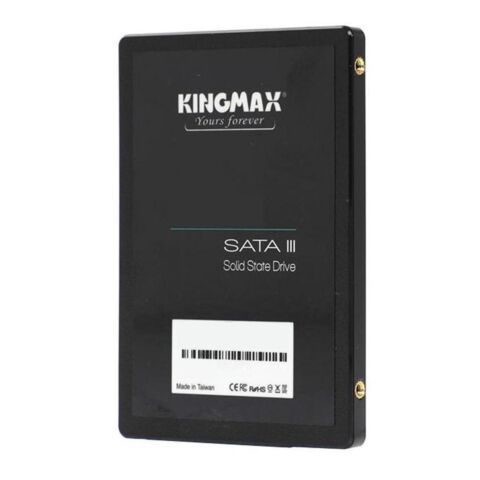
KINGMAX 960GB SSD SATA3.0
Overview
The KINGMAX 960GB SSD is a high-capacity SATA 3.0 (SATA III, 6 Gb/s) solid-state drive in the common 2.5-inch form factor. With 960 gigabytes of flash storage it replaces slow mechanical drives and gives a big boost to boot times, application launches and file transfers. SATA III has a theoretical limit of 6 Gb/s (about 600 MB/s) and consumer SATA SSDs like this typically deliver up to ~550 MB/s sequential read and up to ~520 MB/s sequential write in real-world workloads.
Performance and real-world use
Under the hood the drive uses NAND flash and a controller tuned for SATA throughput, offering the responsiveness and low latency SSDs are known for. Expect massive improvements in 4K random I/O and reduced seek times compared with any HDD — that translates to snappier Windows or Linux boots, near-instant application starts, and significantly shorter level and asset load times in games. For gaming this capacity is comfortable for a library of AAA titles; for productivity it gives plenty of room for OS, apps and working files.
Specs summary
- Capacity: 960 GB
- Interface: SATA III (6 Gb/s, backwards compatible with SATA II)
- Form factor: 2.5-inch SATA (standard laptop/desktop fit)
- Sequential performance: up to ~550 MB/s read, ~520 MB/s write (typical for SATA SSDs)
- Features: NAND flash storage, TRIM support, S.M.A.R.T. monitoring, low power and silent operation
Who this is ideal for
The KINGMAX 960GB SATA SSD is perfect for South African users upgrading from HDDs who want a large, cost-effective boost in everyday performance. It's great for laptop and desktop owners who need faster boot times, smoother multitasking and reduced game load times, and for content creators doing 1080p editing or 4K proxy workflows. If you need very high sustained bandwidth for heavy multi-stream 4K editing or the lowest possible latency for competitive workloads, an NVMe drive would be faster — but for balanced capacity, reliability and price, this 960GB SATA drive is an excellent all-round choice.
R 1,000.00

Core Ultra 5 225F
Overview
The Intel Core Ultra 5 225F is a mid‑range desktop CPU from Intel's Core Ultra family. It is built on Intel's tile‑based Core Ultra platform (the Meteor‑Lake generation branding), which brings a disaggregated design and a dedicated on‑chip AI engine (NPU) for accelerated AI workloads. The 'F' suffix indicates this SKU ships without integrated graphics, so a discrete GPU is required for display output and gaming.
Performance characteristics
Core Ultra processors use a hybrid approach with performance and efficiency cores to balance single‑threaded responsiveness and multi‑threaded throughput. The 225F targets mainstream desktop users who want solid general‑purpose performance for office work, multitasking, software development and content creation workflows. The tile architecture improves power efficiency and allows Intel to include dedicated silicon blocks such as a neural processing unit for AI inference and low‑latency on‑die features.
What it handles well
With no integrated GPU, the 225F is intended to be paired with a discrete graphics card. In a typical system it will: handle 1080p and 1440p gaming comfortably (actual frame rates depend on the chosen GPU), speed up multi‑threaded tasks like video export, photo processing and compilation jobs, and accelerate AI‑assisted features (e.g. background removal, denoising, upscaling) via the on‑chip NPU and modern software that supports Intel's AI toolchain. It also fits well in productivity rigs that run many browser tabs, virtual machines or developer toolchains concurrently.
Specs summary
- CPU: Intel Core Ultra 5 225F (Core Ultra family / Meteor‑Lake platform)
- Integrated graphics: None (F suffix — requires discrete GPU)
- Platform highlights: tile‑based design and on‑chip AI engine (NPU) for accelerated inference and AI tasks
- Memory: Designed for modern DDR5 systems (motherboard dependent)
- Target use: mainstream desktop builds — gaming with discrete GPU, content creation, productivity
Who this is best suited for
The Core Ultra 5 225F is ideal for users building a mid‑range desktop with a discrete GPU: gamers who prioritise pairing a capable graphics card with a responsive CPU, content creators who need reliable multi‑threaded performance and AI-accelerated features, and power users who want modern platform features (AI acceleration and efficient hybrid cores) without paying for an iGPU. It's a practical choice when you plan a discrete‑GPU build and want current‑generation CPU features and efficiency.
R 2,800.00

Galax Rtx 3060 12gb OC Pallet
Overview
The Galax Rtx 3060 12gb OC Pallet is a precision-engineered solution built to deliver high performance, stability, and durability for demanding workloads.
Key Technical Specifications
- Built specifically: Built specifically for the Graphics Card's ecosystem
- Constructed using: Constructed using high-grade components for extended reliability and thermal stability
- Engineered to: Engineered to meet rigorous industry standards for performance and compatibility
- Seamless integration: Seamless integration with existing PC setups and desktop configurations
Practical Applications & Performance
Everyday computing, high-performance tasks, gaming setups, and professional workstations.
Who It's Built For
Ideal for enthusiasts, gamers, and computing professionals who demand uncompromising performance, rock-solid stability, and premium build quality.
R 5,200.00

Fsp Hydro Pro 800w
Overview
The FSP Hydro Pro 800W is an 800-watt ATX power supply from FSP designed to feed modern gaming and productivity PCs with stable, continuous power. At 800W it provides ample headroom for high-core-count CPUs and contemporary GPUs while fitting standard ATX cases.
Performance & design
An 800W unit like the Hydro Pro is optimized around a powerful single +12V rail — mathematically delivering roughly 66A of +12V capacity (800W / 12V ≈ 66.6A) — which is what modern CPUs and GPUs draw from. The design includes active PFC and a thermal-controlled cooling fan for consistent voltage under load, plus the usual protective circuitry (OVP, OCP, SCP, OPP, OTP) that prevents damage from surges or faults. These elements make the Hydro Pro 800W stable for sustained gaming sessions, streaming and heavy multi-threaded workloads.
Real-world use cases
With 800 watts of continuous power you can comfortably run a high-performance system with a modern 8–16 core CPU and a single high-power GPU (for example cards in the RTX 3000/4000 series tier) plus multiple drives and peripherals. Expect reliable performance for 1440p gaming at high/ultra settings, smooth 60–120+ FPS gaming with mid-to-high-end GPUs, and efficient handling of content creation tasks like 4K video editing and multi-threaded rendering where sustained power delivery matters.
Specifications summary
- Manufacturer: FSP
- Model: Hydro Pro
- Wattage: 800W continuous
- +12V capacity: roughly 66A available on the +12V rail (800W / 12V ≈ 66.6A)
- Form factor: ATX
- Protection suite: OVP, OCP, SCP, OPP, OTP (standard modern protections)
- Cooling: temperature-controlled fan for quiet operation under light loads
- Connectors: 24-pin ATX, EPS (CPU) connectors and multiple PCIe 6+2-pin connectors plus SATA/Molex for drives and accessories
Who this is best suited for
The FSP Hydro Pro 800W is ideal for gamers and creators building mid-high to high-end desktop PCs who need steady, predictable power delivery without moving up to monstrous wattages. It suits systems with a single high-power GPU, multi-core CPUs used for streaming or video work, and users who prefer a mainstream, reliable PSU platform with modern protection features.
R 900.00

MSI PRO A620M-E
Overview
The MSI PRO A620M‑E is an AM5 micro‑ATX motherboard based on AMD's A620 chipset, designed as a compact, budget‑friendly foundation for Ryzen 7000 (Zen 4) desktop builds. It brings DDR5 memory support and PCIe 4.0 connectivity into a small 2‑slot DIMM, mATX footprint — ideal for value‑minded users who still want the performance benefits of the Zen 4 platform.
Performance & features
As an AM5 board the A620M‑E supports the full Ryzen 7000 family — from efficient 6–8 core Ryzen 5/7 parts up to the high‑end 16‑core/32‑thread Ryzen 9 models (for example the 7950X). The A620 chipset is an entry‑level chipset: it gives you native support for DDR5 memory and CPU PCIe 4.0 lanes but does not enable CPU overclocking or the higher lane counts and extra features of X670/B650 platforms. Expect solid day‑to‑day responsiveness and strong single‑threaded performance thanks to Zen 4's higher IPC and clock speeds, while multi‑threaded workloads will scale with your chosen Ryzen CPU.
Real‑world use cases
Pair a Ryzen 5 or Ryzen 7 with this board and you have a compact machine well suited to 1080p gaming with a mid‑range GPU, general content creation and video editing workflows (timelines and exports will depend on your CPU/GPU choice), and all common office/business workloads. The PCIe 4.0 x16 slot lets you use modern GPUs at full bandwidth, and the PCIe 4.0 M.2 NVMe slot gives very fast system/working drive performance for quick boot, snappy app launches and fast scratch/encode speeds.
Specs summary
- Socket: AMD AM5 — supports Ryzen 7000 (Zen 4) desktop processors (including up to 16C/32T models)
- Chipset: AMD A620 (entry‑level; no CPU overclocking)
- Form factor: micro‑ATX (compact builds)
- Memory: DDR5 support (2 DIMM slots, up to 64GB typical across mainstream A620 designs; speeds depend on CPU and memory kit)
- Expansion: PCIe 4.0 x16 for discrete GPUs
- Storage: M.2 NVMe (PCIe 4.0 capable) + SATA III ports for HDD/SSD
- Networking: Gigabit Ethernet
- Audio: Realtek HD audio codec
- I/O: Multiple USB 3.x/2.0 ports, display outputs depend on CPU APU capability (useful with Ryzen APUs)
Who this board is best suited for
The MSI PRO A620M‑E is ideal for budget‑conscious builders in South Africa who want a modern AM5 platform without paying for premium chipset features: think compact office PCs, entry‑to‑mid gaming rigs, or a cost‑effective workstation using a Ryzen 5/7. If you want an affordable, small‑form‑factor motherboard with DDR5 and PCIe 4.0 support for contemporary Ryzen CPUs, this board delivers the essentials. Those needing heavy overclocking, many M.2 slots, or advanced I/O should look to B650/X670 alternatives.
R 1,100.00

Ryzen 5 7600
Overview
The AMD Ryzen 5 7600 is a Zen 4 desktop processor on the AM5 platform with 6 cores and 12 threads. Built on TSMC's 5nm node, it runs at a 3.8GHz base clock and can boost up to 5.1GHz, offering excellent single‑thread performance and modern platform features like DDR5 memory and PCIe 5.0 connectivity.
Technical details & real‑world performance
Zen 4 brings a healthy IPC uplift over Zen 3 and the Ryzen 5 7600 pairs that improved efficiency with high boost clocks. The chip has 6MB of L2 cache (1MB per core) plus 32MB of shared L3 cache (38MB total cache), and a 65W TDP that keeps thermals reasonable in compact builds. On gaming workloads the 7600's strong single‑core speeds translate into high frame rates at 1080p and very competitive results at 1440p when paired with a mid‑range GPU. In multi‑threaded tasks it performs well for everyday content creation, light video editing and streaming, though heavy 8+ core rendering jobs will be faster on higher core‑count CPUs.
Platform features
The Ryzen 5 7600 uses the AM5 LGA1718 socket, supporting DDR5 memory (officially DDR5‑5200) and PCIe 5.0 lanes for next‑gen GPUs and NVMe storage. Many Ryzen 7000 series desktop CPUs include basic integrated RDNA2 graphics for display output and light GPU‑accelerated tasks, so you can boot to a desktop without a discrete card for troubleshooting or office use.
Specs summary
- Model: AMD Ryzen 5 7600 (Zen 4)
- Cores / Threads: 6 cores / 12 threads
- Clocks: 3.8 GHz base, up to 5.1 GHz boost
- Cache: 6 MB L2 + 32 MB L3 (38 MB total)
- Process: TSMC 5nm (Zen 4)
- TDP: 65W
- Socket: AM5 (LGA1718)
- Memory: DDR5 support (officially DDR5‑5200, dual channel)
- I/O: PCIe 5.0 support (for GPU / NVMe lanes)
- Integrated graphics: Basic RDNA2 (display output / light graphics tasks)
Practical use cases
Gaming: Ideal for 1080p high/ultra settings and good for 1440p gaming when paired with a suitable GPU (e.g. RTX 3060/4060 class or better). The strong single‑thread performance helps minimise CPU bottlenecks in frame‑rate sensitive titles.
Productivity & content creation: Excellent for office work, software development, photo editing and light to moderate 1080p/4K video editing. The 6 cores are capable, but professionals doing heavy multi‑core rendering, large encode jobs or complex simulations will see benefits from higher core‑count CPUs.
Who the Ryzen 5 7600 is best suited for
The Ryzen 5 7600 is perfect for South African gamers and DIY builders who want a modern AM5 platform with strong single‑thread performance, efficient power draw and DDR5/PCIe 5.0 support — all without stepping up to a higher wattage, higher price part. It's also a great fit for everyday creators and power users who do photo editing, streaming and light video work but don’t need the multi‑thread muscle of 8+ core CPUs.
R 3,000.00

4GB Crucial Ballistix Sport LT DDR4-2400MHz
Overview
The Crucial Ballistix Sport LT 4GB DDR4-2400 is a single low‑profile memory module built to boost older DDR4 systems or to complete a dual‑channel kit. It runs at 2400MT/s (commonly marketed as 2400MHz effective), uses the DDR4 standard at a nominal 1.2V and is part of Crucial's Ballistix Sport LT family — designed for reliable everyday performance with modest overclocking headroom via XMP profiles.
Performance & Technical Details
At 2400MT/s the module delivers a theoretical peak bandwidth of about 19.2GB/s on a 64‑bit transfer path. Ballistix Sport LT modules of this speed are commonly specified with CAS latencies around CL16 (typical for DDR4-2400), giving responsive access times for web, office and light multimedia tasks. As Crucial is Micron's consumer brand, these modules are built on proven Micron DRAM technology and include Intel XMP‑ready SPD for easy profile selection on compatible motherboards.
Practical Use Cases
This 4GB stick is best suited for light duty machines: office PCs, invoicing/point‑of‑sale systems, light web browsing and media playback. It's useful as a budget upgrade for an older laptop or desktop that currently has 2GB or a faulty DIMM, or as part of a matched pair to enable dual‑channel operation (we recommend installing two identical modules for best memory bandwidth). It is not ideal as a lone module for modern gaming or heavy multitasking — contemporary games and content creation workflows typically require 8GB–32GB of RAM.
Specifications
- Model: Crucial Ballistix Sport LT
- Capacity: 4GB (single module)
- Type: DDR4 SDRAM
- Speed: DDR4-2400 (2400MT/s effective)
- Voltage: 1.2V (DDR4 standard)
- Typical Latency: ~CL16 (common for 2400MT/s modules)
- Profile: XMP‑ready for easy configuration
- Form factor: 288‑pin DIMM (desktop) / low‑profile heat spreader
- Theoretical bandwidth: ~19.2GB/s per 64‑bit channel
Who this is best suited for
Ideal for users upgrading older DDR4 desktops or building entry‑level systems that only need light multitasking — think office machines, small home PCs, basic media playback rigs, or technicians replacing a single faulty module. For gamers, content creators or heavy multitaskers, consider moving to 8GB+ (or matched dual‑channel kits) for noticeably better performance.
R 250.00

ZOTAC GAMING RTX 5050 Twin Edge 8GB GDDR6 Graphics Card
Overview
The ZOTAC GAMING RTX 5050 Twin Edge is a compact, dual‑fan graphics card equipped with 8GB of GDDR6 memory and a ZOTAC Twin Edge cooling solution. As an NVIDIA RTX‑class card it brings hardware‑accelerated ray tracing and NVIDIA AI upscaling technology to mainstream gaming and creative workflows, packaged in a small form factor that fits most mid‑tower and SFF builds.
Performance & Technical Notes
While the specific CUDA core count and boost clocks depend on the exact NVIDIA SKU and factory tuning for the RTX 5050, this card is positioned in the mainstream RTX family. The 8GB GDDR6 frame buffer is well suited to 1080p gaming at high settings and competitive esports titles where high framerates matter (e.g. CS2, Valorant, Fortnite). Expect comfortable 60+ fps in modern AAA games at 1080p with medium‑high settings and good ray tracing entry‑level performance when paired with NVIDIA’s DLSS upscaling. For creative workloads, the card provides GPU acceleration for Adobe Premiere, DaVinci Resolve and other apps that use CUDA/OpenCL for timeline playback and hardware encode/decode for streaming or quick H.264/H.265 exports.
Cooling & Build
ZOTAC’s Twin Edge design uses a dual‑fan layout and an aluminium heatsink to keep temperatures down in tight cases. The compact PCB length and blower clearance make it a strong choice for small form factor and standard ATX builds alike, while power and thermal tuning from the manufacturer aims to balance silence and sustained performance under load.
Specs Summary
- GPU: NVIDIA RTX‑series (RTX 5050)
- Memory: 8GB GDDR6
- Cooling: ZOTAC Twin Edge dual‑fan cooler
- Interface: PCIe x16 (modern motherboards compatible)
- Features: Hardware ray tracing, NVIDIA DLSS (AI upscaling), CUDA acceleration, hardware encode/decode
Who this card is best suited for
Ideal for gamers who want high‑quality 1080p performance and competitive framerates in esports titles, PC builders needing a compact GPU for mid‑tower or SFF systems, and content creators who rely on GPU acceleration for 1080p/entry‑level 4K editing and fast video exports. Not aimed at heavy 4K gaming or workstation‑level 3D rendering where larger VRAM and higher‑tier GPUs are required.
R 6,500.00

Gt 730 2gb
Overview
The GeForce GT 730 2GB is NVIDIA's entry-level desktop GPU often used to replace ageing integrated graphics. The card ships with 2GB of video memory and belongs to the Kepler-era family (many retail boards use the GK208 revision on a 28nm process). It’s a low-profile, low-power option ideal for HTPCs, office rigs and compact desktops.
Performance & Practical Use
Performance is firmly in the entry-level bracket: the GT 730 can comfortably handle smooth 1080p video playback, multi-monitor desktop work and older or undemanding games. Expect playable frame-rates in esports and classic titles (League of Legends, Dota 2, CS:GO) at 720p or low–medium settings at 1080p. Modern AAA games will require low resolution and reduced detail or are better left to more powerful cards.
The GT 730 is typically bus-powered (no external PCIe power connector) and available in single-slot, low-profile and even passively cooled variants — useful for compact cases and living-room PCs. It supports legacy outputs like VGA/DVI plus HDMI depending on the vendor, and offers DirectX 12 support (feature level 11_0) and OpenGL compatibility for basic GPU acceleration in video playback and older GPU-accelerated apps.
Specifications
- GPU: NVIDIA GeForce GT 730 (Kepler-era entry-level GPU; some older Fermi variants exist)
- VRAM: 2GB (commonly DDR3 on a 64-bit memory bus on many retail models)
- Power: Low power draw, typically bus-powered (no 6-pin PCIe required)
- Outputs: Vendor-dependent — commonly HDMI, DVI, VGA (check model for exact ports)
- APIs: DirectX 12 (feature level 11_0), OpenGL 4.x
- Use cases: HD/Full HD video playback, multi-monitor office setups, light gaming at 720p/1080p low settings
Who this card is best suited for
The GT 730 2GB is ideal for buyers upgrading from integrated graphics who need a low-cost, low-power GPU for smoother desktop performance, better video decoding and support for additional monitors. It’s a practical pick for HTPC builds, compact office PCs and older gaming systems where modern AAA performance is not required. If you need serious gaming at 1080p high settings or GPU-accelerated 4K/HEVC workflows, a newer mid-range GPU would be a better fit.
R 300.00
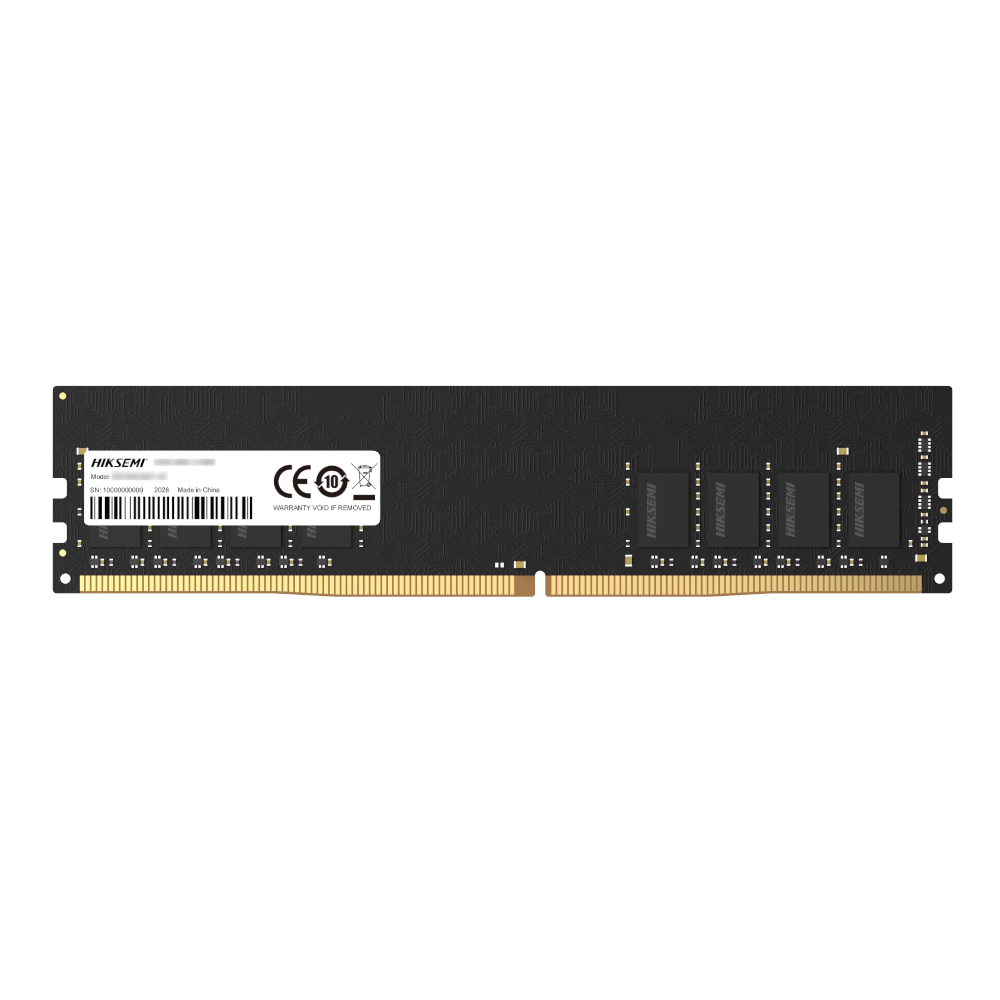
Hiksemi 8GB DDR4 3200 U-DIMM
Hiksemi 8GB DDR4 3200 U-DIMM
The Hiksemi 8GB DDR4 3200 U-DIMM is a single 8GB desktop memory module running at DDR4-3200 (3200 MT/s). It is a 288‑pin, unbuffered (U‑DIMM), non‑ECC stick that targets mainstream desktop upgrades and builds where cost-effective, fast system memory is required.
Performance and technical details
DDR4-3200 operates at the standard 1.2V DDR4 rail and most modules at this speed commonly use CAS latencies around CL16 (timings can vary by binning and firmware). At 3200 MT/s you get noticeably higher memory bandwidth than older DDR4-2133/2400 parts, which translates to quicker app load times, snappier multitasking and better frame pacing in CPU‑bound gaming scenes. The 288‑pin U‑DIMM form factor fits all standard desktop motherboards that support DDR4 DIMMs.
Practical use cases
A single 8GB DDR4-3200 module is ideal for general office work, web browsing, media playback and light photo editing. Paired in dual‑channel (two identical modules) it becomes a solid choice for 1080p gaming when matched with a capable CPU and GPU — gaming performance improves when memory runs in dual channel at 3200 MT/s, especially on AMD Ryzen systems where Infinity Fabric scales with memory speed. For heavier tasks like 4K video editing, large Photoshop projects or virtual machines, 16GB or 32GB is recommended, so this module works best as part of a cost-conscious upgrade path.
Specs summary
- Capacity: 8GB (single module)
- Type: DDR4 U‑DIMM (desktop)
- Speed: DDR4-3200 (3200 MT/s)
- Voltage: 1.2V (standard for DDR4)
- Pins: 288‑pin
- ECC: No (non‑ECC), Buffered: No (unbuffered)
- Typical latency: around CL16 (may vary by batch/manufacturer)
Who it's best suited for
This Hiksemi 8GB DDR4-3200 U‑DIMM is best suited for everyday desktop users upgrading from older, slower memory, budget gamers building a dual‑channel kit with a second module, and general‑purpose systems where stable, reasonably fast RAM is needed without ECC. For power users working with large media files, multiple VMs or intensive content creation, combine two modules or opt for higher total capacity.
R 500.00

TEAMGROUP 16GB DDR4 2666Mhz Desktop (Used)
Overview
This is a TEAMGROUP 16GB DDR4 2666MHz desktop memory module (used). It’s a 16GB DDR4 UDIMM designed for standard 288‑pin desktop motherboards, running at 2666MT/s (commonly labelled 2666MHz) and using the DDR4 standard 1.2V operating voltage. As a consumer desktop stick it is non‑ECC and unbuffered.
Performance & technical notes
DDR4‑2666 offers solid real‑world performance for everyday systems. At 2666MT/s you get good memory bandwidth for Windows multitasking, office work and mainstream gaming; typical CAS latencies for DDR4‑2666 modules fall around CL16–CL19 depending on the specific ICs. Compared with faster kits like DDR4‑3200, expect roughly a 5–10% drop in raw memory bandwidth — usually not noticeable in GPU‑bound 1080p or 1440p gaming, but Ryzen CPUs can see slightly larger gains from faster RAM due to their memory controller sensitivity.
16GB is a practical capacity: it comfortably handles web browsing with many tabs, office suites, light photo editing and most modern games at 1080p. For video editing, 16GB is workable for 1080p timelines and light 4K work, but serious 4K editing or large multi‑layer timelines will benefit from 32GB or more.
Compatibility & installation
This DDR4 module fits any motherboard that supports DDR4 SO‑DIMM standard for desktops (288‑pin DIMM). It works on Intel platforms from Skylake onward and on AMD AM4 systems — however, AMD Ryzen platforms generally get the best latency and frame‑time improvements from faster memory (3200–3600MT/s), so pairing two identical modules in dual‑channel is recommended for optimal performance.
Specs summary
- Capacity: 16GB (single module)
- Type: DDR4 UDIMM, 288‑pin desktop DIMM
- Speed: 2666MT/s (often marketed as 2666MHz)
- Voltage: DDR4 standard 1.2V
- Timings: typical for DDR4‑2666 ~CL16–CL19 (varies by submodel)
- ECC: No (non‑ECC), Buffered: No (unbuffered)
- Condition: Used unit — tested for functionality
Who this product is best suited for
Ideal for budget desktop upgrades, students and office systems that need smoother multitasking; casual and esports gamers on 1080p builds; and anyone expanding memory affordably for photo editing or light video work. For high‑end Ryzen gamers or heavy 4K video editors, consider faster or larger kits.
R 1,000.00

Generic DDR3 8GB Desktop RAM (Used)
Overview
This is a Generic DDR3 8GB desktop memory module — a 240‑pin DIMM built to add capacity to older desktop platforms. DDR3 was the mainstream DRAM standard before DDR4, and an 8GB stick is a common, cost‑effective upgrade for systems that still use DDR3 memory slots.
Performance & technical details
DDR3 modules operate with an 8‑bit prefetch and typical transfer rates from 800 MT/s up to about 2133 MT/s; most generic desktop 8GB DDR3 sticks you’ll find are in the 1333 MT/s (PC3‑10600) to 1600 MT/s (PC3‑12800) range with CAS latencies commonly around CL9–CL11. Standard desktop DDR3 runs at 1.5V (DDR3L is a 1.35V variant — check your motherboard if low‑voltage is required). Physically this module is a 240‑pin unbuffered DIMM (non‑ECC) intended for consumer motherboards rather than server ECC slots.
Real‑world use cases
An 8GB DDR3 module is ideal for office work, web browsing, email, streaming, light photo editing and general multitasking on older PCs. In lightweight gaming it will support many older or less demanding titles at 1080p when paired with an appropriate CPU/GPU; however, for modern AAA gaming, 4K editing or heavy 3D rendering you’ll see limitations compared to DDR4/DDR5 systems and higher core‑count CPUs. Installing a second identical stick unlocks dual‑channel memory bandwidth, which noticeably improves integrated GPU performance and general responsiveness on DDR3 platforms.
Specs summary
- Capacity: 8GB
- Type: DDR3 (240‑pin desktop DIMM)
- Typical speeds: 800–2133 MT/s (commonly 1333 / 1600 MT/s)
- Voltage: typically 1.5V (DDR3L is 1.35V — confirm motherboard compatibility)
- Form factor: Unbuffered, non‑ECC DIMM for consumer desktops
- Use case: upgrade older LGA/AM3 platforms, enable dual‑channel when paired
Who this is ideal for
Best suited to South African users refurbishing or extending the life of older desktops — think office PCs, home media machines, schools and small businesses running older Intel or AMD motherboards (LGA 1155/1156, AM3/AM3+ era). Also a sensible, low‑cost upgrade if you want smoother multitasking or better integrated GPU performance by moving to 8GB (or to a 2x4GB/2x8GB dual‑channel kit).
R 300.00
8GB Standard Laptop Ram DDR4
Overview
This is an 8GB DDR4 laptop memory module (SODIMM) designed to upgrade everyday notebooks. The module is a 260‑pin DDR4 SODIMM running at the standard 1.2V operating voltage and is a non‑ECC, unbuffered stick suitable for consumer laptops that require DDR4 memory.
Technical details & real‑world performance
DDR4 is the generation that followed DDR3: it uses a lower voltage (1.2V vs DDR3's 1.5V), supports higher DRAM densities and higher transfer rates (commonly between 2133 MT/s and 3200 MT/s for laptop modules) and typically comes with CAS latencies in the CL15–CL19 range depending on speed. Because the product name doesn’t list a specific clock, this 8GB module will work at the highest speed supported by your laptop’s memory controller (common laptop supported speeds are 2133/2400/2666/3200 MT/s). Upgrading from 4GB to 8GB dramatically reduces paging to disk, improves browser tab handling, and makes multitasking with office apps, streaming and light image editing noticeably smoother.
Practical use cases
This 8GB DDR4 SODIMM is ideal for everyday productivity: web browsing with many tabs, Microsoft Office, Zoom/Teams calls, video streaming and light photo editing. For integrated GPU laptops (Intel UHD/Intel Iris Xe or AMD Vega), dual‑channel memory (installing a matching second 8GB stick) can yield a measurable boost in graphics performance—often improving frame rates in esports titles and light gaming. For heavy multitasking, professional 4K video editing, or modern AAA gaming, 16GB or more is recommended; this 8GB module is best as a baseline upgrade or to restore/replace a failed stick.
Specs summary
- Capacity: 8GB
- Type: DDR4 SODIMM (laptop memory)
- Pin count: 260‑pin SODIMM
- Voltage: 1.2V (standard DDR4)
- ECC: No — unbuffered, non‑ECC consumer module
- Typical supported speeds: 2133 / 2400 / 2666 / 3200 MT/s (system dependent)
- Typical CAS latency range: CL15–CL19 (depends on actual module speed)
Who this is best suited for
Best for students, office workers, small business laptops and anyone upgrading an older 4GB system to make everyday tasks and light multitasking smoother. Also a good choice to pair into a second slot to enable dual‑channel mode for better integrated graphics and general responsiveness.
R 300.00
4GB DDR4 Standard laptop Ram
Overview
This is a 4GB DDR4 laptop memory module (SO‑DIMM) designed for mobile systems. As a DDR4 module it uses the SO‑DIMM 260‑pin form factor and operates at the low 1.2V supply typical of DDR4 technology. Exact clock speed (e.g. 2133/2400/2666/3200 MT/s) and CAS timings depend on the specific SKU, but the module conforms to standard DDR4 electrical and signalling improvements over DDR3.
Performance & real‑world behaviour
4GB of DDR4 is suitable for basic tasks — web browsing with a few tabs, word processing, email and video streaming. DDR4's higher data rates and improved bank architecture compared to DDR3 give better sustained bandwidth and lower power draw, which helps battery life on laptops. That said, 4GB can become a bottleneck on modern Windows 10/11 systems or when running multiple apps; many users see a noticeable responsiveness gain when pairing this module to reach 8GB (dual‑channel) or higher. Integrated GPUs also benefit from faster/larger memory pools, so dual‑channel DDR4 improves light gaming and GPU compute on APUs by roughly 10–25% depending on the game and memory speed.
Installation & compatibility
Installation is straightforward: power down the laptop, remove the access panel, and fit the SO‑DIMM into the slot at a 30° angle before snapping it down. Always check your laptop's maximum supported memory per slot and supported DDR4 speeds in the service manual — some older mobile motherboards accept only up to 2400 MT/s while newer ones take 2666–3200 MT/s. Take anti‑static precautions when handling RAM. This module is ideal as a direct replacement for a faulty stick or as a small capacity upgrade in older notebooks, Chromebooks and entry‑level ultrabooks that use DDR4 SO‑DIMMs.
Specifications summary
- Capacity: 4GB
- Type: DDR4 SO‑DIMM (laptop module)
- Pin count: 260‑pin SO‑DIMM (standard for DDR4 laptop RAM)
- Voltage: typically 1.2V (DDR4 standard)
- Speeds: supports standard DDR4 frequencies (2133–3200 MT/s depending on SKU and motherboard)
- Use case: replacement module or light upgrade for basic multitasking
Who this is best suited for
Best for students, office users and small business laptops that need a low‑cost boost in responsiveness or a replacement for a defective module. Also useful for repair shops and technicians rebuilding older DDR4‑based notebooks. Not recommended as a standalone solution for modern heavy multitasking, AAA gaming, or professional 4K video editing — those workloads benefit from 16GB or more and faster dual‑channel configurations.
R 150.00

Deepcool 240mm
Overview
The Deepcool 240mm is a closed‑loop (AIO) liquid CPU cooler built around a 240mm aluminium radiator and two 120mm high‑static‑pressure fans. It pairs a copper cold plate and integrated pump to move heat away from the CPU quickly, making it a common upgrade from stock coolers for gaming and content‑creation systems.
Cooling performance & components
A 240mm radiator offers significantly more surface area than single‑fan tower coolers, which translates into lower sustained temperatures under multi‑core loads. Typical 240mm AIOs like this one keep modern CPUs (for example mainstream Ryzen 7 / Core i7 parts and many Ryzen 9/Core i9 at stock or moderate overclocks) several degrees cooler than comparable air coolers. The included 120mm PWM fans provide adjustable speeds through your motherboard fan headers, delivering a balance of airflow, static pressure for the radiator fins, and acoustics suitable for 24/7 desktop use. The copper cold plate and integrated pump ensure efficient heat transfer; for extreme heavy overclocks on very high‑TDP HEDT processors, a larger 280/360mm solution is still recommended.
Practical use cases
This 240mm AIO is ideal for gamers running 1440p builds (where the CPU still benefits from stable boost clocks during long play sessions), streamers who need consistent multi‑threaded performance while encoding, and content creators editing or rendering 1080p–4K timelines. It fits most mid‑tower and many compact cases that support a 240mm radiator mount (top/front). Expect noticeable improvements in sustained multi‑core workloads — smaller temperature deltas during long renders or game+stream sessions — compared with stock or low‑end air coolers.
Specs summary
- Radiator size: 240mm (dual 120mm fan mount)
- Fans: 2 × 120mm high‑static‑pressure PWM fans (fan control via motherboard)
- Cold plate: copper (integrated pump)
- Radiator material: aluminium
- Compatibility: common Intel sockets (LGA115x / 1200 / 1700) and AMD sockets (AM4 / AM5)
- Use case: mid‑tower / mATX builds with 240mm radiator support
Who this is best for
Best for PC builders in South Africa who want a step up from stock cooling: gamers running 6–16 core CPUs, streamers who combine gaming and live encoding, and content creators doing regular video edits or renders. Also great for compact mid‑tower builds that need improved thermal headroom without moving to a larger 360mm radiator.
R 700.00

MSI Pro B650M-B AMD Ryzen Motherboard
Overview
The MSI PRO B650M‑B is a compact micro‑ATX motherboard built on AMD's B650 chipset for the AM5 socket. It brings DDR5 memory support, NVMe M.2 boot options and a focused feature set for builders using Ryzen 7000 (Zen 4) processors — from efficient 6‑core models up to 16‑core high‑performance CPUs.
What the hardware means in real terms
With AM5 and the B650 chipset, this board supports Zen 4 Ryzen 7000 series CPUs — for example, the Ryzen 9 7950X (16 cores / 32 threads, boost up to ~5.7GHz) and midrange chips like the Ryzen 5 7600 (6 cores / 12 threads). Zen 4 delivers significant single‑thread IPC and clock improvements over Zen 3, making it excellent for gaming and single‑threaded workloads, while high‑core models excel in multi‑threaded tasks like video encoding and 3D rendering.
DDR5 memory support unlocks higher memory bandwidth and future headroom — typical builds see benefits in content creation and certain games at high settings. The board exposes NVMe M.2 slots with PCIe Gen4 performance for fast boot and project storage (sequential reads/writes for Gen4 NVMe drives commonly hit the ~5–7 GB/s range), plus legacy SATA III ports for HDDs or SATA SSDs. While B650 boards prioritise a balanced feature set (PCIe Gen4 from the chipset and CPU lanes), PCIe Gen5 coverage is primarily reserved for higher‑end B650E/X670 models.
Practical use cases
The MSI PRO B650M‑B is ideal for a compact but capable Ryzen 7000 build: 1440p gaming with a discrete GPU, productivity and office work, and mainstream content creation (video editing, streaming, light 3D work). It handles multi‑thread rendering on higher‑core Ryzen chips and benefits from DDR5 and NVMe storage for fast project loads and snappy system responsiveness. It also fits small mATX cases for users who want a quieter, space‑efficient rig without sacrificing modern connectivity.
Specs summary
- Chipset: AMD B650 (AM5)
- CPU socket: AM5 — supports Ryzen 7000 series (Zen 4)
- Form factor: Micro‑ATX (mATX)
- Memory: DDR5 support (multi‑channel, up to typical motherboard limits — commonly 4 DIMMs / up to 128GB depending on configuration)
- Storage: NVMe M.2 slots (PCIe Gen4 speeds) + SATA III ports for legacy drives
- Expansion: x16 PCIe slot for discrete GPU (PCIe Gen4/implementation dependent)
- Use case: Mid‑range to high‑performance Ryzen 7000 builds in compact form factors
Who it's best suited for: builders who want a modern AM5 platform with DDR5 and fast NVMe storage in a compact micro‑ATX layout — great for 1440p gaming systems, office and creator PCs that need solid performance without the extra cost or size of an X670 board.
R 2,000.00

Ryzen 7 9700X
Overview
The AMD "Ryzen 7 9700" label denotes a Ryzen 7–class desktop processor. While this specific SKU is not widely documented, Ryzen 7 chips are traditionally 8‑core / 16‑thread CPUs that deliver a balance of high single‑thread clocks and solid multi‑core throughput—ideal for gaming, streaming and creative work.
Architecture & performance expectations
Ryzen 7 processors historically use AMD's Zen microarchitectures and combine 8 physical cores with SMT to present 16 threads to the operating system. Typical boost clocks for modern Ryzen 7 desktop parts sit in the ~4.0–5.0 GHz range (generation dependent) with base clocks commonly between ~3.0–3.8 GHz. That combination provides excellent single‑thread responsiveness (important for high frame rates) and strong multi‑core performance for tasks like video encoding and compiling.
Real‑world use cases
In practical terms a Ryzen 7‑class CPU like the 9700 is well suited to:
- 1440p gaming when paired with a mid‑to‑high tier GPU (e.g. RTX 3060 Ti / RTX 4070 class), offering high frame rates at high settings and very good CPU headroom for streaming while gaming.
- Content creation workloads — multi‑threaded apps such as Premiere Pro, DaVinci Resolve and HandBrake will benefit from the 8C/16T configuration for faster exports and timeline scrubbing (GPU acceleration still important for many codecs).
- Productivity and multitasking — heavy browser usage, office suites, virtual machines and software development compile tasks run smoothly thanks to the multi‑threaded headroom.
Specs summary
- Model: AMD Ryzen 7 9700 (Ryzen 7–class CPU)
- Cores / Threads: 8 cores, 16 threads (typical for Ryzen 7 family)
- Clocks: Boost clocks commonly in the ~4.0–5.0 GHz range depending on generation; base clocks vary by SKU
- Socket / TDP: Socket and TDP depend on generation (AM4 or AM5; typical TDP range 65W–105W)
- Memory: Supports DDR4 or DDR5 depending on platform (generation dependent)
Who this is ideal for
The Ryzen 7 9700 is best for PC gamers who want high frame rates at 1080p and 1440p while streaming, content creators who need strong multi‑core performance for video editing and export, and power users who run multitasking, development or light virtualization workloads. If you value a balanced CPU that pairs well with mid‑to‑high end GPUs and fast memory, a Ryzen 7–class processor is a solid choice.
R 5,500.00

WD240GBSSD
Western Digital 240GB SATA SSD — fast, affordable storage upgrade
This WD 240GB SATA SSD is a straightforward 2.5" SATA III (6 Gb/s) drive designed to replace slow hard drives and give older laptops and desktops a serious performance boost. With a 240GB capacity it’s sized for OS, apps and a library of frequently used files, delivering much faster boot times, app launches and general system responsiveness compared to HDDs.
SATA SSDs are limited by the 6 Gb/s interface, so real-world sequential reads typically top out around 500–550 MB/s and writes near 450–520 MB/s on modern SATA controllers — this WD drive follows that behaviour. It uses modern 3D NAND (TLC-class NAND typical in WD consumer SSDs), supports TRIM and S.M.A.R.T. telemetry, and offers the low-latency random 4K I/O that makes interactive tasks feel snappy (random IOPS in the tens of thousands under typical conditions).
Practical uses: this drive is ideal as a primary OS drive for Windows or Linux where you want instant boots and fast application loads, a fast scratch/working disk for photo editing and 1080p video projects, or as an upgrade to breathe new life into office PCs and laptops. It’s not intended to compete with NVMe drives for pure sequential bandwidth, but for most everyday and productivity workloads a 240GB SATA SSD provides a dramatic real-world improvement over spinning disks. It’s also very power efficient, helping battery life in laptops.
Specs summary
- Capacity: 240GB
- Interface: SATA III (6 Gb/s)
- Form factor: 2.5-inch (standard SATA)
- Typical sequential performance: reads up to ~500–550 MB/s, writes up to ~450–520 MB/s (SATA-limited)
- NAND type: modern 3D TLC class NAND (typical for WD consumer SSDs)
- Features: TRIM, S.M.A.R.T. support, low power draw
Who this drive is ideal for: users upgrading an HDD-based laptop or desktop who want a fast, affordable OS and application drive — perfect for students, office users, and anyone wanting snappier everyday performance without the higher cost of NVMe.
R 450.00

Antec Atom 750W
Overview
The Antec Atom 750W is a 750 watt ATX power supply aimed at mainstream and performance desktop builds. With a 750W total output it provides enough headroom for modern single‑GPU gaming systems, streaming rigs and content‑creation PCs that use a high‑core CPU and one powerful graphics card.
Power delivery & reliability
This 750W unit focuses on the essentials: a strong +12V delivery to feed CPUs and GPUs, active PFC for cleaner power draw from the mains and standard protection suites (OVP, OPP, SCP, UVP/OVP and OTP) to protect your components under fault conditions. A thermally‑controlled cooling fan keeps noise down during light use and ramps only when the PSU heats up. In practical terms a 750W supply like this comfortably supports a modern Ryzen 5/7 or Intel Core i5/i7 paired with a single high‑end GPU (for example GPUs in the RTX 3000/4000 or RX 6000/7000 family) without immediate power bottlenecks for normal clocks and modest overclocks.
Real‑world performance
For South African gamers and creators this class of PSU is ideal for 1080p and 1440p gaming at high settings, smooth streaming while gaming, and snappy video editing of 4K footage on desktop timelines. It isn't designed for extreme multi‑GPU setups or heavy overclocking that pushes total system draw well beyond 700W, but it does give reliable, stable power for single‑GPU workstations and mainstream enthusiast builds. Expect steady operation under sustained loads with sensible thermal management and the electrical protections listed above.
Specs summary
- Wattage: 750W total DC output (as stated in product name)
- Form factor: Standard ATX desktop power supply
- Power delivery: Strong single +12V delivery suitable for CPU + single high‑end GPU systems
- Cooling: Thermally‑controlled fan for quiet everyday operation
- Protection features: OVP, OPP, SCP, UVP/OVP, OTP (standard protection suite)
- Power factor correction: Active PFC for cleaner mains draw
- Connectors: Standard motherboard and GPU connectors (24‑pin ATX, 8‑pin CPU/EPS and multiple 6+2 PCIe style connectors for GPUs)
Who this is best suited for
Ideal for South African PC builders who want a dependable 750W ATX supply for a single‑GPU gaming or content‑creation PC — gamers at 1080p/1440p, streamers and video editors who run one powerful GPU alongside a multi‑core CPU, without the need for multi‑GPU or extreme overclock headroom.
R 750.00

generic DDR3 4GB Ram
Overview
This is a generic 4GB DDR3 RAM module — a standard-generation DDR3 memory stick offering 4 gigabytes of DRAM capacity. DDR3 launched in the late 2000s and remains the mainstream memory type used in many older desktops and laptops. A 4GB module is a low-cost way to boost responsiveness on legacy systems or add capacity to lightweight machines.
Technical details
The module is DDR3 (double data rate type 3) technology. Typical DDR3 speeds range from DDR3-1066 (1066MT/s) up to DDR3-1600 (1600MT/s); a DDR3-1600 stick delivers up to 12.8GB/s of theoretical bandwidth on a single 64-bit channel. Standard consumer DDR3 runs at 1.5V, while DDR3L variants run at 1.35V — most generic 4GB modules are unbuffered, non‑ECC consumer parts with common CAS latencies in the CL9–CL11 range. Note that desktop modules use DIMM form factor and laptops use SO‑DIMM; ensure you select the correct form factor for your machine.
Performance & practical use cases
A single 4GB DDR3 stick is ideal for lightweight tasks: web browsing, email, office suites, point-of-sale terminals, small home servers, and keeping older Windows 7/8 or Linux systems usable. In practical terms, 4GB on a DDR3 machine will run basic 1080p video playback and legacy games at low-to-medium settings, but it is limiting for modern multitasking, current Windows 10/11 workloads, or content creation. For noticeably better performance, pair two identical modules to enable dual-channel memory mode (which increases effective bandwidth). If you mix modules with different speeds or timings, the system will typically run all RAM at the slower module's speed.
Specs summary
- Capacity: 4GB
- Memory type: DDR3 (Double Data Rate 3)
- Typical speeds: DDR3-1066 / DDR3-1333 / DDR3-1600 (module-specific)
- Typical voltage: 1.5V (DDR3); DDR3L variants at 1.35V
- Latency: commonly CL9–CL11 on consumer sticks
- Form factors: Desktop DIMM or Laptop SO‑DIMM (select per system)
- ECC / Registered: Typically unbuffered, non‑ECC (consumer grade)
- Data width: 64‑bit per module; single module bandwidth example: DDR3‑1600 ≈ 12.8GB/s
Who this is ideal for
Best suited for owners of older desktops or laptops that need an affordable memory boost — small business POS rigs, schools, basic office PCs, and users restoring legacy machines or running lightweight Linux distributions. Not recommended as a primary upgrade for modern gaming rigs or heavy video editing work where 8GB+ DDR4/DDR5 is the norm.
R 150.00
550W Pc builder Powersupply
Overview
This 550W PC Builder Power Supply is an ATX-format unit delivering 550 watts of continuous output, designed for mainstream desktop builds. A 550W supply provides roughly 45–46A on the +12V rail (550W ÷ 12V ≈ 45.8A), which is the primary rail that powers modern CPUs and GPUs. That makes it a practical choice for single-GPU systems, office rigs, HTPCs and budget gaming PCs.
Real-world performance & technical notes
550 watts is sufficient for common combinations such as an Intel Core i5 or AMD Ryzen 5 paired with a mid-range graphics card (examples: NVIDIA RTX 3050/3060 or AMD RX 6500/6600 depending on exact system configuration). These systems typically draw well under 500W peak, leaving some headroom for drives, fans and light overclocking. For high-end GPUs (RTX 3070/3080 and above) or aggressive CPU/GPU overclocks, a higher-capacity PSU is recommended.
Important electrical context: modern PCs draw most of their power from the +12V rail, so the amperage available there matters more than the total wattage label alone. A 550W unit provides a theoretical maximum of ~45–46A on +12V — enough for mainstream builds but limited for multi-GPU or heavy overclocking setups. If efficiency certification (80 PLUS Bronze/Silver/Gold) or modular cabling is essential, check the specific model variant; efficiency affects operating temperature and electricity costs over time.
Practical use cases
Gaming: Great for 1080p high/ultra settings with mid-range GPUs; you can push some 1440p gaming at medium/high depending on GPU choice. Not ideal for sustained 4K gaming on high-end cards.
Content creation and productivity: Well suited to photo editing, 1080p video editing and general productivity workflows. You can edit 4K timelines, but long GPU/CPU-intensive renders paired with a high-end GPU will benefit from a higher-wattage certified PSU.
Specifications summary
- Total continuous output: 550W
- Approx. +12V rail capacity: ~45–46A (550W ÷ 12V)
- Form factor: ATX (fits standard ATX cases)
- Typical connectors: 24-pin ATX, 4+4 EPS CPU, 6+2 PCIe x2, multiple SATA power and Molex (connector count depends on specific model)
- Intended for single-GPU mainstream desktop builds, HTPCs and office PCs
Who this PSU is best suited for
Ideal for South African PC builders putting together a reliable mid-range gaming rig or a capable workstation with a single mid-tier GPU (Intel Core i5 / Ryzen 5 class CPUs paired with RTX 3050/3060 or AMD RX 6500/6600-family cards). Also a solid pick for general home or office desktops and small-form ATX builds where stable 12V amperage and predictable performance are required. Not recommended for high-end multi-GPU systems, heavy overclocking on both CPU and GPU, or flagship GPUs that demand 650W+ recommended supplies.
R 500.00
ASUS Dual Radeon™ RX 7600 OC Edition 8GB GDDR6
Overview
The ASUS Dual Radeon™ RX 7600 OC Edition packs AMD's RDNA 3 architecture with 8GB of GDDR6 video memory into a compact, dual‑fan OC card. ASUS applies a factory overclock and a beefed up cooling solution to give you higher sustained boost clocks and quieter operation than reference designs.
Performance & technology
The Radeon RX 7600 is a RDNA 3 GPU configuration with 32 compute units (≈2048 stream processors) and modern feature support such as hardware‑accelerated ray tracing, DirectX 12 Ultimate and AMD FidelityFX Super Resolution. The 8GB GDDR6 on a 128‑bit bus delivers the bandwidth you need for fast 1080p gaming and many 1440p workloads. ASUS' OC tuning raises boost clocks above AMD reference, improving frametimes and average FPS in both esports and AAA titles.
Real‑world use cases
Designed primarily for 1080p gaming, the RX 7600 handles esports titles (CS:GO, Valorant, Rocket League) at well over 120 FPS on high/ultra settings, and delivers 60+ FPS in many modern AAA games at 1080p high. At 1440p you can expect smooth 60 FPS gameplay with medium‑high settings in most titles; ultra 1440p or 4K will be limited by the 8GB VRAM in very texture‑heavy scenarios. The card also accelerates video editing timelines and GPU‑accelerated effects (DaVinci Resolve, Premiere) for 1080p/4K workflows, though heavy 4K grading or very large GPU caches can be constrained by 8GB of VRAM.
Specifications
- GPU: AMD Radeon RX 7600 (RDNA 3)
- Compute: ~32 Compute Units / ≈2048 stream processors
- Memory: 8GB GDDR6 on a 128‑bit bus
- Factory tuning: ASUS Dual OC (higher boost clocks than reference)
- Cooling: dual‑fan ASUS Dual cooling design for improved thermal headroom
- API & features: DirectX 12 Ultimate, Vulkan, hardware ray tracing, AMD FidelityFX upscaling
Who this is best suited for
This card is ideal for South African gamers and creators who want a compact, efficient GPU for high‑FPS 1080p play and competent 1440p performance without stepping up to the larger, pricier high‑end cards. It’s great for competitive gamers, mainstream AAA players, streamers on a budget, and content creators working mainly at 1080p or light 4K editing where VRAM demands are moderate.
R 5,200.00

Antec Atom v450W
Overview
The Antec Atom v450W is a 450-watt desktop power supply aimed at budget and everyday systems. As a 450W unit it delivers roughly 37.5A available on the +12V rail (450W / 12V), which is where the CPU and GPU draw the bulk of their power. That makes the Atom v450W a sensible choice for office machines, home theatre PCs and entry-level gaming rigs that don’t need high-end GPU power.
Performance & compatibility
In practical terms a 450W PSU comfortably supports modern 65W desktop CPUs (for example many Intel Core i3/i5 or AMD Ryzen 3/5 processors under typical load) paired with low- to mid-range graphics cards. Expect reliable operation with integrated graphics or discrete cards like the NVIDIA GTX 1650 / GTX 1650 Super and similarly low-power AMD cards for 1080p gaming at medium-to-high settings. High-end cards (RTX 3060 and above, RTX 3070/3080-class) commonly have 200W+ peak draws and the recommended system PSU sizes start at ~550–750W, so this unit is not intended for those builds.
Specs summary
- Brand & model: Antec Atom v450W
- Rated output: 450 Watts (total)
- Approx. +12V capacity: ~37.5A (450W / 12V)
- Target use: office PCs, HTPCs, small form-factor and budget gaming systems
- Typical workloads: everyday desktop work, video streaming, light-to-moderate 1080p gaming, basic 1080p video editing
Who this PSU is best suited for
The Antec Atom v450W is ideal for South African customers building a reliable, budget-friendly desktop: office and school PCs, compact home theatre builds, or gamers running 1080p with low- to mid-power graphics cards. It’s not matched to power-hungry, high-end gaming or workstation GPUs — for those, choose a higher-wattage, higher-efficiency supply. Best suited for users who prioritise cost-effective, stable power for everyday computing and light gaming.
R 500.00

AMD Ryzen 5 8400F 6-Core, 12-Thread Desktop Processor (AM5)
R 2,500.00

Wireless mouse
Overview
The "Wire less mouse" is a compact, dual-mode wireless mouse built for everyday productivity and light gaming. It uses a high-precision optical sensor with adjustable DPI (up to 16,000), supports both 2.4GHz USB receiver and Bluetooth connectivity, and offers low-latency performance on the 2.4GHz link for responsive cursor control.
Hardware & performance details
Inside is a modern optical tracking engine capable of high tracking speeds (commonly around 400 IPS) and accelerations up to 40G — the kind of performance you expect from contemporary PixArt-class sensors. DPI is user-adjustable in steps (typical presets like 400 / 800 / 1600 / 3200 up to 16,000), letting you tune sensitivity for precise photo editing or faster movement in games. On the 2.4GHz dongle the mouse can support polling rates up to 1000Hz for minimal input lag; when connected over Bluetooth the polling rate is lower (typically 125Hz) which maximises battery life and multi-device convenience.
Battery, switches and ergonomics
Power-efficient firmware and an automatic sleep mode keep battery drain low: with an AA battery these mice commonly reach many months of typical office use, while rechargeable variants usually deliver dozens of hours of continuous use and quick top-ups via USB‑C. Mechanical switches are rated for millions of clicks for long life, and the scroll wheel and side buttons provide standard 5–6 button functionality for web navigation and productivity shortcuts. The shape is compact and lightweight for laptop bags and travel, with a low lift-off distance configurable on some models for consistent tracking.
Specs summary
- Connection: Dual-mode 2.4GHz USB receiver + Bluetooth (multi-device)
- Sensor: High-precision optical sensor (modern PixArt-class performance)
- DPI: Adjustable up to 16,000 (common presets 400 / 800 / 1600 / 3200)
- Polling rate: Up to 1000Hz on 2.4GHz, ~125Hz on Bluetooth
- Tracking speed / accel: ~400 IPS, up to 40G (typical modern sensor figures)
- Buttons: 5–6 (left/right, clickable scroll, DPI switch, 2 side buttons)
- Power: AA battery or built-in rechargeable (power-saving sleep mode)
- Compatibility: Windows, macOS, Linux, Android (Bluetooth) — plug-and-play
Who this mouse is best suited for
This wireless mouse is ideal for students, office users and travellers who need a reliable, pocketable pointing device with long battery life and solid tracking. It's also a great choice for casual and esports-curious gamers who want the low-latency 2.4GHz option without the bulk of a full gaming mouse. Photographers and content creators who require precise cursor control will appreciate the high DPI range and adjustable sensitivity.
Ideal for: everyday office work, laptop users on the move, casual gaming and light creative work.
R 100.00


Intel Core i7-4790 Quad-Core 3.6GHz Desktop CPU Processor | Socket LGA 1150 (SR1QF)
R 600.00

Msi H97 PC Mate
Overview
The MSI H97 PC Mate is an ATX motherboard built around Intel's H97 chipset for LGA1150 processors. It supports 4th‑gen Haswell and 5th‑gen Broadwell Intel Core CPUs (Core i7/i5/i3, Pentium, Celeron) and provides a straightforward, dependable platform for everyday desktops, multimedia rigs and budget to mid-range gaming systems.
Performance & compatibility
Socket LGA1150 compatibility means you can pair the board with quad‑core Haswell/Broadwell CPUs — for example Core i7 models with 4 cores/8 threads (turbo clocks into the ~4.0–4.4GHz range on high‑end parts like the i7‑4790K) or Core i5 quad‑core CPUs for strong single‑threaded gaming performance. The H97 chipset delivers PCIe 3.0 x16 support for a discrete GPU (the primary x16 slot is wired to the CPU), multiple SATA III 6Gb/s ports for modern HDD/SSD arrays and chipset support for M.2 storage on boards that implement the connector. Note: H97 is a chipset for stable platforms and does not support CPU multiplier overclocking the way Z97 does.
Practical use cases
With four DIMM sockets operating in dual‑channel DDR3 mode (commonly up to 32GB on this class of board) and a full‑length PCIe 3.0 x16 slot, the H97 PC Mate handles 1080p gaming comfortably when paired with a suitable discrete GPU, does everyday productivity work and light photo/video editing efficiently, and makes a solid base for HTPC builds thanks to its legacy display outputs and I/O. It’s ideal for upgrading older systems to modern SSDs (SATA or M.2 depending on the installation) and for users who want a reliable, feature‑complete motherboard without the premium features of a gaming flagship board.
Specs summary
- Chipset: Intel H97 (LGA1150 platform)
- CPU support: 4th‑gen Haswell and 5th‑gen Broadwell Intel Core i7/i5/i3, Pentium, Celeron
- Memory: 4x DDR3 DIMM slots, dual‑channel (commonly up to 32GB, DDR3 1600/1333 profiles)
- Expansion: PCIe 3.0 x16 primary slot for discrete GPU, additional PCIe slots for cards
- Storage: SATA III 6Gb/s ports; M.2 slot support on board variant for modern SSDs
- Networking & audio: Gigabit Ethernet and Realtek HD audio (typical for this model range)
- Form factor: ATX — good for standard mid‑tower cases
- BIOS: MSI UEFI/Click BIOS with standard board-level tuning and boot options
Who this board is best suited for
The MSI H97 PC Mate is ideal for South African users building a reliable, cost‑effective desktop around LGA1150 CPUs — think office workstations, 1080p gaming rigs with a discrete GPU, HTPCs and upgrade projects breathing new life into Haswell/Broadwell processors. It’s a practical choice if you want solid connectivity (SATA III, M.2 support on the board), proven stability and expansion options without the need for CPU overclocking or cutting‑edge DDR4 memory support.
R 600.00

HDMI to HDMI 1.5M
R 50.00

Asus H110M-R
Overview
The Asus H110M‑R is a compact microATX motherboard based on Intel's H110 chipset for LGA1151 CPUs. It supports 6th and 7th generation Intel Core processors (Skylake and Kaby Lake), provides two DDR4 DIMM slots for up to 32GB of RAM at DDR4‑2133, a single PCIe 3.0 x16 slot for a discrete GPU, and multiple SATA 6Gb/s ports — a straightforward, no‑frills platform for budget builds and small desktops.
Technical details and platform limits
The H110 chipset is entry‑level: it does not support CPU overclocking and gives a limited number of PCIe lanes compared with Z‑series boards. Compatible CPUs include 6th/7th Gen Core i7/i5/i3 (for example the i7‑7700 is a 4‑core/8‑thread part with up to ~4.2GHz turbo) as well as Pentium and Celeron SKUs. Memory is limited to two DIMMs (up to 32GB total) and is officially DDR4‑2133 — enough for office work and light multitasking but a constraint for heavy content‑creation workloads that benefit from 64GB+ RAM.
Real‑world use cases
Pair an H110M‑R with a mid‑range discrete GPU and you have a capable 1080p gaming machine that runs most titles smoothly at medium‑high settings depending on the GPU. It's great for home and office PCs, HTPCs or compact workstations where size and cost matter. For video editing or heavy 3D rendering the limited memory capacity and absence of advanced PCIe features mean longer render times and fewer upgrade options compared to higher‑end chipsets, but the board will handle light 1080p video editing and day‑to‑day creative work.
Specs Summary
- Chipset: Intel H110 (100 series)
- CPU Socket: LGA1151 — supports 6th & 7th Gen Intel Core / Pentium / Celeron
- Memory: 2 x DDR4 DIMM slots, up to 32GB, DDR4‑2133 (official)
- Expansion: 1 x PCIe 3.0 x16 slot, 2 x PCIe x1 slots
- Storage: 4 x SATA 6Gb/s ports
- Onboard video outputs: DVI‑D and VGA (uses CPU iGPU)
- USB: USB 3.0 and USB 2.0 ports on rear I/O
- LAN & Audio: Realtek Gigabit Ethernet, Realtek HD audio codec (8‑channel)
- Form factor: microATX — compact, fits small cases
- Notes: No CPU overclocking, no M.2 slot on most revisions, not targeted at multi‑GPU setups
Who it's best suited for
The Asus H110M‑R is ideal for budget builders, office and home users, and anyone needing a compact, reliable platform for 1080p gaming with a discrete GPU or for everyday productivity and media playback. It's not aimed at enthusiasts who want overclocking, large RAM capacities, or advanced PCIe expansion.
R 550.00

Kingston 240GB
Overview
The Kingston 240GB is a consumer-grade solid state drive offering 240 gigabytes of NAND flash storage. Kingston's 240GB drives (commonly sold in the A400 family) are SATA III (6 Gb/s) 2.5-inch SSDs designed to replace mechanical hard drives and breathe new life into laptops and desktops.
Performance & technical notes
Typical Kingston 240GB SATA SSDs deliver sequential read speeds up to around 500 MB/s and sequential writes near 350 MB/s — the practical limits of the SATA III interface. These drives use modern 3D TLC NAND and a compact controller that supports TRIM and SMART reporting. The result is much lower access latency and several-times-faster boot, application load and file transfer performance compared with a 7200 RPM HDD. Power draw is also lower than spinning drives, which helps laptop battery life and reduces heat.
Practical use cases
As a 240GB drive this SSD is ideal as a primary OS and application drive: fast Windows 10/11 boot times, responsive office apps, web browsing, and snappier editing in Lightroom or Photoshop on modest projects. It also improves game load times for 1080p gaming, but the capacity is limited for large AAA libraries (many modern games run 50–100+ GB each). This drive is not targeted at heavy 4K video editing workflows that require high-capacity, high-endurance NVMe or RAID arrays.
Specs summary
- Brand: Kingston
- Capacity: 240 GB (usable capacity slightly lower after formatting)
- Interface: SATA III (6 Gb/s), 2.5-inch form factor (common for desktops & laptops)
- Typical sequential speeds: ~500 MB/s read / ~350 MB/s write (SATA-limited)
- NAND: 3D TLC (consumer-grade flash), supports TRIM & SMART
- Benefits: low power, silent operation, faster boot & app loads vs HDD
Who this is best suited for
This Kingston 240GB SSD is ideal for South African users upgrading older laptops or desktops that still run on mechanical drives, anyone wanting a fast OS/app drive on a budget, students, office workers and casual gamers who prioritise system responsiveness over bulk storage. For content creators or heavy game libraries, consider larger-capacity SSDs or NVMe options instead.
R 450.00

Antec VP700P 700W Continuous Power Supply
R 600.00
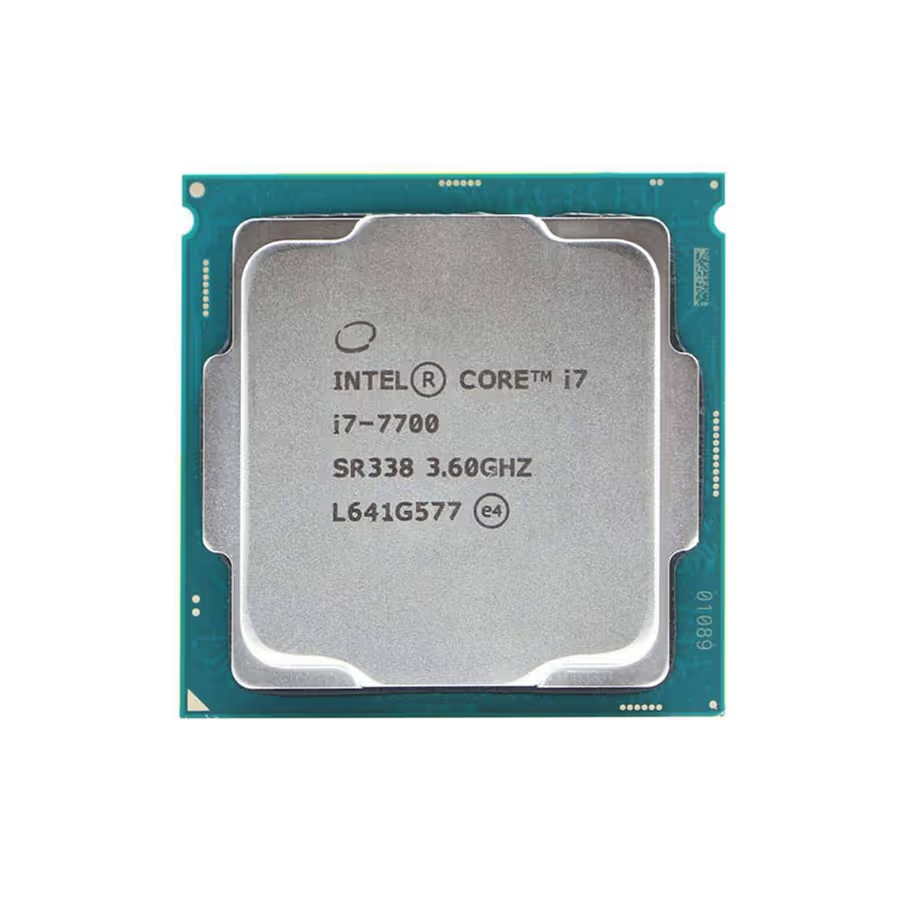
i7 7700
Overview
The Intel Core i7-7700 is a 7th-generation Kaby Lake desktop processor with 4 physical cores and 8 threads, a 3.6 GHz base clock and up to 4.2 GHz Turbo Boost. Built on Intel's refined 14nm+ process, it offers excellent single-threaded performance for gaming and day-to-day desktop tasks while keeping a conservative 65W TDP.
Technical details & real-world performance
The i7-7700 ships with 8 MB of Intel Smart Cache, supports DDR4 memory (officially DDR4-2133), and uses the LGA1151 socket compatible with 100/200-series motherboards (Z270, H270, B250, etc.). It provides 16 PCIe 3.0 lanes from the CPU and includes integrated Intel HD Graphics 630 with Intel Quick Sync and Kaby Lake's hardware HEVC / VP9 decode — useful for smooth 4K video playback and fast Quick Sync accelerated transcodes on supported software.
Because it concentrates on strong single-core IPC and high turbo clocks (4.2 GHz max), the i7-7700 behaves very well in CPU-bound 1080p gaming and general responsiveness. Multithreaded workloads like heavy 4K video rendering or large multi-threaded compilations will be slower than modern 6- or 8-core CPUs, but the 4 cores/8 threads still provide respectable performance for light to moderate content creation.
Practical use cases
- Gaming: Excellent for 1080p gaming when paired with a mid-to-high GPU — high frame rates in many titles thanks to strong single-core speed.
- Media & streaming: Integrated HD 630 handles desktop video and 4K hardware decode; Quick Sync speeds up video transcodes. Streaming while gaming is possible but may be limited compared to newer higher-core-count CPUs.
- Productivity & office: Snappy performance for office apps, web browsing, photo editing and light multitasking.
- Content creation: Good for editing 1080p video and photo workflows; for sustained heavy 4K timelines or long render farms, more cores will deliver faster throughput.
Specifications summary
- Model: Intel Core i7-7700 (Kaby Lake)
- Cores / Threads: 4 / 8
- Base / Turbo: 3.6 GHz / up to 4.2 GHz Turbo Boost
- Cache: 8 MB Intel Smart Cache
- TDP: 65 W
- Socket: LGA1151 (100/200-series motherboard support)
- Memory: DDR4 (officially DDR4-2133)
- Integrated GPU: Intel HD Graphics 630 (Quick Sync, HEVC/VP9 hardware decode)
- PCIe: 16 lanes PCIe 3.0 from CPU
- Multiplier: Locked (non-K part) — limited overclocking potential
Who this processor is best suited for
The i7-7700 is ideal for users who want strong single-threaded performance: competitive 1080p gamers paired with a dedicated GPU, power users who do office work, photo editing and light video editing, or anyone building a responsive desktop on LGA1151 hardware. It’s less suitable for heavy, professional-scale multi-threaded workloads where modern 6+ core CPUs offer significantly faster render and encode times.
R 900.00
AVANT 240GB
Overview
The AVANT 240GB is a solid-state drive with 240 gigabytes of NAND flash storage designed as a budget-friendly performance upgrade for laptops and desktops. As a 240GB consumer SSD it delivers dramatically lower access latency and much higher random I/O than traditional hard drives, making it perfect for fast boot times, snappy application launches and responsive system performance.
Real-world performance & technology
240GB SSDs in this class typically use modern NAND (TLC or QLC on entry-level models) and a consumer-grade controller. If this AVANT model is a SATA-based 2.5" drive you can expect sequential reads in the region of ~500–560 MB/s and sequential writes up to ~450–520 MB/s (the practical limits of SATA III 6Gb/s). Entry-level NVMe variants (if the AVANT range includes an M.2 NVMe SKU) will be noticeably faster, delivering multi-gigabyte/sec sequential speeds and lower latency. Random IOPS for mainstream 240GB SATA drives commonly sit in the tens of thousands (read IOPS often up to ~80–100k depending on controller and DRAM presence).
Many budget 240GB models use SLC caching and sometimes DRAM-less designs — this gives strong burst performance for everyday tasks but can show slower sustained write speeds on very large transfers once the SLC cache fills. Typical endurance for drives of this capacity is in the order of ~75–150 TBW for TLC-based consumer SSDs, which is more than adequate for normal desktop and laptop use.
Practical use cases
With 240GB of usable space the AVANT 240GB is best used as a primary OS and applications drive. It excels at:
- Speeding up Windows or Linux boot times and application loading (web browsing, office suites, development tools).
- Light gaming — fast level load times and reduced texture streaming stutters; suitable for installing 1–3 modern games depending on size.
- Everyday content work — photo editing and 1080p video editing with moderate project sizes, working as a cache/scratch drive for heavier projects.
Specs summary
- Capacity: 240GB NAND flash
- Interface / form factor: model dependent (commonly 2.5" SATA III 6Gb/s or M.2 NVMe in AVANT ranges)
- Typical sequential performance (SATA expectation): ~500–560 MB/s read, ~450–520 MB/s write
- Random IOPS: tens of thousands (varies by controller and DRAM)
- Endurance: consumer-class (typical ~75–150 TBW range for 240GB TLC drives)
Who it's best suited for
The AVANT 240GB SSD is ideal for South African users upgrading from an HDD who want a fast, affordable boot and applications drive: students, office workers, everyday home users, and casual gamers who need quicker responsiveness without large storage demands. For heavier gamers, large AAA libraries or professional 4K video editing you should consider larger-capacity or NVMe options, but for a clean, cost-effective performance boost this 240GB SSD is a practical choice.
R 450.00

Hiksemi 256GB SSD
Compact 256GB performance boost
The Hiksemi 256GB SSD delivers 256 gigabytes of solid-state storage in a low-power, no-moving-parts design. As a 256GB drive it’s ideal for a Windows or Linux system disk, app/library install drive, or a fast cache alongside larger storage.
What to expect under the hood
Hiksemi-branded drives use NAND flash and an SSD controller to replace spinning hard disks — offering vastly lower latency, near-instant random access and much faster sequential throughput. The product name specifies capacity only (256GB); the exact interface and form factor (SATA III 2.5" vs M.2 NVMe) will determine real-world speeds. Typical performance ranges you can expect: SATA III drives hit around 450–550 MB/s sequential read/write, while NVMe PCIe Gen3 x4 drives commonly reach up to ~3,500 MB/s sequential reads. Endurance/warranty metrics vary by SKU, but entry-level 256GB SSDs often have TBW ratings in the low hundreds and benefit from built-in wear-leveling and error correction.
Practical use cases
With 256GB of usable space the Hiksemi SSD is well-suited for: installing the operating system and core applications for fast boot and snappy responsiveness; office productivity and web development where random I/O matters; and gaming — it will significantly reduce load times and texture streaming for 1080p gaming, though large AAA libraries may need a secondary drive for capacity. For video work this capacity fits short projects and serves well as a scratch or cache drive, but heavy 4K timelines will require larger or additional storage.
Specs summary
- Capacity: 256GB (solid-state storage)
- Storage type: NAND flash (controller-managed SSD)
- Interface & form factor: varies by SKU (SATA III or NVMe M.2 common)
- Typical performance: SATA ≈450–550 MB/s; NVMe Gen3 ≈up to 3,500 MB/s (dependent on model)
- Benefits: low latency, no moving parts, lower power draw, faster boot & app load
- Endurance: model-dependent (typical 256GB drives often rated in the low hundreds TBW)
Who this drive is best for
This Hiksemi 256GB SSD is ideal for users upgrading from an HDD who want a fast OS/app drive, students and professionals needing quick responsiveness for office and development tasks, and gamers who want faster load times for 1080p play. It’s also a good choice as a secondary cache or scratch drive for light media projects. For sustained heavy 4K editing or large game libraries, pair it with higher-capacity storage.
R 450.00
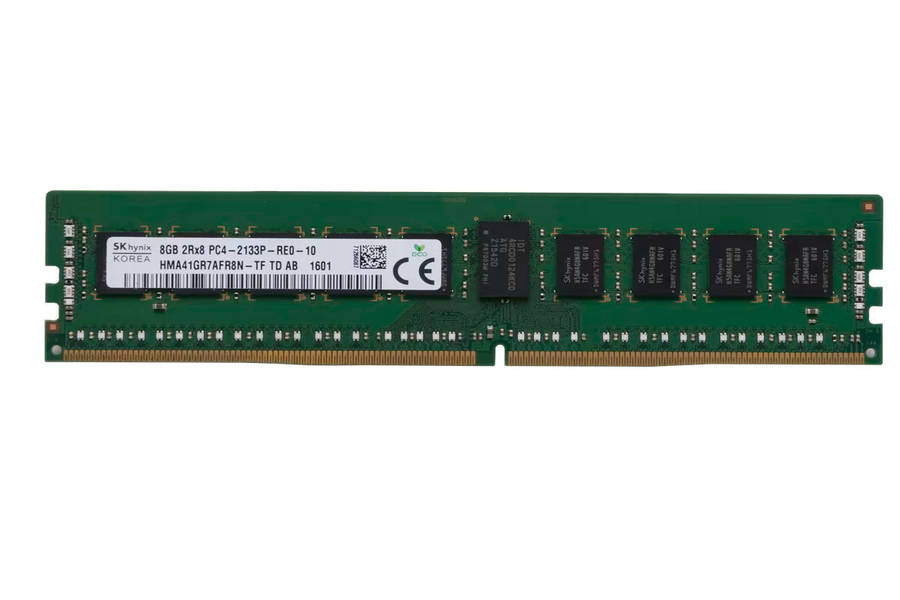
Sk hynix 8GB 2444mhz DDR4
R 500.00

Kingston 960GB
Fast, high-capacity Kingston 960GB SATA SSD
The Kingston 960GB solid-state drive delivers a big-capacity, low-cost performance boost for laptops and desktops. As a 2.5" SATA III (6Gb/s) SSD using 3D TLC NAND with SLC caching, it gives sustained performance far ahead of traditional hard drives — typical sequential read speeds up to ~500MB/s and writes up to ~450MB/s on the 960GB model.
Real-world performance and tech details
This 960GB Kingston drive uses SATA III bandwidth (backward compatible with older SATA ports) and a slim 7mm 2.5" form factor that fits most notebooks and desktop drive bays. The 3D TLC NAND plus dynamic SLC caching improves burst write performance and everyday responsiveness: faster boot times, snappier application launches, and dramatically reduced game level/load times compared to HDDs. MTBF is typically rated around 1,000,000 hours and Kingston provides a multi-year limited warranty and support.
What it handles well
With 960GB of usable space and solid sequential throughput, this SSD is perfect as a primary OS and apps drive — you can store the OS, dozens of programs, and a large game library while enjoying quick load times. It's excellent for office work, web development, photo editing and 1080p video projects. For heavy multi-stream 4K video editing or ultra-fast scratch disks, NVMe drives will be faster, but this Kingston SSD is a reliable, high-capacity choice for most users.
Specs summary
- Capacity: 960GB
- Form factor: 2.5" (7mm)
- Interface: SATA III (6 Gb/s)
- NAND: 3D TLC with SLC caching (dynamic write acceleration)
- Typical sequential read: up to ~500 MB/s
- Typical sequential write: up to ~450 MB/s
- MTBF: ~1,000,000 hours
- Warranty: Multi-year limited warranty and technical support
Who this SSD is ideal for
Best suited for users upgrading from an HDD who want a large, reliable primary drive for Windows or macOS, gamers wanting faster load times at 1080p, office and student laptops, and content creators doing photo work or light-to-moderate 1080p/4K editing. If you need maximum raw throughput for heavy 4K timelines or professional workstation workloads, consider an NVMe alternative — otherwise this 960GB Kingston SSD is a balanced, cost-effective performance upgrade.
R 1,000.00

PC BUILDER TYHOON ICE120MM ARGB AIR CPU COOLER
Overview
The PC BUILDER TYHOON ICE 120mm ARGB is a compact single-fan air CPU cooler that pairs a 120mm ARGB fan with a slim aluminium heatsink to deliver reliable cooling for mainstream desktop CPUs. Its addressable RGB lighting adds visual flair while PWM control balances cooling power and acoustic performance.
Performance & technical notes
The included 120mm fan uses PWM speed control to adapt to load — typically offering a wide speed range (commonly around ~700–1,800 RPM on similar designs) so you get stronger airflow under heavy CPU load and quieter operation at idle. A well-mounted 120mm air cooler like the TYHOON ICE is ideal for CPUs in the mainstream TDP band (~65W–125W), which covers everyday chips such as Intel Core i3/i5 and many Core i7 models, as well as AMD Ryzen 3/5/7 processors. In practical terms it handles sustained office work, streaming and light to moderate gaming reliably, and keeps temps well in check for short creative bursts like video encoding or photo editing.
Features & specs summary
- Type: Air CPU cooler, single 120mm fan (ARGB)
- Fan lighting: Addressable RGB (ARGB) for per-LED control with compatible motherboards or controllers
- Fan control: PWM (automatic speed adjustment under load)
- Typical fan speed range: ~700–1,800 RPM (typical for this class) for a balance of airflow and low noise
- Target cooling: Mainstream CPUs up to roughly 125W TDP (typical single-120mm cooler capability)
- Heatsink: Compact aluminium fin stack suited for smaller cases and tight RAM clearance
- Compatibility: Designed for common Intel and AMD platforms (examples: LGA 1700/1200/115x and AM5/AM4 — verify exact mount brackets for your build)
Who this cooler is best suited for
The TYHOON ICE 120mm ARGB is ideal for South African builders putting together budget-to-mid-range gaming rigs, compact ITX/mATX systems, or quiet office machines where space is limited but you still want clean aesthetics from ARGB lighting. It’s a solid choice if you run 1080p gaming, multitasking, streaming or occasional content work without extreme overclocking — users seeking extreme thermal headroom or heavy sustained workstation loads would benefit from a larger dual-tower cooler or AIO instead.
R 250.00

4GB DDR4 Standard Desktop RAM
Overview
This is a 4GB DDR4 memory module — a single-stick of fourth-generation DRAM. DDR4 brought higher clock rates and lower operating voltage compared with DDR3 (standard 1.2V vs ~1.5V), improved prefetch and internal efficiency, and common speeds that range from ~2133MT/s up to 3200MT/s and beyond. Modules are supplied as either 288-pin DIMM (desktop) or 260-pin SODIMM (laptop) depending on the SKU.
Performance and real-world behaviour
At 4GB capacity this module provides a modest amount of RAM suitable for light tasks: web browsing with a few tabs, office productivity (Word/Excel), media playback and compact HTPC builds. DDR4’s higher bandwidth and lower latency (typical consumer CAS timings fall in the CL15–CL19 window depending on speed) give noticeably better throughput than DDR3 in memory-sensitive tasks. However, 4GB will be a bottleneck for modern Windows 10/11 multitasking, recent AAA gaming, and video editing — those activities benefit from 8–16GB or more. Running two identical 4GB sticks in dual-channel doubles memory bandwidth and noticeably improves frame rates and system responsiveness versus a single stick.
Specifications
- Capacity: 4GB
- Memory type: DDR4 (fourth-generation DRAM)
- Typical speeds: commonly 2133–3200 MT/s (actual speed depends on the specific module)
- Voltage: standard DDR4 ~1.2V
- Form factor: desktop 288-pin DIMM or laptop 260-pin SODIMM (depends on SKU)
- ECC/Buffered: typically non‑ECC, unbuffered for consumer modules
Who this is best suited for
Ideal for budget desktop or laptop upgrades where the goal is to replace a defective stick or give an older machine enough memory for light productivity, school use, simple media playback or compact HTPC duties. Not recommended as the sole memory for heavy gaming, content creation or professional multitasking — power users should choose higher capacities or dual-channel kits.
R 150.00

Cudy AC650 Wireless dual Band USB Adater
Overview
The Cudy AC650 Wireless Dual Band USB Adapter is a compact USB Wi‑Fi upgrade that brings 802.11ac (Wi‑Fi 5) speeds to laptops and desktops. It advertises a combined theoretical throughput of up to 650Mbps — delivered as up to ≈433Mbps on the 5GHz AC band and around 200Mbps on the 2.4GHz N band — giving you faster, more reliable wireless for streaming, browsing and online gaming.
Technology & Performance
This adapter uses 802.11ac Wave 1 principles on the 5GHz band (single spatial stream at 80MHz channel width) to reach the advertised ~433Mbps peak, and 802.11n on 2.4GHz for the lower-band throughput. 802.11ac adds higher-order modulation (256‑QAM) and wider channels, which is why the 5GHz band delivers the biggest performance boost and lower interference in crowded Wi‑Fi environments. Real-world speeds will be lower than theoretical peaks — expect typical throughput in the hundreds of Mbps on good links and lower in congested or distant conditions.
Practical uses
With up to ~433Mbps on 5GHz this adapter is well suited to smooth 1080p or multi‑device HD streaming, video conferencing, and responsive online gaming. It also handles large file downloads and cloud backups significantly faster than legacy 802.11g/n adapters. While it can assist with streaming 4K video (which needs 15–50Mbps per stream), peak LAN transfers and low‑latency competitive gaming will still depend on your router, signal strength and USB host bandwidth.
Specs Summary
- Wireless standards: IEEE 802.11ac / 802.11n / 802.11g / 802.11b
- Dual‑band speeds: up to 433Mbps (5GHz, 802.11ac) + ~200Mbps (2.4GHz, 802.11n) — combined ≈650Mbps theoretical
- Interface: USB (backward‑compatible with common USB ports)
- Security: WPA/WPA2 encryption supported
- OS support: Windows and macOS drivers available; many Linux distributions provide driver support
Who this is best suited for
The Cudy AC650 USB adapter is ideal for users in South Africa who need an easy, low‑cost wireless upgrade — students, travellers or home office users with older laptops or desktops that lack fast 5GHz Wi‑Fi. It’s a practical choice for HD streaming, video calls and everyday online gaming when you need a compact, plug‑in wireless boost.
R 150.00

500GB HDD 2.5 inch
Overview
This is a 500GB HDD — a traditional mechanical hard drive using magnetic platters to store data. As a 500 gigabyte drive it gives you a cost-effective chunk of capacity for documents, photos, video collections and game libraries where raw capacity matters more than SSD-like speeds.
Performance & technology
Hard drives store data on spinning platters with a moving read/write head. Typical drives in the 500GB class deliver sequential transfer rates roughly in the 80–200 MB/s range depending on spindle speed (5400 RPM drives tend toward the lower end, 7200 RPM drives toward the higher end). Average seek latency and response times are higher than SSDs — expect average latencies around 4–8 ms and lower random IOPS. HDDs excel at bulk, sequential read/write tasks but are not suited for instant OS responsiveness or heavy random-access database workloads.
Practical uses
500GB HDDs are ideal as secondary or archival storage: storing photos, music, movies, game installs, and regular backups. They’re great for surveillance use (DVR/NVR footage), bulk media libraries and when you need a lot of space on a tight budget. For tasks like 1080p video playback and long sequential file transfers they perform well; for 4K editing projects or running an operating system and programs you’ll see a noticeable speed difference compared to an SSD.
Specs summary
- Capacity: 500GB (500 gigabytes)
- Drive type: Mechanical HDD (magnetic platter storage)
- Typical sequential performance: ~80–200 MB/s (dependent on spindle speed and model)
- Typical latency: ~4–8 ms; lower random IOPS than SSDs
- Common interface: SATA III (6 Gb/s) on most modern 500GB drives — check form factor (2.5" vs 3.5") for your device
- Use case: secondary storage, backups, media libraries, surveillance
Who this is best suited for
Best for users who need affordable, reliable bulk storage — home users building a media library, budget desktop or laptop owners needing extra capacity, photographers and hobby videographers archiving footage, or anyone wanting an economical drive for backups and surveillance recordings. Not recommended as your primary system/OS drive if you require fast boot times and snappy application performance.
R 150.00

DELL S2419HGF 24" Full HD 144Hz Refresh Rate
Overview
The DELL S2419HGF is a 24-inch Full HD (1920x1080) display with a 144Hz refresh rate — built to deliver smooth motion and low-latency feel for competitive gaming and fast desktop work. The 24" size hits a practical pixel density (~92 PPI) that keeps text sharp while making high frame rates easy to achieve with mainstream GPUs.
Performance & Real-world Use
A 144Hz panel like the S2419HGF reduces motion blur and perceived input lag compared with 60Hz screens, making it ideal for esports titles (CS:GO, Valorant, Overwatch) where frame timing and responsiveness matter. Paired with a mid-range GPU (for example GTX 1660 Super / RTX 3050 / RX 6600) you can routinely reach 144 FPS on competitive settings; more demanding AAA titles will need a stronger GPU (RTX 3060 / RTX 4060 class or better) to sustain high frame rates at higher detail.
Practical Considerations
At 1920x1080 on 24", this monitor balances performance and system requirements — you get smoother gameplay without the GPU cost of higher resolutions. It's also great for general productivity: faster refresh makes scrolling, window movement and animations feel more fluid. For colour-critical photo or video work, larger wide‑gamut IPS panels are still preferable; the S2419HGF is optimised for speed over absolute colour fidelity.
Specs Summary
- Screen size: 24" (60.96 cm)
- Resolution: Full HD 1920 x 1080
- Refresh rate: 144Hz for high-frame-rate gaming
- Pixel density: ~92 PPI — sharp for desktop use at 24"
Who this monitor is best for
The DELL S2419HGF is ideal for competitive and casual gamers who prioritise high refresh and responsiveness at 1080p, plus users who want a snappy, fluid desktop experience without the GPU cost of higher resolutions. It suits gamers using mid-range GPUs for esports and streamers who favor frame-rate over ultra-high resolution, while photographers and colour-critical creators may prefer a dedicated wide-gamut panel instead.
R 1,800.00
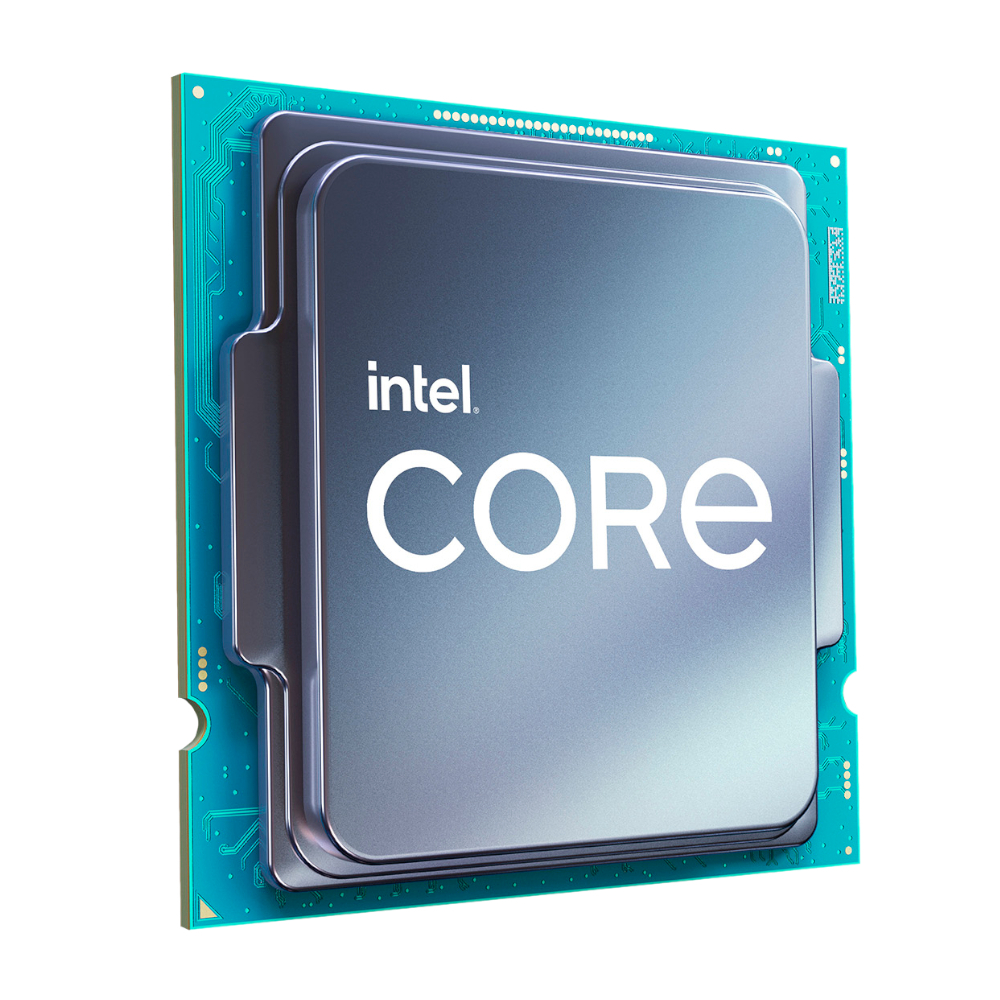
Intel® Core™ i7-8700 Processor
Overview
The Intel Core i7-8700 is an 8th-generation Coffee Lake desktop processor with 6 physical cores and 12 threads. It runs at a base clock of 3.2 GHz and uses Intel Turbo Boost up to 4.6 GHz on light loads, backed by 12MB of SmartCache. Built on Intel's 14nm++ process, the i7-8700 brings a notable uplift in multi-threaded performance over previous 4-core i7s while keeping a 65W TDP.
Performance and real-world use
With 6 cores and Hyper-Threading, the i7-8700 delivers strong single-threaded performance for games and snappy desktop responsiveness, while its multi-threaded capacity makes it a capable workhorse for content creation. Expect excellent 1080p gaming performance when paired with a modern discrete GPU — the CPU rarely bottlenecks at 1080p and becomes GPU-limited at most 1440p/4K gaming scenarios. For video editing and encoding, the 6 cores handle 1080p and light 4K timelines well; Intel Quick Sync on the integrated UHD Graphics 630 also accelerates fast transcodes when needed.
Platform & compatibility notes
The i7-8700 fits LGA1151 (300-series chipset) motherboards and supports dual-channel DDR4 memory up to DDR4-2666 natively. It provides 16 PCIe 3.0 lanes for a discrete GPU and supports Intel features such as Turbo Boost 2.0, Hyper-Threading, and Intel Optane Memory (with a compatible board) for responsive storage. The integrated UHD 630 GPU is suitable for basic display output, light multimedia and Quick Sync accelerated tasks, but gamers should pair the CPU with a dedicated GPU for serious gaming.
Specs summary
- Model: Intel Core i7-8700 (8th Gen Coffee Lake)
- Cores / Threads: 6 / 12
- Clocks: 3.2 GHz base, up to 4.6 GHz Turbo
- Cache: 12 MB Intel SmartCache
- TDP: 65 W
- Integrated GPU: Intel UHD Graphics 630 (with Quick Sync)
- Memory: Dual-channel DDR4 up to 2666 MHz
- Socket: LGA1151 (300-series chipset required)
- PCIe: 16 PCIe 3.0 lanes for discrete GPU
Who this CPU is best suited for
The i7-8700 is ideal for gamers building a strong 1080p gaming rig, creative users doing photo editing and moderate 4K video work, and general heavy multitaskers who want snappy performance without the power draw of higher-TDP chips. It suits builders upgrading 300-series systems and anyone who values strong single-core speed together with capable multi-core throughput.
R 1,000.00

XFX Speedster Qick319 Radeon RX6700XT
Overview
The XFX Speedster QICK319 Radeon RX 6700 XT is an RDNA 2‑based graphics card built around AMD's Navi 22 GPU. It ships with 12GB of GDDR6 memory and a healthy set of features from AMD's Radeon stack — hardware ray tracing, 96MB Infinity Cache, PCIe 4.0 support and driver features like FidelityFX and Radeon Anti‑Lag. XFX's Speedster line focuses on efficient cooling and a factory tuned profile, so expect a card tuned for sustained 1440p performance.
Technical details
The RX 6700 XT packs 2,560 stream processors (40 compute units) on the RDNA 2 architecture and uses AMD's hardware ray accelerators for ray tracing workloads. Reference game / boost clocks sit around a 2.42 GHz game clock and up to about 2.58 GHz boost clock — factory‑tuned XFX variants often push those clocks slightly higher. Memory is 12GB GDDR6 on a 192‑bit bus (effective memory bandwidth around 384 GB/s) and the chip includes a 96MB Infinity Cache to reduce latency and VRAM bandwidth pressure for higher frame rates.
Real‑world performance & use cases
In practice the RX 6700 XT is targeted at 1440p gaming: it delivers smooth high‑settings performance in modern AAA titles and excellent results in esports titles at high frame rates. You can expect many contemporary games to run at 60–120+ FPS at 1440p depending on settings and CPU, while 4K gaming is possible at medium to high settings with lower frame rates. Ray tracing is supported, but AMD's RT performance typically trails NVIDIA's current generation at heavy ray‑traced settings — use FidelityFX Super Resolution (FSR) or Radeon Super Resolution to recover fps when enabling ray tracing. The card is also well suited to creative workloads: the 12GB of VRAM and 2560 cores handle 4K video editing timelines and GPU‑accelerated effects efficiently.
Specifications
- GPU: AMD Radeon RX 6700 XT (Navi 22, RDNA 2)
- Stream Processors: 2,560 (40 CUs)
- Clocks: ~2424 MHz game clock / up to ~2581 MHz boost (reference; XFX factory tuning may vary)
- Memory: 12GB GDDR6, 192‑bit bus (~384 GB/s effective)
- Infinity Cache: 96MB
- Features: Hardware ray tracing (Ray Accelerators), DirectX 12 Ultimate, PCIe 4.0, FidelityFX / FSR, Radeon Software features
- Typical Board Power: ~230W (recommend 650W PSU)
Who this card is ideal for
The XFX Speedster QICK319 RX 6700 XT is ideal for gamers who want strong 1440p performance at high refresh rates, streamers and content creators who need 12GB of VRAM for 4K editing timelines, and PC builders who want RDNA 2 features like FSR and Smart Access Memory. It's a great fit if you want NVIDIA‑class raster performance in many games while also benefiting from AMD's software features — especially for a South African gamer or creator focused on 1440p play and efficient multi‑tasking.
R 5,500.00

Samsung 2.5" 960GB SSD
Overview
The Samsung 2.5" 960GB SSD is a 2.5-inch SATA solid-state drive with a large 960 gigabyte capacity and Samsung's proven 3D V‑NAND technology. As a SATA III (6 Gb/s) drive it replaces traditional hard drives for much faster boot times, application launches and overall system responsiveness while offering a high-capacity option for laptops and desktops that lack NVMe slots.
Performance and technical details
Because this is a SATA III 2.5" drive, real-world sequential read speeds top out close to the SATA limit—typically around 500–550 MB/s for reads and up to ~500–520 MB/s for writes depending on firmware and burst behaviour. Random 4K performance is in the tens of thousands of IOPS, delivering greatly reduced latency compared with spinning disks. Samsung's 3D V‑NAND and mature controller firmware provide consistent performance under sustained loads, improved endurance over planar NAND, and efficient power use—beneficial for notebooks and energy-conscious desktop builds.
Practical use cases
This 960GB SATA SSD is ideal as a primary system drive: it makes Windows or macOS boot in seconds, accelerates application and game load times, and stores a substantial game library or large photo/video projects. For gaming it handles 1080p and 1440p play smoothly by cutting level-load times and texture stuttering versus HDDs. For content creators it provides fast timeline playback and snappy file transfers for 1080p—single-stream 4K editing is possible, but heavy multi-camera 4K workflows will still benefit from a high-performance NVMe drive or external scratch drive.
Specifications
- Capacity: 960 GB
- Form factor: 2.5-inch SATA
- Interface: SATA III (6.0 Gb/s)
- NAND: Samsung 3D V‑NAND (stacked TLC architecture)
- Typical sequential performance: ~500–550 MB/s read, ~500–520 MB/s write (SATA-limited)
- Random 4K: tens of thousands IOPS (real-world varies by system)
Who this is best suited for
This drive suits laptop and desktop users who want a large, reliable SATA SSD for fast system responsiveness, gamers wanting shorter load times without moving to NVMe, and content creators needing roomy, fast storage for 1080p and light-to-moderate 4K editing. It’s a strong upgrade from HDDs where a 2.5" SATA slot is available and NVMe is not required or supported.
R 1,200.00
Universal GPU Anti-Sag Support Brackets
R 80.00

Asus Prime Z490-P
Overview
The ASUS Prime Z490‑P is an ATX motherboard based on Intel's Z490 chipset with an LGA1200 socket. Designed for 10th‑Gen Intel Core processors (Comet Lake) and compatible with many 11th‑Gen CPUs after BIOS updates, it provides a stable, feature‑rich foundation for gaming, content creation and everyday productivity.
Performance & CPU support
Because it's a Z‑series board the Prime Z490‑P supports CPU overclocking and higher TDP parts — so it will run 10th‑Gen parts like the Core i9‑10900K (10 cores / 20 threads, boost up to ~5.3GHz on suitable cooling) and Core i7/i5 Comet Lake chips effortlessly. The board exposes a full PCIe x16 slot driven by the CPU (PCIe 3.0 on Comet Lake), and offers a BIOS with standard ASUS tuning options for moderate overclocking and memory XMP profiles. For memory it takes 4 DDR4 DIMMs for up to 128GB in dual‑channel mode and is engineered to support high frequency DDR4 kits with XMP — expect practical overclocked memory speeds into the 4000–4600MHz range depending on your kit and CPU memory controller.
Storage, expansion and connectivity
The Z490‑P includes modern storage options: an M.2 slot that supports NVMe PCIe 3.0 x4 SSDs (real‑world sequential reads up to ~3.5GB/s on fast NVMe drives) plus multiple SATA III (6Gb/s) ports for traditional SSDs and HDDs. Expansion is straightforward with the primary PCIe x16 slot for a discrete GPU and additional PCIe x1 slots for sound cards, NICs or capture cards. On the rear I/O you'll find video outputs (DisplayPort and HDMI) to use the CPU's integrated graphics, a mix of USB 3.x and USB 2.0 ports for peripherals, Intel Gigabit Ethernet for reliable wired networking and ASUS' on‑board high‑definition audio solution for multi‑channel sound.
Practical use cases
Paired with a mid or high‑end CPU and GPU, the Prime Z490‑P is an excellent platform for 1080p and 1440p gaming — the board supplies the necessary PCIe bandwidth and power delivery to feed modern GPUs. For creators it supports multi‑core Comet Lake CPUs that accelerate video editing, encoding and multi‑threaded workloads. It's also a dependable choice for home and office systems where stability, multiple storage drives and fast LAN are priorities.
Specs summary
- Chipset: Intel Z490
- Socket: LGA1200 — supports 10th‑Gen Intel Core (Comet Lake) and many 11th‑Gen with BIOS update
- Memory: 4× DDR4 DIMM slots, up to 128GB, dual‑channel, XMP and memory overclocking supported
- Storage: 1× M.2 (NVMe PCIe 3.0 x4 / SATA), multiple SATA III 6Gb/s ports
- PCIe: Primary PCIe x16 slot (CPU lanes, PCIe 3.0 with Comet Lake); additional PCIe x1 slots
- Networking: Intel Gigabit Ethernet (reliable 1Gbps wired connectivity)
- Audio: Onboard HD audio (Realtek‑class codec providing multi‑channel output)
- Rear I/O: HDMI & DisplayPort for iGPU, mix of USB 3.x and USB 2.0 ports, audio jacks
- Form factor: ATX — fits standard mid & full towers
Who this board is best suited for: builders who want a dependable, affordable Z‑series platform for 10th‑Gen Intel CPUs — gamers targeting 1080p/1440p with a dedicated GPU, creators using multi‑core Comet Lake processors for editing and users who need multiple drives and stable Gigabit LAN. The Prime Z490‑P is ideal for mid‑range to performance desktop builds where reliability, expandability and straightforward overclocking matter most.
R 1,400.00
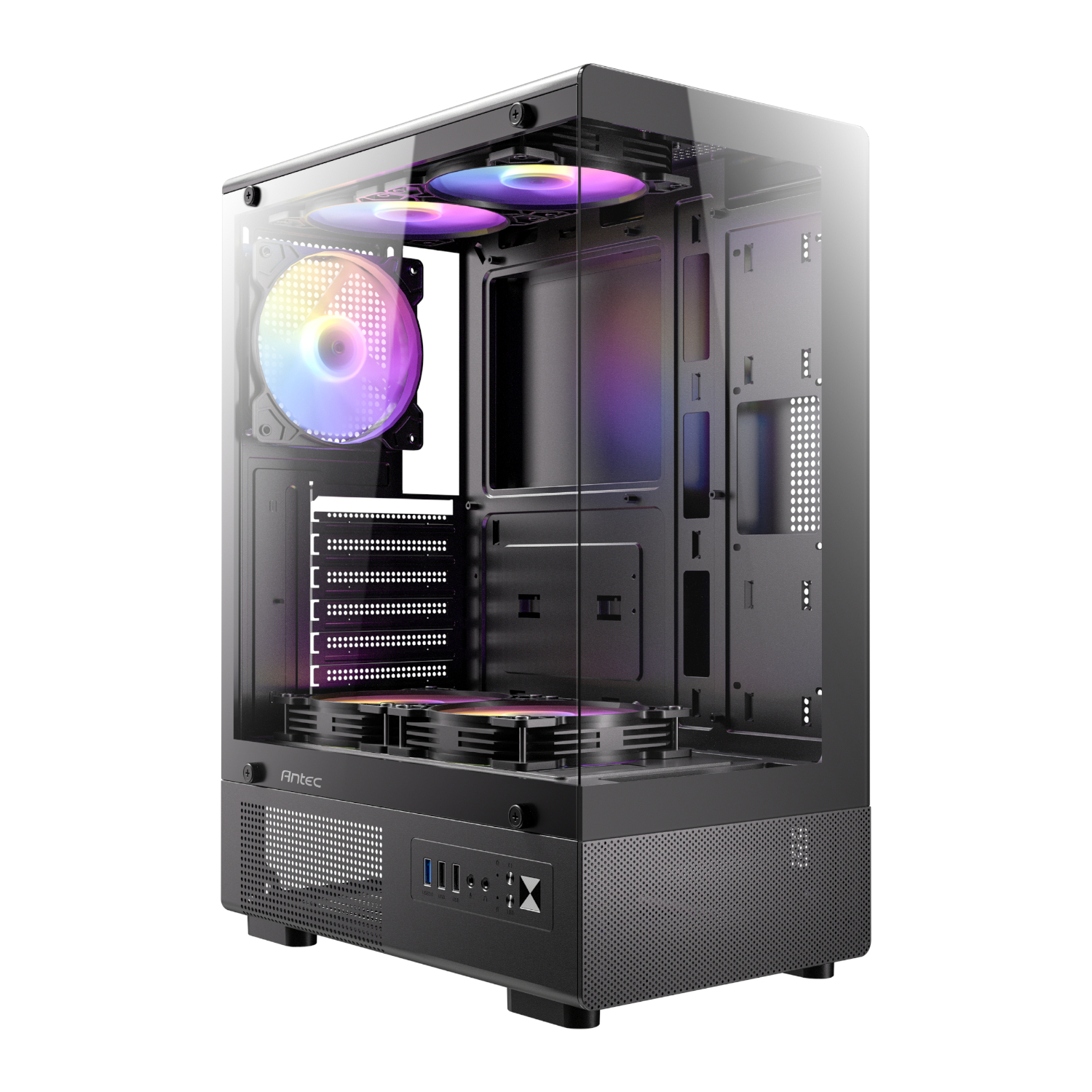
Antec VCX300 ARGB ATX Gaming Chassis
R 650.00